en.Wedoany.com Reported - At the DTW Ignite 2026 summit, Sam Wang, General Manager of Huawei's Autonomous Driving Network (ADN) Solution and a member of the TM Forum AN MLT, was interviewed by Olta Vangjeli, Director of the TM Forum AN Program. They discussed the newly released "Autonomous Networks White Paper 8.0," sharing industry trends, progress in commercial deployment of AN L4 Phase 1, and architectural and technological evolution for Phase 2.
Over the past year, the global Autonomous Networks (AN) industry has seen significant changes in both goals and practices. AN L4 Phase 1 has officially entered the commercial deployment phase, and exploring how AN can enable revenue growth has become a new focal point for the industry.

The evolution of the AN industry is reflected in three aspects. AN L4 Phase 1 is entering an accelerated commercial deployment phase. With the maturity of Agent technology and the improvement of AN practice standards, operators' willingness to invest in AN has increased. The next 2 to 3 years are considered a critical window for planning and deploying AN L4. The industry's focus is expanding from cost reduction and efficiency improvement to business innovation and revenue growth. Some Chinese operators, leveraging comprehensive 5G coverage and large-scale deployment of new 5G-A technologies, have taken the lead in exploring experience-driven revenue scenarios. They offer differentiated network experience capabilities as NaaS services, providing replicable models for operators in other regions. Agents are beginning to deeply integrate into the network infrastructure, rather than serving as external O&M tools. The release of the Agent to Agent Protocol for Telecom (A2A-T) standard marks a significant milestone in this field, providing a unified protocol for communication and collaboration between network agents from different vendors and layers, laying the foundation for multi-agent collaborative high-level autonomous networks.
Regarding the progress of AN L4 commercial deployment, the industry has jointly identified 25 high-value scenarios, such as IP fault management, wireless fault management, and personal service assurance. Among these, 15 Solution Packages have been released to guide commercial deployment in live networks. Operators like China Mobile and Telefonica have established complete AN Journey processes, systematically addressing each scenario and completing production integration to accelerate AN L4 Phase 1 commercial deployment. Three major challenges currently exist: the complexity of cross-layer and cross-domain integration, where traditional customized interface integration methods are inadequate for the Agentic AI era, requiring rapid technical solutions for cross-layer and cross-domain integration and the establishment of new organizational processes; return on investment pressure, as over 75% of operators plan to increase AN investment, but AN L4 is a long-term investment requiring solid network layer capabilities upfront—operators can refer to the white paper for ANSP planning and calculate KBI/KEI targets to quantify value; and insufficient mature case references, as different operators have varying data, processes, and businesses, necessitating adaptation of AN L4 SPG in live networks. The experience of pioneering operators is highly valuable. During the compilation of White Paper 8.0, over 40 cases from more than 20 operators were received. Selected cases have been included, and the remaining cases will be published in the "AN Commercial Case Collection" in July this year.
White Paper 8.0 focuses on AN L4 Phase 2, which transitions from single-domain autonomy to multi-scenario collaborative autonomy. Its core value shifts from simplified and efficient single-scenario O&M to business innovation, revenue growth, and optimal overall network efficiency. In terms of architectural and technological evolution, a new Service Center is added at the business layer, targeting services like MBB, HBB, and 5G2B. It manages full lifecycle activities such as service provisioning and assurance, orchestrating and dispatching business-layer agents and automatically completing activities with the collaboration of network-layer agents, thereby enabling commercial revenue growth. A new Domain Agent is added at the network layer, providing capabilities for comprehensive planning, task distribution, event handling, and conflict coordination, achieving optimal overall network efficiency through single-network autonomy. Agent collaboration and governance are enhanced with the addition of an Agent Registration Center, Orchestration Center, and Governance Center, supporting Agent Card registration, semantic search, and addressing, as well as providing a multi-agent collaborative workflow orchestration framework. The Agent to Agent for Telecom protocol, with the widespread application of agents, enables agents distributed across different layers and domains to extend from single-domain autonomy to cooperation and collaboration. It carries AN Intents and defines A2A extensions and enhancements such as determinism, spontaneity, controllability, and security, becoming a key technology for promoting agent integration into live networks.
Sam Wang stated that Huawei will continue to upgrade its ADN solution and collaborate with global operators and industry partners to drive the AN industry from isolated exploration to systematic collaboration, paving a scalable and replicable evolution path for the intelligent upgrade of the global communications industry.
Related Products


G.652.D Wavelength-extended Non-dispersion Shifted Single-mode Optical Fiber
HONGAN GROUP CO., LTD.
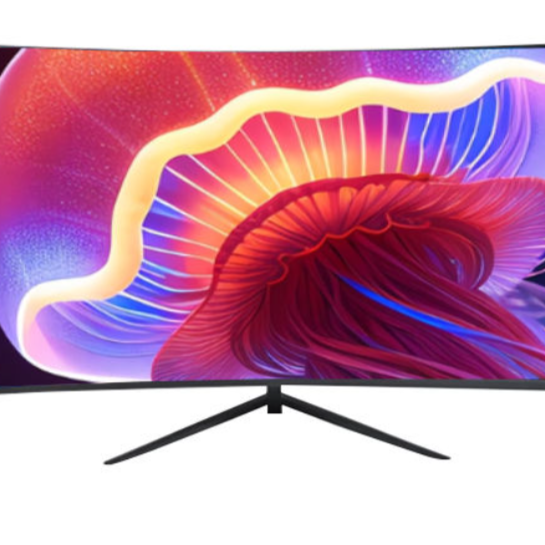
20 Inch 1600*900 Full HD 60Hz TFT LED Monitor with VGA and DP Interfaces for Desktop Computers-Business Use
Guangzhou Zanying Optoelectronics Technology Co., Ltd.

MUX Series Communication Interface Device for Security and Stability Control System
Nanjing NR Electric Co., Ltd.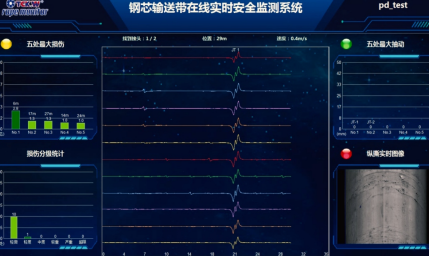
Conveyor Belt Intelligent Monitoring System
LUO YANG WIRE ROPE INSPECTION TECHNOLOGY CO., LTD.
TWP16 P-Band Tropospheric Wind Profile Radar
China Huayun Meteorological Technology Group Co., Ltd.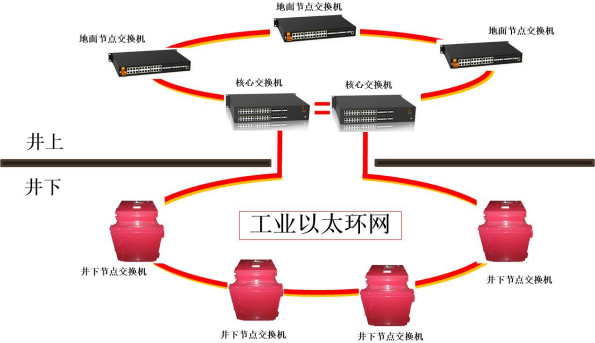
Mine Explosion-proof and Intrinsically Safe Industrial Ethernet Ring Network (10 Gigabit/Gigabit)
Chongqing Mas Sci&Tech Co., Ltd.
Industrial and Commercial Point-Type Gas Detector
Jinan Benan Technology Development Co., Ltd.
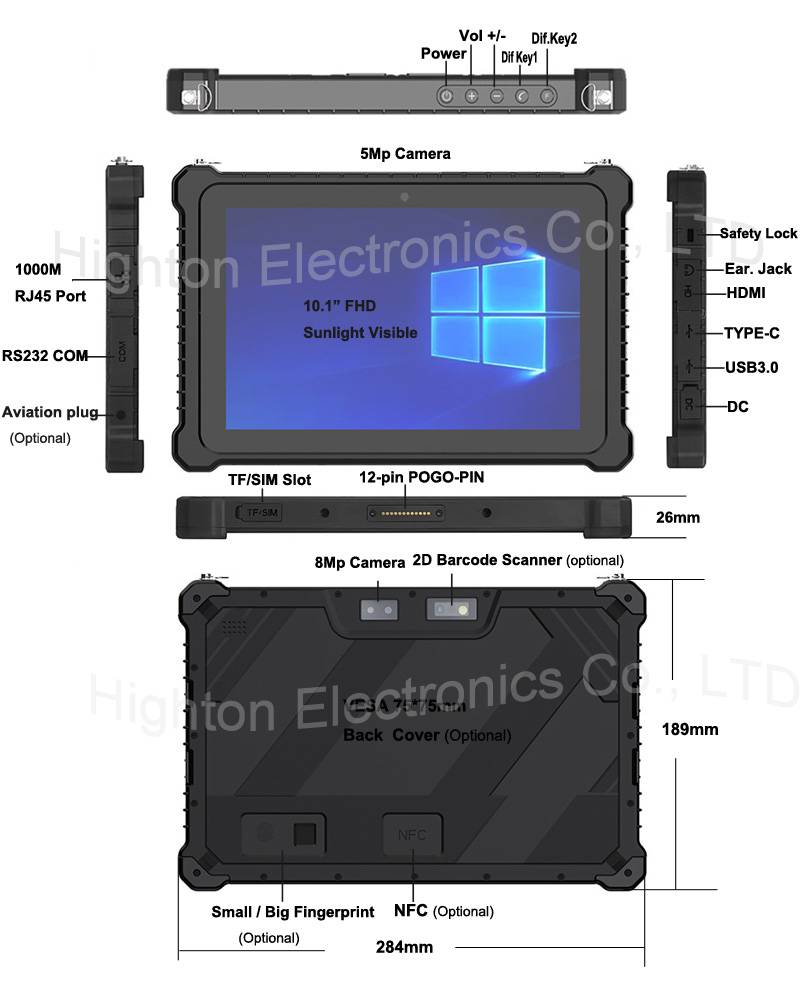
Hot Selling 10 Inch Intel N5100 I5 I7 FHD 8 +128GB 16+256GB Win10 Pro Win11 Pro 4G 5G Rugged Tablet PC Pad with NFC Barcode
Highton Electronics Co., Ltd.