U.S. Army Awards $15 Million to Rice University to Establish Center for Sensing and Communications Research
en.Wedoany.com Reported - The U.S. Army Research Office has awarded $15 million to Rice University to establish a five-year research center advancing secure sensing, imaging, and communications technologies. The center, officially named the Center for Large Aperture Secure Sensing, Imaging and Communications (CLASSIC), will bring together researchers from multiple universities and national laboratories across the United States to develop advanced antenna technologies for future wireless systems.
The center is led by Edward Knightly, the Sheafor-Lindsay Professor in Rice's Department of Electrical and Computer Engineering, with research spanning multiple disciplines including wireless networks, antennas, radar, artificial intelligence, circuits, and physics. The research team will focus on exploring how extremely large-scale antenna arrays (ELSAAs) can extend wireless system capabilities in environments where signals are obstructed or disrupted, thereby improving communication reliability and enhancing the detection and imaging of concealed objects.
David Sholl, Rice's vice president for research, stated that this award reflects the university's ability to address complex national research challenges through interdisciplinary and multi-institutional collaboration. Provost Amy Dittmar noted that CLASSIC brings together leading researchers from diverse institutions and disciplines, laying the groundwork for future discoveries in secure communications and sensing.
The research is organized around five thrust areas: advancing the fundamental science of ELSAAs, developing sensing technologies for threat detection, building resilient high-speed wireless networks, investigating wireless interference, and validating technologies through laboratory and field testing. Additionally, the center will develop an AI-driven modeling framework to simulate complex electromagnetic environments in real time, reducing the computational power required to design and evaluate advanced antenna systems and thereby accelerating the development of new technologies.
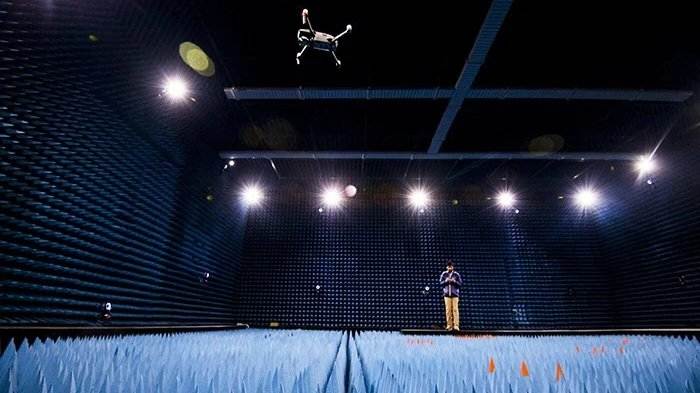
To assess technology performance under real-world conditions, the research team will conduct laboratory experiments and drone-based field trials. Knightly stated that the center will provide researchers with resources and a collaborative framework to drive progress that would be difficult to achieve through individual projects.
Co-principal investigators include Ashutosh Sabharwal of Rice University, Sensen Li of the University of Texas at Austin, Hou-Tong Chen of Los Alamos National Laboratory, Danijela Cabric of the University of California, Los Angeles, Josep M. Jornet and Tommaso Melodia of Northeastern University, Daniel M. Mittleman of Brown University, and Willie Padilla of Duke University. Industry partners include Booz Allen Hamilton, Intel, Keysight, Lockheed Martin, MITRE, Northrop Grumman, Qualcomm, and Raytheon.
The center will leverage existing experimental platforms to validate antenna arrays ranging from hundreds to tens of thousands of radiating elements, and will collaborate with academic institutions, national laboratories, and industry partners to facilitate technology transition.
Related Products



Comprehensive Mining Automation Control System
Beijing Tianma Intelligent Control Technology Co., Ltd.
Hot Selling 10 Inch Intel N5100 I5 I7 FHD 8 +128GB 16+256GB Win10 Pro Win11 Pro 4G 5G Rugged Tablet PC Pad with NFC Barcode
Highton Electronics Co., Ltd.
TWP16 P-Band Tropospheric Wind Profile Radar
China Huayun Meteorological Technology Group Co., Ltd.



20 Inch 1600*900 Full HD 60Hz TFT LED Monitor with VGA and DP Interfaces for Desktop Computers-Business Use
Guangzhou Zanying Optoelectronics Technology Co., Ltd.
MUX Series Communication Interface Device for Security and Stability Control System
Nanjing NR Electric Co., Ltd.
KJD127(A) Mining Explosion-Proof and Intrinsically Safe Computer
Taiyuan Xiangming Intelligent Control Technology Co., Ltd.
Multi-function Marine Monitoring Low-altitude Detection Radar Sea-air Boundary Ocean Dynamic Environment Measurement
Chengdu Dixin Technology Co., Ltd.