Matching Fabric Filters, Electrostatic Precipitators, and Cyclones to Industrial Dust
en.Wedoany.com Reported - Industrial dust varies in particle size, concentration, temperature, humidity, stickiness, electrical resistivity, and combustibility. Dust-control equipment should therefore not be selected from design airflow alone. Fabric filters, electrostatic precipitators, cyclones, and wet scrubbers suit different gas and dust conditions.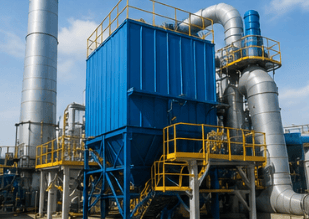
Cyclones use rotating gas flow to create centrifugal force and separate larger particles from the gas. Their simple structure, high-temperature tolerance, and relatively low maintenance make them common pre-collection devices, but their ability to collect fine particles is normally limited.
A fabric filter passes dust-laden gas through filter bags, and particles accumulate on the filter material and the dust cake formed on its surface. This type of Dust Removal Equipment can remove fine particles effectively, but the filter material must withstand gas temperature, chemical conditions, moisture, and abrasion.
An electrostatic precipitator uses a high-voltage electric field to charge particles and collect them on electrode plates. It is suitable for large gas volumes and has low pressure loss, but collection performance is affected by dust resistivity, gas-flow distribution, and electrical-field condition.
A wet dust collector uses contact between liquid and contaminated gas to capture particles and may also remove selected soluble gases. It is suitable for some high-temperature, sticky, or fire-risk dust applications, but it creates wastewater, sludge, and corrosion challenges.
Dust-control technologies can be combined. A cyclone may remove large particles first and reduce wear on downstream filter bags, while a fabric filter controls the fine-particle fraction. The project should define the role of each device according to inlet loading and the emission target.
Combustible dust requires an additional explosion-risk assessment. High dust concentrations may accumulate inside the collector, and a spark or hot particle can initiate combustion or explosion. Grounding, explosion venting, isolation, and spark detection should match the process risk.
Sound dust-control selection should consider emission requirements, pressure loss, electricity use, water consumption, filter life, dust disposal, and maintenance space. The highest single-device collection efficiency does not necessarily produce the lowest lifecycle cost.