Meta's Non-Invasive Brain-Computer Interface Research: Up to 78% Accuracy in Decoding Magnetoencephalography Signals
en.Wedoany.com Reported - Meta has announced its brain-computer interface research results, Brain2Qwerty v2. This study utilizes artificial intelligence to reconstruct natural language from brain activity generated when subjects type, aiming to provide a non-invasive text communication method for individuals who have lost the ability to speak or move due to brain injury, stroke, or neurological diseases.

Unlike brain-computer interfaces that require surgically implanted electrodes, the Brain2Qwerty v2 project uses a magnetoencephalography (MEG) device to record the weak magnetic fields generated by the brain's neural activity to obtain signals. An AI model then analyzes these signals and outputs information.
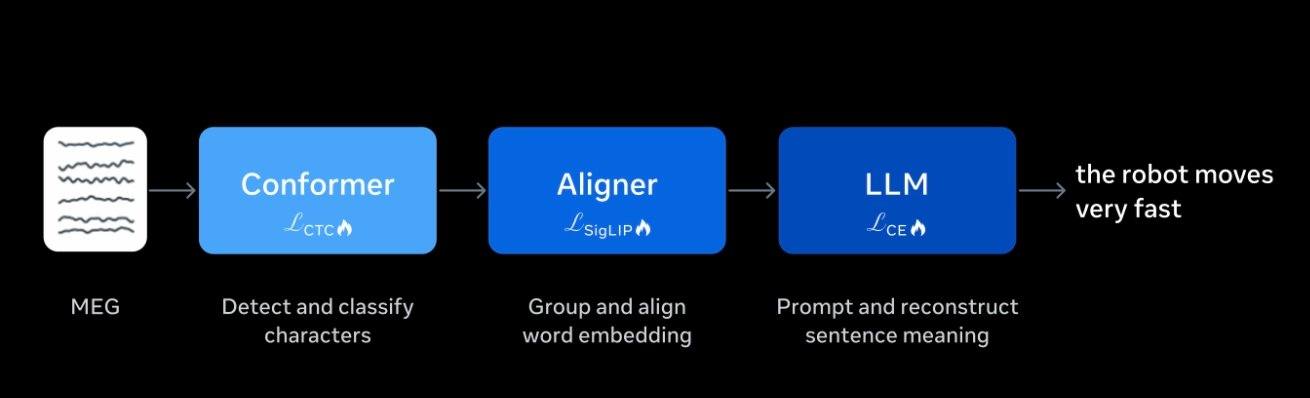
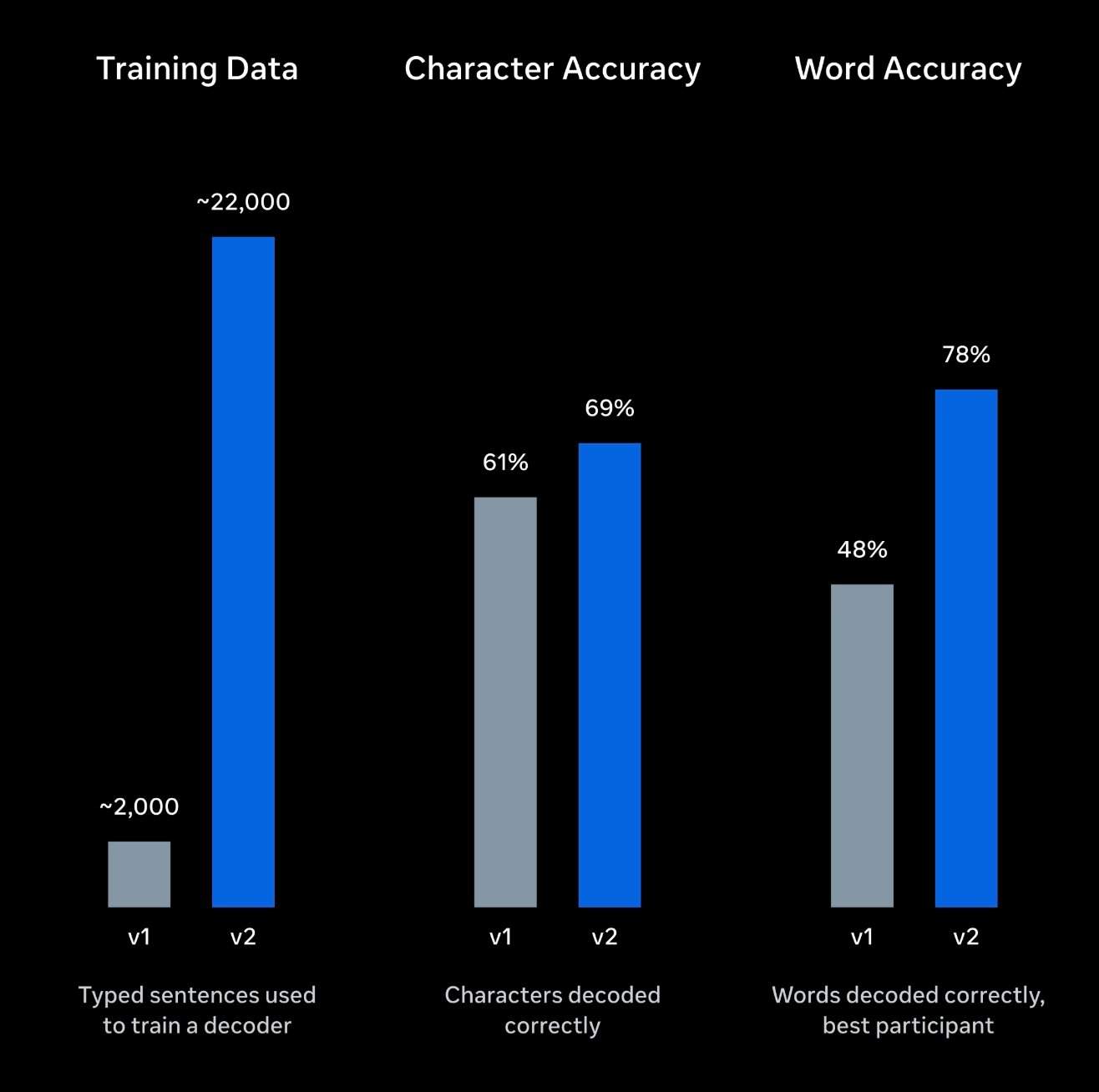
The AI model was trained on data from nine volunteers, including 22,000 sentences and approximately 10 hours of brain activity recordings. Meta specifically fine-tuned the model to utilize contextual semantic information to complete and correct high-noise brain signals, thereby generating more coherent and natural sentences.
According to experimental results published by Meta, Brain2Qwerty v2 currently achieves an average word recognition accuracy of approximately 61%, corresponding to an average word error rate (WER) of about 39%. In the best-performing subject, accuracy reached up to 78%, and in over half of the test sentences, there was no more than one word error.
The technology still has significant limitations. The experiments were conducted in a highly controlled environment, requiring patients to use large laboratory-grade MEG equipment to accurately output magnetoencephalography signals. In terms of equipment cost, size, and daily use scenarios, there remains a considerable gap before practical application.
Currently, Meta has open-sourced the training code for Brain2Qwerty v1 and v2 on GitHub. The collaborating institution, Basque Center on Cognition, Brain and Language, has also released the v1 dataset, and the v2 dataset will be made available after the paper is formally accepted.
Related Products



Automatic Aiming Laser Remote Obstacle Removal Robot
Pinggao Group Weihai High-Voltage Apparatus Co., Ltd.
20 Inch 1600*900 Full HD 60Hz TFT LED Monitor with VGA and DP Interfaces for Desktop Computers-Business Use
Guangzhou Zanying Optoelectronics Technology Co., Ltd.
Industrial and Commercial Point-Type Gas Detector
Jinan Benan Technology Development Co., Ltd.

Mine Explosion-proof and Intrinsically Safe Industrial Ethernet Ring Network (10 Gigabit/Gigabit)
Chongqing Mas Sci&Tech Co., Ltd.
Conveyor Belt Intelligent Monitoring System
LUO YANG WIRE ROPE INSPECTION TECHNOLOGY CO., LTD.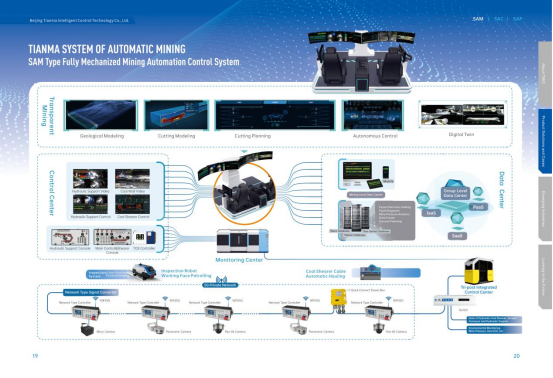
Comprehensive Mining Automation Control System
Beijing Tianma Intelligent Control Technology Co., Ltd.