Indian Steelmakers Invest 700 Billion Rupees, India Becomes Top Destination for US Met Coal Exports
en.Wedoany.com Reported - Indian steel manufacturers have entered a multi-year investment cycle, with the top four producers announcing a 40% year-on-year increase in capital expenditure for fiscal year 2027, committing 700 billion rupees. This announcement redefines a question that has plagued the US metallurgical coal industry for decades: the issue is not whether the industry can survive, but where it will survive.
The traditional narrative holds that US metallurgical coal is an industry in managed decline, but evidence suggests otherwise. It is an industry that, having lost its domestic market, has spent four decades serving the expansion of others. As US blast furnaces shrank, coke production has fallen by 80% since 1980. US producers turned to overseas markets. In 2024, India became the single largest destination for US metallurgical coal exports for the first time.
India's blast furnace capacity is expanding. Under the targets of the National Steel Policy, India plans to achieve 300 million tonnes of crude steel capacity by 2030 and 400 million tonnes by the mid-2030s. Companies such as JSW Steel and Tata Steel are building blast furnaces designed for a 40-year lifespan, rather than facilities that flex with price cycles.
India relies on imports for about 90% of its metallurgical coal. Domestic reserves have high ash content and are unsuitable for large-scale steelmaking, making import dependency structural rather than temporary. S&P Global expects India's metallurgical coal imports to approach 100 million tonnes by 2030. The capital behind this is committed, not speculative.
India's shift from concentrated supply from Australia to diversified supply is a deliberate strategic move. Australia supplies about 72% of India's coking coal imports, a concentration that creates supply vulnerabilities India has publicly identified as a geopolitical risk. Diversification is by grade: Russia supplies high-volatile and semi-soft coal at discounted prices, used to extend blending ratios rather than as a base coal; while high-grade hard coking coal, used to enhance coke strength for world-class steel production, comes from fewer suppliers. US coal plays precisely this role: not the cheapest ton, nor a full replacement for Australian supply, but a high-grade coal that only a few countries can provide at scale.
The February 2026 US-India joint statement formalized this relationship. India committed to purchasing $500 billion in US energy products over five years, with coking coal explicitly mentioned. On the US side, critical material designations and reductions in federal coal royalty rates have reshaped the long-term reserve economics for metallurgical coal producers. Combining India's structural import demand and diversification requirements, the policy window and demand window are now aligned—a coincidence that is rare and time-limited.
This opportunity favors US companies with three conditions: long-term reserve resources, low costs, and built and owned export infrastructure. Warrior Met Coal, as a pure-play steelmaking coal producer, has cash costs near $100 per short ton, has continued investing during price weakness, and secured 53 million short tons of federal reserves in Alabama in 2025. Its Blue Creek mine began longwall mining on schedule, driving 2026 production to 12.5–13.5 million short tons. Alpha Metallurgical Resources produces a full range of grades and holds a 65% stake in Dominion Terminal Associates at Newport News, a facility with 22 million tons of capacity, blending capabilities, and customers in 19 countries. Both companies entered this downturn with net cash positions, a balance sheet strength that allows low-cost producers to secure reserves and upgrade pathways as higher-cost competitors contract.
Global coal capital expenditure has fallen by about two-thirds since 2010. Wood Mackenzie expects a supply gap in seaborne metallurgical coal by the mid-2030s as older mines deplete and few new projects are approved. Producers securing reserves now understand that a structural supply shortage is coming, and the window to position for it is the present.
Related Products

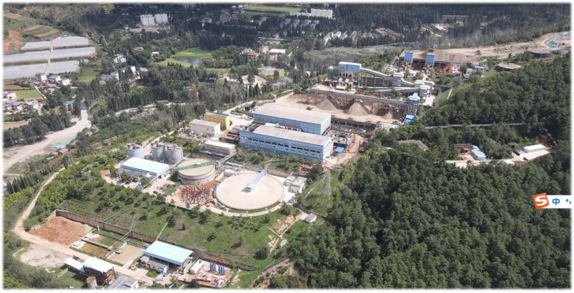
Yunnan Phosphorus Chemical Group Co., Ltd. 2 Million t/a Phosphorus Ore Mining and Beneficiation Project
China Bluestar Lehigh Engineering Corporation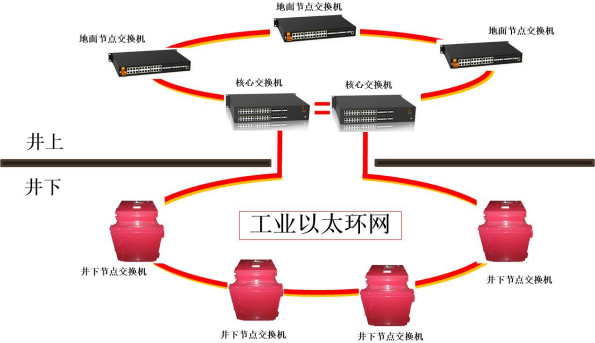
Mine Explosion-proof and Intrinsically Safe Industrial Ethernet Ring Network (10 Gigabit/Gigabit)
Chongqing Mas Sci&Tech Co., Ltd.
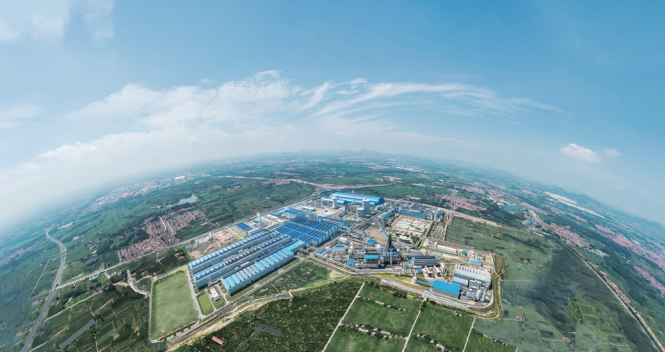
Linyi Steel Investment Special Steel 2.7 Million Tons per Year High-quality Special Steel Project
Capital Engineering & Research Incorporation Limited