P3 Media Launches Forward Deployed Engineering Practice to Accelerate Brand AI Deployment
en.Wedoany.com Reported - P3 Media has announced the launch of its Forward Deployed Engineering practice, aimed at helping mid-market and enterprise-level commercial brands transition from artificial intelligence experimentation to operational deployment. As a Shopify Platinum Partner specializing in complex e-commerce, point-of-sale, and unified commerce transformations, the new service embeds senior AI-native commerce engineers directly within client organizations to build production-ready AI workflows, deliver business functionality, improve internal efficiency, and train client teams to effectively use AI within their existing technology environments.
This launch comes as business leaders prepare for the next phase of AI adoption: agentic commerce. As AI agents begin to assist and execute workflows in merchandising, customer service, catalog operations, personalization, marketing, analytics, and internal decision-making, brands will need integrated systems, clean data, robust governance, and teams capable of deploying AI safely and effectively in real commercial operations. Many organizations face a common challenge: they understand the strategic importance of AI but lack the internal expertise, operational models, and implementation capabilities to deploy at scale. P3's Forward Deployed Engineering practice aims to bridge this gap for commercial brands.
David Wagoner, co-founder and CMO of P3 Media, stated that every executive team is talking about AI and agentic commerce, but the real opportunity is not just having agents generate content or automate isolated tasks—it lies in redesigning how commerce teams build, operate, merchandise, support customers, and make decisions. This requires people who understand both AI and the realities of complex e-commerce operations.
Unlike traditional agency retainers or consulting engagements, P3's forward deployed engineers work as embedded members of the client team. They participate in stand-ups, operate within client systems, collaborate with internal engineering and business stakeholders, and focus on delivering practical AI-driven solutions that can be maintained and scaled by the client organization.
The practice encompasses four core service areas. In AI Commerce Engineering, senior Shopify and commerce engineers build AI-native features and processes directly within production commerce environments, covering personalization, content operations, merchandising support, automation, internal tools, and agentic commerce use cases. AI Team Enablement involves hands-on training and capability transfer within real sprint work, helping client teams develop practical AI proficiency in prompt design, tool selection, workflow automation, documentation, governance, and agent-assisted operational models. Commercial AI Infrastructure includes technical architecture, data workflows, model routing, observability, reliability planning, and integration support, designed to make AI systems and commerce agents usable in enterprise environments. AI Efficiency Audits provide structured diagnostics to identify where AI and agent workflows can reduce manual overhead in catalog operations, merchandising, customer service, order fulfillment, marketing, and internal decision-making.
Wagoner added that success in AI adoption does not come from companies buying more tools. It only succeeds when teams know where AI creates leverage, systems are integrated into actual workflows, and people within the organization understand how to use and extend what has been built. Agentic commerce is only valuable when it connects to how teams actually operate, which is why capability transfer is central to this practice.
P3's Forward Deployed Engineering practice builds on the company's work delivering complex Shopify and unified commerce implementations for high-growth and enterprise-level brands. The agency has supported major transformations in e-commerce, retail, B2B, and omnichannel commerce, with client and project experience spanning brands such as ALDO Group, David's Bridal, GIII Apparel, Spectrum Brands, Karl Lagerfeld Paris, DKNY, Follett, and Invicta Stores.
The new service area also reflects a shift in how commercial organizations approach AI. Early AI adoption has often been dominated by experimentation, isolated pilots, and one-off productivity tools. P3 believes the next phase will be defined by integrated AI systems, agent workflows, embedded technical leadership, operational change management, and measurable business outcomes.
Aanarav Sareen, CEO and co-founder of P3 Media, noted that large organizations do not struggle with AI due to a lack of ambition; they struggle because AI must adapt to real systems, governance, data, and operational teams. Commerce is particularly complex, as every AI decision impacts customer experience, inventory, pricing, order fulfillment, merchandising, and brand trust. As agentic commerce becomes more important, brands will need technology partners that can help them move from theory to production, and the forward deployed engineering model provides clients with senior technical capabilities embedded within their business. P3 designed this practice for organizations that need to move faster than traditional agency models allow, including brands with stretched internal engineering teams, ambitious AI roadmaps, complex Shopify or commerce architectures, major platform initiatives, or workflows ready for automation. A forward deployed engineering engagement can start with a single embedded senior engineer and scale into a larger cross-functional P3 team as client needs grow. Each engagement is designed around specific business outcomes, such as faster feature delivery, reduced manual workflows, improved data visibility, enhanced internal AI capabilities, agent workflow deployment, and production-ready AI implementations.
For business leaders, the question is no longer whether AI matters, but whether their organization can adopt it in a way that is useful, safe, scalable, and commercially meaningful. Agentic commerce has the potential to transform how brands operate, but only if deployed with the right architecture, workflows, and human oversight. The Forward Deployed Engineering practice is now available to qualified mid-market and enterprise-level commercial organizations.
Related Products



Multi-function Marine Monitoring Low-altitude Detection Radar Sea-air Boundary Ocean Dynamic Environment Measurement
Chengdu Dixin Technology Co., Ltd.
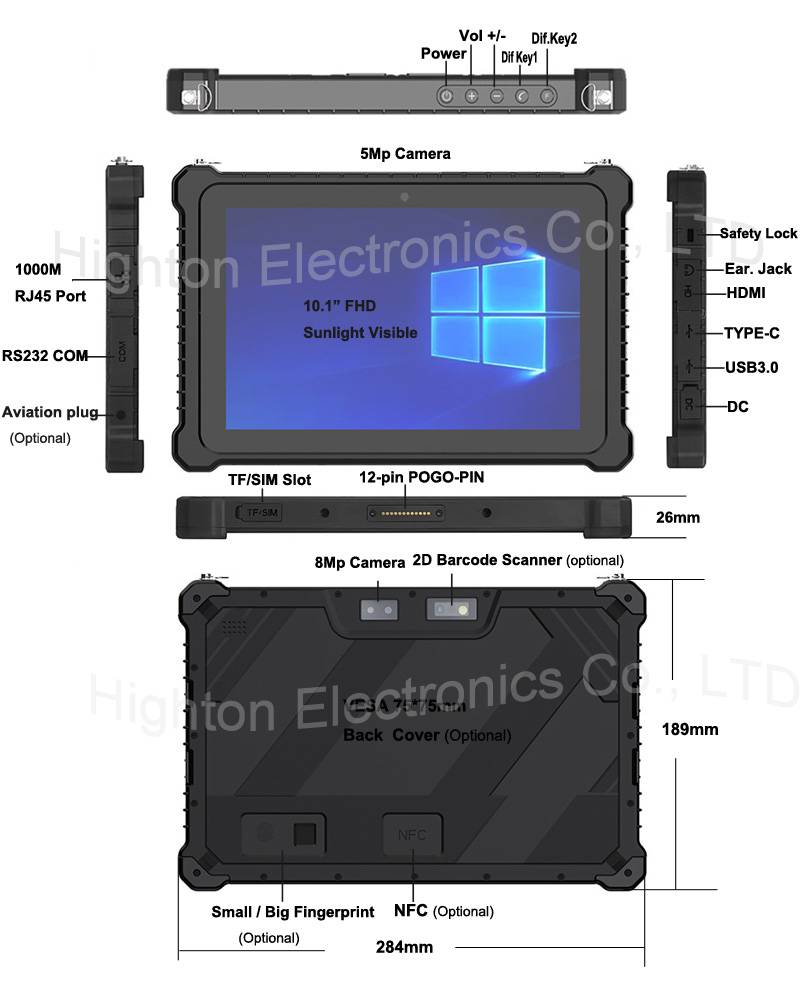
Hot Selling 10 Inch Intel N5100 I5 I7 FHD 8 +128GB 16+256GB Win10 Pro Win11 Pro 4G 5G Rugged Tablet PC Pad with NFC Barcode
Highton Electronics Co., Ltd.
TWP16 P-Band Tropospheric Wind Profile Radar
China Huayun Meteorological Technology Group Co., Ltd.
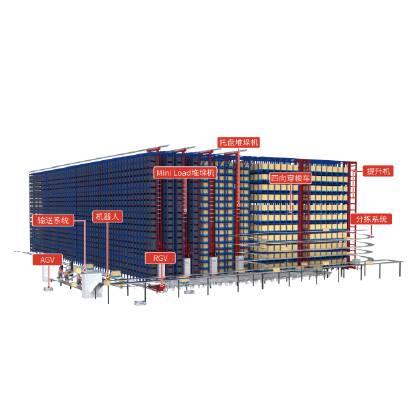


Mine Explosion-proof and Intrinsically Safe Industrial Ethernet Ring Network (10 Gigabit/Gigabit)
Chongqing Mas Sci&Tech Co., Ltd.