Cyient Unveils Intelligent Network Modernization Blueprint with Approximately 40 rApps
en.Wedoany.com Reported - Arunav Roy, Senior Vice President and Head of Connectivity at Cyient, stated at the DTW Ignite conference in Copenhagen that the company's strategy is rapidly evolving as operators' priorities become clearer. He noted that the pace of change is more significant than ever, with changes now being discussed in terms of weeks.
Across the telecom industry, the vision of AI-enhanced networks and increasingly autonomous operations is not new, but translating ambition into infrastructure and operational reality remains challenging. Operators are still managing fragmented OSS/BSS environments, multi-vendor architectures, and manual operational processes, while under pressure to improve cost efficiency and find new monetization avenues for 5G and future network investments.
Cyient's intelligent network modernization approach is built around three mutually reinforcing layers: network engineering, data foundation, and cognitive operations. The first layer focuses on planning, building, and operating the network itself, including leveraging AI-assisted engineering, simulation, and domain expertise to help operators optimize coverage, capacity, resilience, energy efficiency, and service performance across wireless, transport, and core network domains.
Roy emphasized that the industry's ability to effectively utilize AI increasingly depends on the data foundation. For years, operators have discussed data quality, data preparation, and OSS modernization, but the scale, speed, and operational importance of data generated across network and IT systems have now significantly increased. Even to make AI models more effective, clean data is required, and creating context for content generated by AI models needs a clear foundation, structure, and governance.
This foundation is key to achieving cognitive operations. As operators pursue higher levels of automation in their long-term quest for autonomy, the challenge lies in creating conditions where automation is trustworthy, explainable, and operationally meaningful. Roy pointed out that most operators are still in relatively early stages of automation, with many at Level 1 or Level 2 of the TM Forum's six-level Autonomous Network Maturity Index. Moving to Level 3, Level 4, and beyond requires clean data, clear use cases, standardized interfaces, and a practical roadmap for introducing automation.
Cyient's approach is designed to be modular rather than monolithic. Its intelligent network modernization technology stack is powered by VISMON AI, an IP-based platform approach typically bundled as an enabling layer into Cyient's services. Operators can engage Cyient around specific modules, such as network engineering, data foundation, or cognitive NOC capabilities, or pursue a comprehensive modernization program. Roy stated that Cyient's differentiation lies in its ability to work across multiple domains and vendors, leveraging over 30 years of knowledge in solving problems for telecom operators.
These experiences also inform Cyient's work in rApp and SMO-enabled automation. The company has built a catalog of approximately 40 rApps targeting use cases such as dynamic configuration management, conflict management, and energy efficiency. The goal is to package long-standing operator pain points into modular, deployable applications that can run on emerging automation architectures.
Cyient's stance is that intelligent network modernization is not about using AI as a slogan, but rather combining telecom domain knowledge, engineering discipline, clean data, and cognitive operations to help operators modernize their networks in a reliable, auditable, and results-driven manner. Roy stated that Cyient has taken a bold stance, aligning its investments with the savings, efficiency, and operational outcomes that operators need most. For telecom operators facing cost pressures, complexity, and growing expectations, this could be the difference between AI experimentation and AI-enhanced transformation.
Related Products


MUX Series Communication Interface Device for Security and Stability Control System
Nanjing NR Electric Co., Ltd.
Conveyor Belt Intelligent Monitoring System
LUO YANG WIRE ROPE INSPECTION TECHNOLOGY CO., LTD.
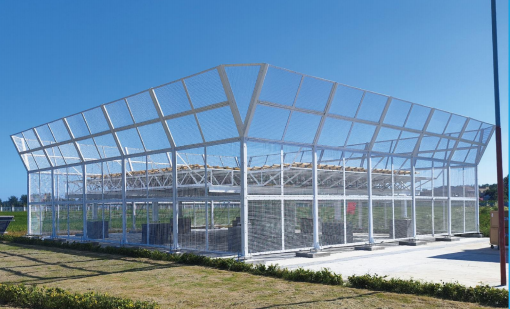
TWP16 P-Band Tropospheric Wind Profile Radar
China Huayun Meteorological Technology Group Co., Ltd.


GYTA Type Non-Self-Supporting Aerial/Duct Optical Cable
TONGDING INTERCONNECTION INFORMATION CO., LTD.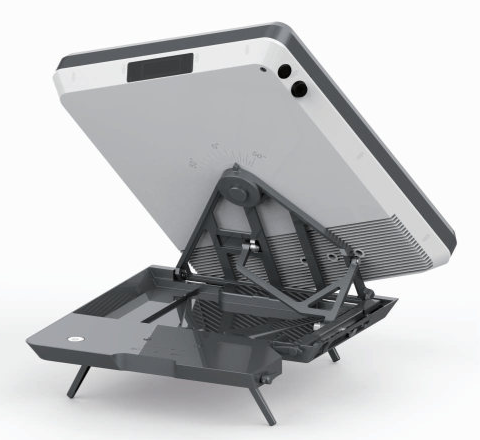
Flat Portable Satellite Terminal 0.35m Aperture Manual Portable Terminal
China Starwin Science & Technology Co., Ltd.