Classiq and Pontificia Universidad Católica de Chile Collaborate on Quantum AI
en.Wedoany.com Reported - Classiq has launched a joint research project with Pontificia Universidad Católica de Chile (UC Chile) to develop hybrid quantum algorithms for biomedical image analysis. The project leverages classical machine learning and the NVIDIA CUDA-Q platform for quantum-classical computing.
The 12-month collaboration, titled "Enhancing Pathology through Quantum Computing," is funded by Avanza UC 2025 (UC Chile's internal research and creation competition).
This marks the first public alliance in Latin America to combine quantum computing, machine learning, and computational pathology.
The collaboration underscores the growing influence of quantum computing and Classiq in Latin America, as well as Classiq's expanding partnerships with academic, research, and public institutions, including in the health innovation sector. It also strengthens Chile's emerging role in quantum computing, artificial intelligence, and advanced technology development.
Quantum machine learning applies quantum computing methods to machine learning problems such as classification, pattern recognition, and complex data analysis. The initial project focuses on renal pathology, a field of growing public health importance in Chile and across Latin America.
Research includes applying quantum machine learning to computational pathology, automatic glomerular segmentation, and semantic pattern search across entire histological sections. This work will be conducted in collaboration with Dr. Luciano Rebouças and Dr. Washington Conrado, researchers from the Oswaldo Cruz Foundation (Fundação Oswaldo Cruz, FIOCRUZ) in Brazil, as well as professors and researchers from the Federal University of Bahia (Universidade Federal da Bahia, UFBA). The collaboration combines expertise in digital pathology, computer vision, and biomedical data analysis, using curated histopathological datasets provided by Brazilian institutions.
The research will utilize the Classiq quantum computing software platform and the NVIDIA CUDA-Q platform, providing a seamless workflow from algorithm development to simulation and execution.
Nir Minerbi, CEO and co-founder of Classiq, stated that Latin America possesses the scientific talent, institutional momentum, and public health needs to support the next phase of quantum computing applications. This collaboration integrates quantum software engineering, machine learning, and biomedical data expertise into a single workflow and project, helping to strengthen the regional quantum ecosystem while exploring practical research pathways in health.
The project will be led by Dr. Dardo Goyeneche from the Faculty of Physics at Pontificia Universidad Católica de Chile. The team also includes Dr. Daniel Uzcátegui from Universidad Católica de la Santísima Concepción, whose research spans machine learning and quantum information theory.
Dr. Goyeneche said the project connects fundamental quantum research with a significant biomedical challenge. By collaborating with Classiq and partners in Chile and Brazil, they are creating a regional platform for quantum machine learning in health, while enabling researchers to gain experience with modern quantum software engineering workflows used in international research and industry.
Researchers will use the Classiq platform to model, synthesize, and optimize quantum convolutional neural networks, variational quantum classifiers, and quantum kernel methods. Selected algorithms will be simulated on NVIDIA AI infrastructure, executed on IonQ quantum hardware, and benchmarked against classical machine learning methods using standard computer vision metrics.
The collaboration aligns with Chile's National Strategy for Quantum Technologies 2025-2035 and supports UC Chile's plans to expand quantum computing research and education under the Faculty of Physics' 2025-2029 strategic plan.
Related Products





Mine Explosion-proof and Intrinsically Safe Industrial Ethernet Ring Network (10 Gigabit/Gigabit)
Chongqing Mas Sci&Tech Co., Ltd.

G.652.D Wavelength-extended Non-dispersion Shifted Single-mode Optical Fiber
HONGAN GROUP CO., LTD.
Flat Portable Satellite Terminal 0.35m Aperture Manual Portable Terminal
China Starwin Science & Technology Co., Ltd.
TWP16 P-Band Tropospheric Wind Profile Radar
China Huayun Meteorological Technology Group Co., Ltd.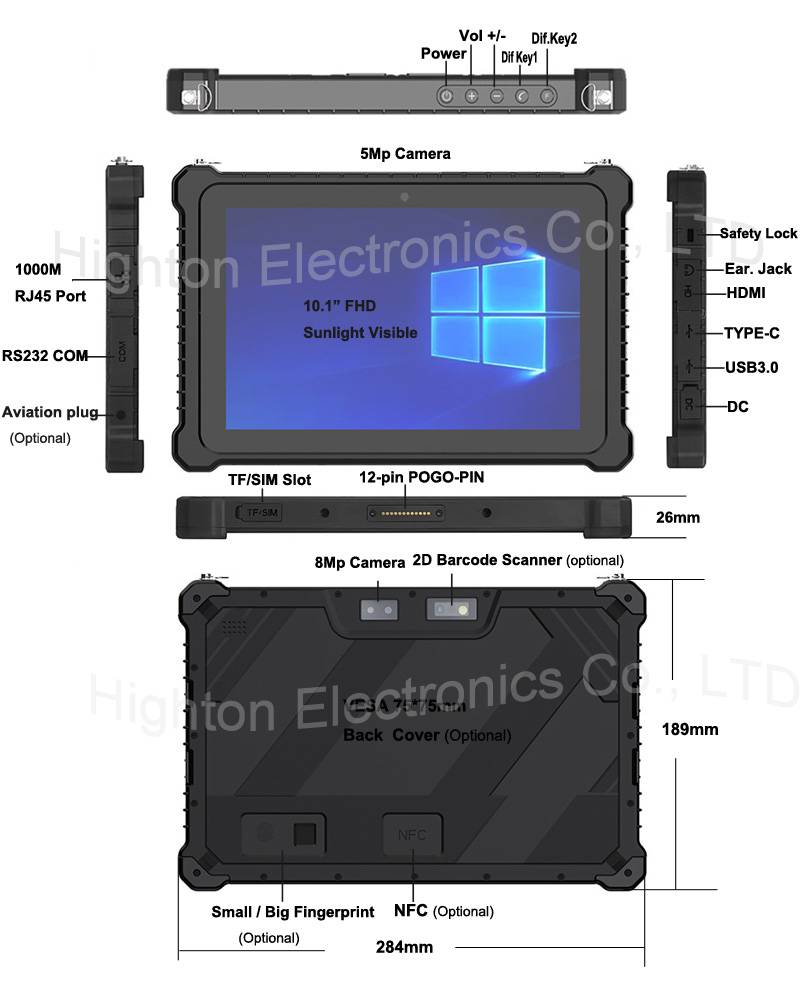
Hot Selling 10 Inch Intel N5100 I5 I7 FHD 8 +128GB 16+256GB Win10 Pro Win11 Pro 4G 5G Rugged Tablet PC Pad with NFC Barcode
Highton Electronics Co., Ltd.