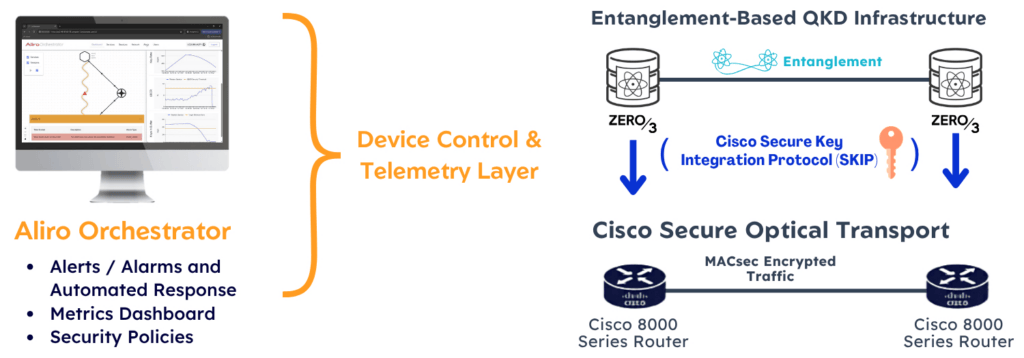
France's CEA-Leti Receives Carnot Funding to Study QKD Physical Layer Vulnerabilities
en.Wedoany.com Reported - The French Alternative Energies and Atomic Energy Commission's Laboratory for Electronics and Information Technology (CEA-Leti) has revealed physical layer vulnerabilities in quantum key distribution (QKD) systems during actual deployment by studying the interface between optical and digital signals. The three-year Carnot project SEQUENCES specifically investigates side-channel attacks targeting the optoelectronic conversion interface of QKD systems. Unlike traditional cryptography and post-quantum cryptography, the security of quantum cryptography relies on the laws of quantum physics, with weaknesses primarily stemming from physical implementation rather than mathematical algorithms. Mikael Carmona, head of the hardware security department at CEA-Leti, pointed out that theoretical absolute security may introduce vulnerabilities in actual system implementation.
The SEQUENCES project focuses on characterizing potential physical attacks on QKD systems, with particular attention to whether side-channel observation attacks pose a threat to key confidentiality. Researchers believe that variations in power consumption or electromagnetic radiation during photon detection and processing may leak transmitted data. Loïc Mangin, a research engineer at CEA-Leti and evaluator at its ITSEF laboratory, elaborated on this core issue. He stated that the photon detection and processing process is a potential vulnerability point, as each key distribution system transmits photons through optical fibers for quantum communication. The research team explored whether side-channel observation attacks exploiting unintentional physical radiation could compromise key confidentiality, investigating the correlation between power consumption fluctuations or electromagnetic radiation during photon detection and the transmitted data.
The increasingly widespread deployment of QKD systems has driven in-depth research into their security. The optoelectronic conversion interface, which converts photon signals into the digital signals required to establish keys, forms a unique attack surface distinct from weaknesses in traditional cryptography. Overcoming such physical vulnerabilities requires new security assessment methods, which have received limited attention in previous scientific literature. The research findings of the SEQUENCES project complement the QCommTestbed initiative, establishing a coordinated national testing platform for quantum technologies in France.
The project's progress heavily relies on funding from the Carnot program. Carmona stated that this funding is crucial for acquiring quantum cryptography systems, which are key equipment for characterizing potential physical attacks. Researchers emphasized that if an attacker gains access to a QKD system, they could compromise the confidentiality of generated keys through physical attacks, highlighting the importance and urgency of security assessments. The project's outcomes have enhanced CEA-Leti's ability to evaluate QKD technology as it matures, contributing to the industrial and institutional quantum cryptography community.
Related Products

Flat Portable Satellite Terminal 0.35m Aperture Manual Portable Terminal
China Starwin Science & Technology Co., Ltd.

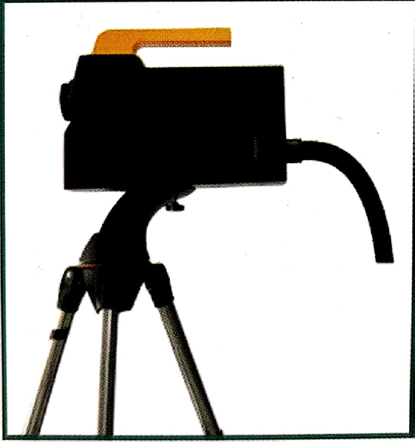
Automatic Aiming Laser Remote Obstacle Removal Robot
Pinggao Group Weihai High-Voltage Apparatus Co., Ltd.
GYTA Type Non-Self-Supporting Aerial/Duct Optical Cable
TONGDING INTERCONNECTION INFORMATION CO., LTD.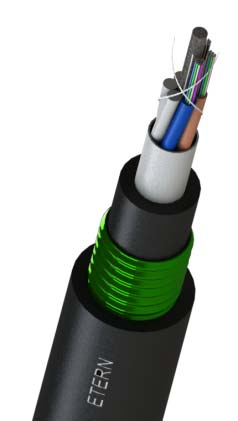
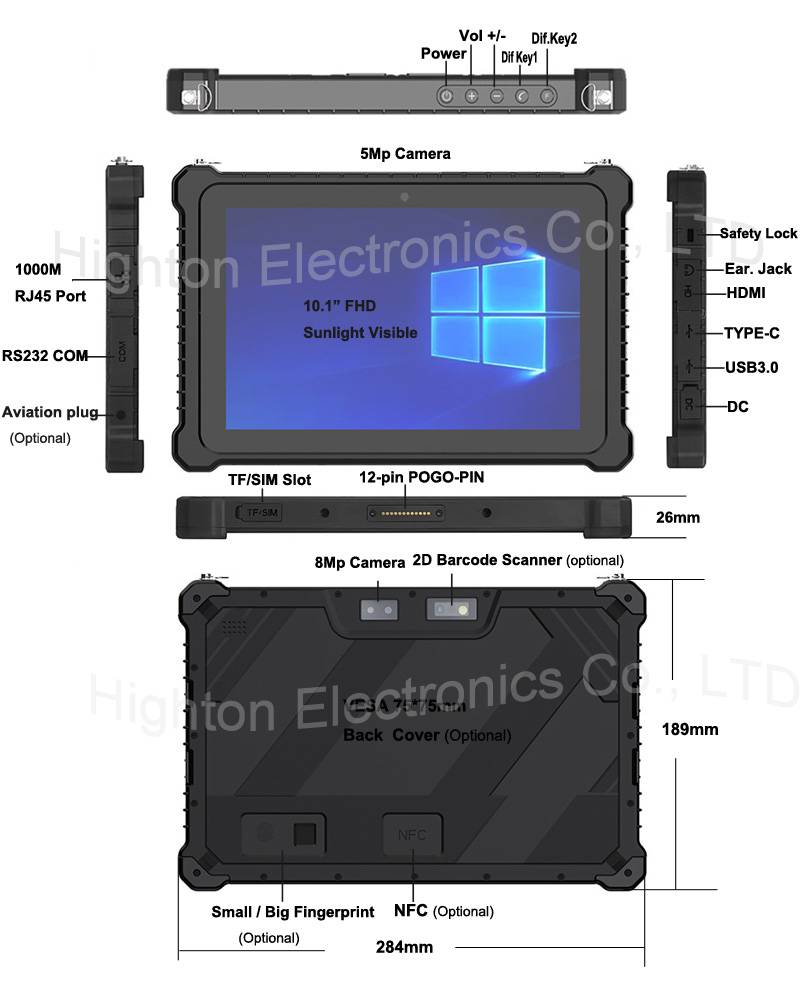
Hot Selling 10 Inch Intel N5100 I5 I7 FHD 8 +128GB 16+256GB Win10 Pro Win11 Pro 4G 5G Rugged Tablet PC Pad with NFC Barcode
Highton Electronics Co., Ltd.
MUX Series Communication Interface Device for Security and Stability Control System
Nanjing NR Electric Co., Ltd.