Cisco Deploys Nearly 600 Wi-Fi 7 Access Points for the U.S. Open
en.Wedoany.com Reported - Cisco provides network, security, and observability infrastructure for the United States Golf Association (USGA) to operate the 126th U.S. Open Championship at Shinnecock Hills in New York, USA.

The network solution supports connectivity, spectator management, ticketing, merchandise sales, and digital services across the entire venue. The USGA built a temporary network across the expansive event area rather than relying on a permanent stadium-style environment. The deployment includes nearly 600 Wi-Fi 7 access points, 120 Meraki security cameras, Cisco switching and firewall equipment, and Splunk-based analytics and observability tools.
The USGA stated that the environment must support tens of thousands of spectators moving across the course while also handling operational systems and the growing volume of user-generated content from on-site fans, media, and influencers.
Unlike large venues with fixed infrastructure, the U.S. Open requires the network to be reinstalled and reconfigured for each tournament. The network must support high-density crowds spread across hundreds of acres, with demands shifting as spectators follow players around the course. Coverage must move with the crowd, and network capacity must handle traffic spikes when large numbers of spectators gather around leading players or during critical moments of the competition.
Rob Neumann, Cisco's Director of Technology Sponsorships, said the challenge is maintaining connectivity for fans moving around the course. "With our latest Wi-Fi 7 products, we are able to achieve this." Neumann noted that usage patterns at golf events have changed, with more people creating and posting content on-site rather than simply consuming it. "Now at golf events, there are more people uploading content than downloading it. A large portion of this comes from content creators—all the influencers and others who want to post their content live from the venue." Cisco stated that Wi-Fi 7 provides the USGA with additional headroom to meet these demands, as the new standard is designed to improve speed and capacity in dense environments.
The USGA also uses Cisco and Splunk tools to provide its IT team with a unified operational view of the event network. From the organization's mobile command center, staff can monitor connectivity, device performance, security, and operational data across the entire venue. Anthony Santora, Managing Director of IT at the USGA, said the command center dashboard gives the team a single view of the entire network coverage and helps them quickly respond to issues that arise. Camera deployment is part of this operational layer. Video streams from Meraki cameras are shared with law enforcement and the USGA operations team to monitor the flow of people around the venue, including road traffic, bus queues, and concession stand lines. Santora said, "As far as cameras go, we deploy them everywhere. The operations team uses them to monitor things like traffic flow on the highway, how long it takes people to get off the bus, or whether the lines at concession stands are too long. They make real-time decisions based on what they observe." Cisco stated that the combination of network, cameras, security, and observability allows the USGA to use the same environment for both fan-facing connectivity and internal event operations.
Christian Rodriquez, Senior Manager of IT Operations at the USGA, said that resilience and redundancy are central to the organization's infrastructure needs, given the outdoor conditions and the requirement to keep services running throughout the tournament. "The way Cisco builds access points, and the way redundancy is built in before we even configure anything, is amazing. These solutions are out in the field. You see the weather conditions they are exposed to. We have never had an environment-related issue. From the hardware to the technology to all the configurations. Honestly, why wouldn't we use it?"
Santora said the quality of the wireless experience has become so apparent that users contact the IT team to praise it rather than report problems. "I received a call saying, 'What's going on with the Wi-Fi here? It's incredibly fast, it's amazing,'" Santora said. "I said, 'Oh my gosh, this is the first time I've gotten a call for a positive reason.'"
This year's event also highlighted the role of AI in operations and fan services. The USGA launched Rules AI, a digital assistant integrated into its mobile app that answers golf rules questions in plain language. The tool was trained on over 25,000 validated rules queries. Santora said Cisco AI Defense was used as a security layer for the app. "AI Defense is our first—and last—line of defense." He said the USGA is also exploring Cisco's intelligent agent AI tools to help tune the network, identify issues, and provide optimization recommendations for the small IT and security team managing the large-scale event. Santora said, "We are very excited to use AI to tune the network, find problems, or optimize things. Tools like intelligent agents can provide us with expert-level advice that we might not otherwise have access to."
Related Products


MUX Series Communication Interface Device for Security and Stability Control System
Nanjing NR Electric Co., Ltd.
Industrial and Commercial Point-Type Gas Detector
Jinan Benan Technology Development Co., Ltd.



Multi-function Marine Monitoring Low-altitude Detection Radar Sea-air Boundary Ocean Dynamic Environment Measurement
Chengdu Dixin Technology Co., Ltd.

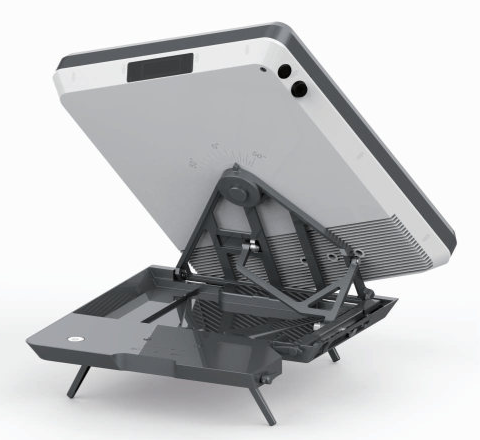
Flat Portable Satellite Terminal 0.35m Aperture Manual Portable Terminal
China Starwin Science & Technology Co., Ltd.
TWP16 P-Band Tropospheric Wind Profile Radar
China Huayun Meteorological Technology Group Co., Ltd.
Mine Explosion-proof and Intrinsically Safe Industrial Ethernet Ring Network (10 Gigabit/Gigabit)
Chongqing Mas Sci&Tech Co., Ltd.