Italy's AIIP Signs Agreement with Coldiretti to Cover 1.5 Million Agricultural Enterprises with Fiber Optics in Three Years
en.Wedoany.com Reported - The Italian Internet Providers Association (AIIP) has signed a Memorandum of Understanding with Coldiretti aimed at laying fiber optic networks to agricultural enterprises, farmhouses, and farms in the country's rural areas, targeting remote agricultural entities that are not yet connected to fiber optics. The agreement was signed today at the association's annual event held at Palazzo Rospigliosi in Rome by AIIP President Giuliano Claudio Peritore and Coldiretti President Ettore Prandini. Given that Coldiretti has 1.5 million member enterprises, AIIP's local operators plan to focus on these businesses over the next three years to achieve comprehensive fiber optic coverage in rural and the most difficult-to-reach areas.
On this occasion, AIIP has requested the government, particularly the Ministry of Agriculture, to provide dedicated vouchers for farmers for fiber optics, arguing that such incentives are crucial to cover the costs of fiber optic connections in remote and radar-difficult areas. This digitalization effort will lay the foundation for the widespread adoption of precision agriculture tools and predictive planting tools, which rely on software and systems including artificial intelligence to calibrate agricultural activities.
AIIP President Giuliano Claudio Peritore stated that through this agreement, food sovereignty is now combined with digital sovereignty. Agricultural enterprises and AIIP's member operators are both local businesses, and this Memorandum of Understanding will provide an opportunity for dialogue and mutual development. He emphasized that agricultural enterprises must not be overlooked in the digitalization process, as they produce essential food and make significant contributions to Italy's high-quality supply chains worldwide. AIIP has a responsibility to accompany these enterprises on their digital development path, supporting them in enhancing security, productivity, sustainability, competitiveness, resilience, and innovation through collaboration among local businesses.
Coldiretti President Ettore Prandini noted that innovation and data management are increasingly important in the agricultural sector today. Over the past few years, 2.5 billion euros have been invested in agricultural development, with a target of reaching 6 billion euros by 2030. He believes that without fiber optics, initiatives like Industry 4.0 and Industry 5.0 are unimaginable, as fiber optics are the necessary infrastructure for utilizing data across the entire supply chain. This is not just about facilitating work, but also about providing citizens with a mechanism to access correct information. The agri-food sector has become the largest industry, valued at 707 billion euros, employing 4 million people, and with exports reaching 75 billion euros despite tariff impacts. Prandini emphasized that without data management, growth could slow down, making collaboration essential. Rural areas should not lag behind major cities to retain young people and create virtuous mechanisms that allow information to flow globally and add value to tourism.
AIIP Vice President Giovanni Zorzoni stated that the agreement with Coldiretti today is the result of a process that began over three years ago. For a long time, AIIP has believed that its member operators possess the best local skills and sufficient knowledge of the territory to extend fiber optic coverage to all farmhouses. Once digitalized, farmhouses can leverage the advantages of ultra-broadband connections for predictive analysis of data collected in the field. Achieving this requires a stable connection, and even in the agricultural sector, production facilities must be digitalized, with production plans based on the cloud.
Minister of Agriculture, Food Sovereignty and Forestry Francesco Lollobrigida expressed openness to the possibility of introducing dedicated vouchers to promote connectivity in the agricultural sector. He believes the government supports such initiatives, and agriculture has once again become a priority in Europe. Targeted incentives are needed to support businesses. Agriculture 4.0, Agriculture 5.0, and drones will transform agriculture, and it is difficult to achieve truly innovative farming without a network. The government supports strategic investments and will back all actions that bring widespread networks to regions, reconnecting domestic areas and uninhabited zones through a capillary system. Food sovereignty is built in this way.
Senator Luca De Carlo, from the Senate's 9th Standing Committee (Industry, Commerce, Tourism, Agriculture and Agri-Food Production), believes that focusing on internal areas benefits everyone. He emphasized that young people are the future, but digital skills must be taught in schools, and future farmers must be equipped with up-to-date tools. The perception of agriculture must change, supporting public and private infrastructure development, and thinking about future tools. He has pushed for the use of drones in agriculture and noted that only 2.5% of Italy's population works in agriculture, and they cannot be left isolated. He is a fervent supporter of using technology in agriculture, viewing it as a matter of youth and democracy. Despite tariffs, Italy has increased exports to the United States due to product quality.
Pierfrancesco Sbordone from the Digital Transformation Department added that the agricultural sector is very fragmented but must be supported, just as has been done for other sectors like schools and healthcare.
Agid Director Mario Nobile stated that agricultural data should be utilized collectively, and AIIP can serve as a driving force to enable new technologies in the agricultural sector. Aggregation is also needed in agriculture, requiring local data centers and local computing power.
Open Fiber could play a significant role in the AIIP and Coldiretti Memorandum of Understanding. Francesco Nonno, the company's Director of Regulatory and European Affairs, said they are studying how to reach areas in need of coverage and are very willing to cooperate, finding in AIIP an important player due to its territorial coverage. He acknowledged that this will not be easy work, as needs vary and fragmentation is high. The core issue remains funding; vouchers or incentives are desirable because the high territorial dispersion requires economic support, necessitating further backing from the government and the sector.
Alessandro Apòlito, Head of Technical Services and Innovation and Digitalization at Coldiretti, stated that two-thirds of Coldiretti's members are not connected (out of a total of 1.6 million registered members). They have already conducted territorial mapping of their members together with Open Fiber. Eight out of ten businesses want to invest in technology, and the benefits of using AI are well known, although there is the issue that "data collected by barn robots later still belongs to the robots."
Marco Lupo, Director of the Food Sovereignty and Horse Racing Department, said that after the PNRR, further investment is needed in the agricultural sector to bring fiber optics to everyone. They have invested 16 billion euros in the agricultural and agri-food sectors, tripling PNRR funds from 3 billion euros to 9 billion euros. The horizontal value of innovation and digitalization in agriculture is evident; using data can increase yield per hectare by 15%.
Related Products
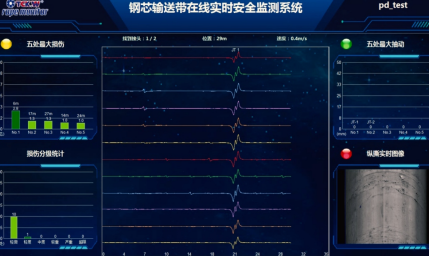

Conveyor Belt Intelligent Monitoring System
LUO YANG WIRE ROPE INSPECTION TECHNOLOGY CO., LTD.
Industrial and Commercial Point-Type Gas Detector
Jinan Benan Technology Development Co., Ltd.
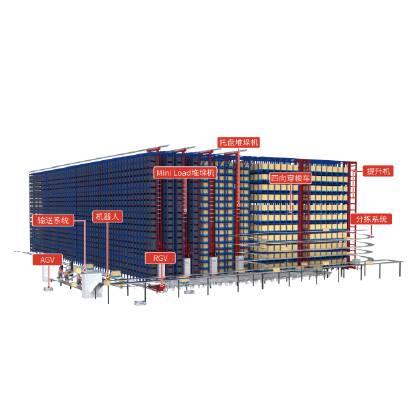

20 Inch 1600*900 Full HD 60Hz TFT LED Monitor with VGA and DP Interfaces for Desktop Computers-Business Use
Guangzhou Zanying Optoelectronics Technology Co., Ltd.

GYTA Type Non-Self-Supporting Aerial/Duct Optical Cable
TONGDING INTERCONNECTION INFORMATION CO., LTD.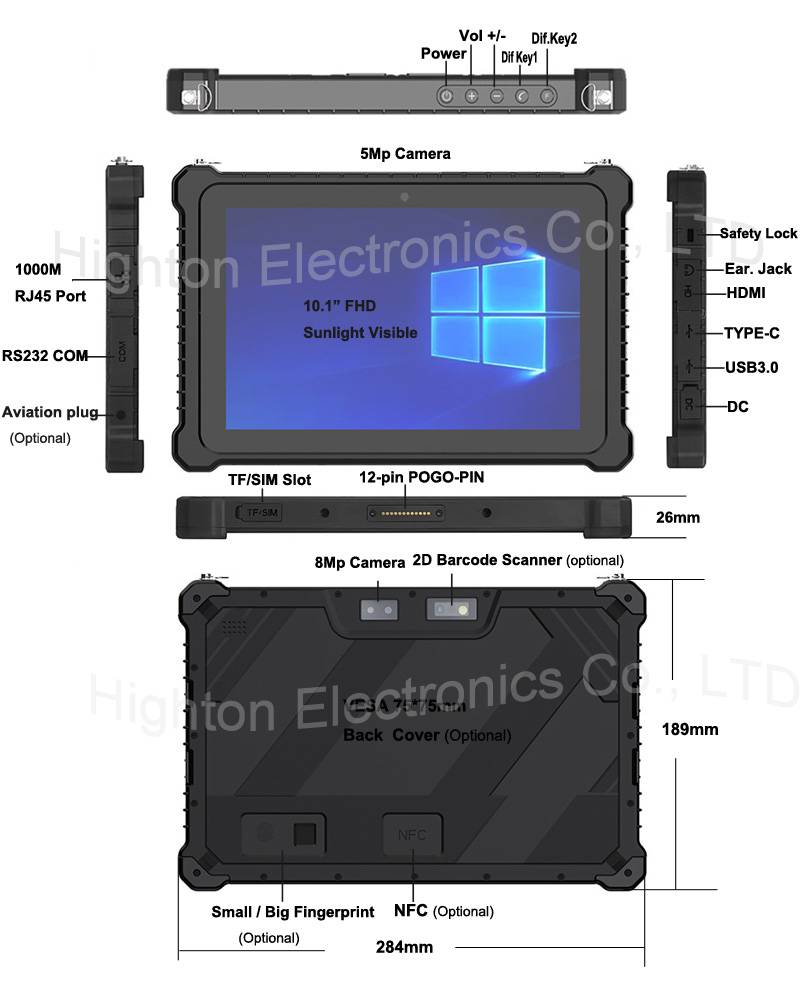
Hot Selling 10 Inch Intel N5100 I5 I7 FHD 8 +128GB 16+256GB Win10 Pro Win11 Pro 4G 5G Rugged Tablet PC Pad with NFC Barcode
Highton Electronics Co., Ltd.