NVIDIA Launches First Full-Stack Robotics Security Architecture
en.Wedoany.com Reported - NVIDIA has introduced the industry's first full-stack security architecture for robotics and physical AI systems—Halos for Robotics—applying safety principles from autonomous vehicles to humanoid robots operating in industrial environments.
This launch marks the first application of Halos beyond the automotive sector. Agility has integrated NVIDIA's Halos for Robotics into its humanoid robot systems deployed at Amazon, GXO, Schaeffler, and Toyota Motor Manufacturing Canada.
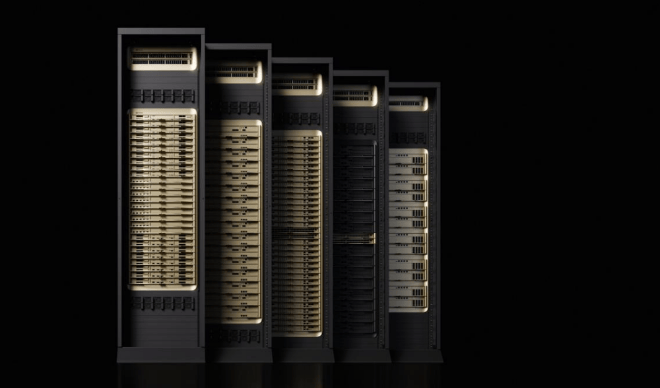
Halos for Robotics combines three technology layers to address safety requirements for autonomous systems. NVIDIA IGX Thor provides industrial-grade AI computing with built-in safety capabilities, the Holoscan Sensor Bridge handles sensor connectivity, and the Halos OS software stack manages safety functions at the operating system level. Additionally, the NVIDIA Halos AI Systems Inspection Lab offers third-party certification services.
Deepu Talla, Vice President of Robotics and Edge AI at NVIDIA, stated that physical AI is transforming how factories, warehouses, and logistics operations work, and robotics teams need a unified safety architecture to scale autonomous systems into these environments. With Halos for Robotics, developers and system builders can leverage NVIDIA's proven autonomous vehicle safety foundation to develop safer robots more quickly.
Agility has deployed Digit humanoid robots using components of NVIDIA's safety system. According to Agility, Digit is the first humanoid robot to operate alongside Microsoft's Arc multi-cloud management platform in production deployment. Peggy Johnson, CEO of Agility, noted that for humanoid robots to create value at scale, safety must be built into the robot and verified throughout the system. Collaborating with NVIDIA to implement and optimize the Halos for Robotics system expands the company's leadership in responsible automation.
Peggy Johnson added that this partnership unlocks true human-robot collaboration, which will power the next generation of manufacturing and logistics operations. Expanding autonomous systems into physical environments raises technical questions about the reliability of AI models. According to the International Federation of Robotics' "World Robotics 2025" statistics, 542,000 industrial robots were installed globally in 2024, more than double the number installed a decade ago. Daniela Rus, Director of the Computer Science and Artificial Intelligence Laboratory at MIT, stated that AI models controlling robots are often not closed-form solutions; if the AI brain tells the robot to do something wrong, the robot's response is uncertain. NVIDIA's approach applies automotive safety engineering to address these uncertainties in robotics applications.
Related Products


Mine Explosion-proof and Intrinsically Safe Industrial Ethernet Ring Network (10 Gigabit/Gigabit)
Chongqing Mas Sci&Tech Co., Ltd.

Conveyor Belt Intelligent Monitoring System
LUO YANG WIRE ROPE INSPECTION TECHNOLOGY CO., LTD.



Automatic Aiming Laser Remote Obstacle Removal Robot
Pinggao Group Weihai High-Voltage Apparatus Co., Ltd.
TWP16 P-Band Tropospheric Wind Profile Radar
China Huayun Meteorological Technology Group Co., Ltd.