Israeli AI Cybersecurity Startup Dream Valued at $3 Billion, Expands into Latin America
en.Wedoany.com Reported - Israeli AI cybersecurity startup Dream has tripled its valuation this year to $3 billion and is expanding into Latin America. The company targets governments aligned with Washington in a region where cyberattacks are reportedly growing 25% annually, while national defense capabilities rank among the weakest globally.
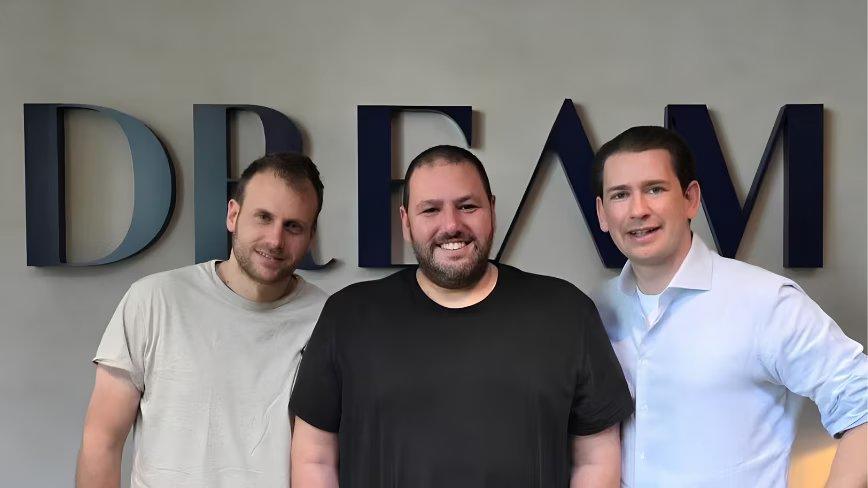
This expansion draws attention due to the background of its co-founder. Shalev Hulio previously founded NSO Group, an Israeli surveillance company whose Pegasus spyware was used by over 50 governments to monitor journalists, activists, and political opponents.
Hulio founded Dream in January 2023, months after stepping down as CEO of NSO. The company claims to be purely defensive, offering an AI-based platform for governments to detect threats and patch vulnerabilities, rather than building offensive surveillance tools. Its co-founders include former Austrian Chancellor Sebastian Kurz and Gil Dolev, founder of intelligence-gathering firm Wayout Group. Kurz was convicted in February 2024 for making false statements to a parliamentary investigative committee but was acquitted on appeal in May 2025.
Dream has offices in Tel Aviv, Vienna, and Abu Dhabi, employs over 300 people, and plans to open an office in Munich. The company operates a sovereign data center near Modi'in, Israel, where it trains its proprietary language model without relying on public cloud providers.
Latin America is the fastest-growing market for cyberattacks globally, with incidents increasing by about 25% annually, according to industry estimates. A World Bank assessment gave countries in the region an average cybersecurity preparedness score of 10.2 out of 20, though the methodology and date of this figure could not be independently verified. Costa Rica demonstrated the risk in 2022: the Conti ransomware group attacked approximately 30 government agencies, demanding a $10 million ransom, forcing President Rodrigo Chaves to declare a state of emergency on May 8, making the country the first to take such a step due to a cyberattack. Weeks later, the Hive group struck the nation's healthcare system, forcing hospitals to revert to pen and paper. Both attacks paralyzed public services for months.
Dream's entry into the region coincides with a rightward shift, as several pro-Israel leaders have come to power. Argentina's Javier Milei has positioned the country as an AI hub and pledged to move its embassy to Jerusalem. In Colombia, Abelardo De la Espriella won the presidential runoff on June 21 with 49.66% of the vote and promised to restore diplomatic relations with Israel. This alignment is crucial for Dream's sales, as selling sovereign AI platforms to national security agencies requires a degree of political intimacy, and its Israeli identity is an asset in capitals with closer ties to Jerusalem.
Dream's expansion into a region where surveillance technology has been exported to governments with poor human rights records invites scrutiny. NSO Group was blacklisted by the U.S. Department of Commerce in November 2021 after Pegasus was found on the phones of journalists, dissidents, and at least one member of the European Parliament. Hulio has distanced himself from that history, resigning as CEO in August 2022 during a company restructuring. Dream's investors, led by Bicycle Capital and Group 11, accept the argument that defensive cybersecurity and offensive surveillance are entirely different businesses. Whether Latin American civil society groups will make the same distinction remains an open question.
Dream's sales have reportedly exceeded $300 million, more than doubling over the past two years. The sovereign defense AI market is attracting new entrants, with startups like Rilian raising capital to deploy AI in air-gapped government environments, but Dream's scale and government relationships give it a significant first-mover advantage. The company operates on three continents, with Middle Eastern sovereign clients among its largest, though it does not publicly disclose government customer names. Latin America will add a fourth continent and a customer base with a low but growing cybersecurity budget baseline.
Related Products


Mine Explosion-proof and Intrinsically Safe Industrial Ethernet Ring Network (10 Gigabit/Gigabit)
Chongqing Mas Sci&Tech Co., Ltd.
Hot Selling 10 Inch Intel N5100 I5 I7 FHD 8 +128GB 16+256GB Win10 Pro Win11 Pro 4G 5G Rugged Tablet PC Pad with NFC Barcode
Highton Electronics Co., Ltd.





Conveyor Belt Intelligent Monitoring System
LUO YANG WIRE ROPE INSPECTION TECHNOLOGY CO., LTD.
Multi-function Marine Monitoring Low-altitude Detection Radar Sea-air Boundary Ocean Dynamic Environment Measurement
Chengdu Dixin Technology Co., Ltd.