South Korea's Ministry of Science and ICT Launches 1.4 Trillion KRW Physical AI R&D Project
en.Wedoany.com Reported - The Ministry of Science and ICT (과학기술정보통신부) of South Korea has launched a physical AI R&D project worth 1.4131 trillion KRW in the Gyeongsangnam-do and Jeollabuk-do regions, aiming to localize technologies within the domestic manufacturing ecosystem and cultivate an export-oriented model.
The project comprises two main components: "Global Demonstration of Human-AI Collaborative Physical Intelligent Behavior Model (LAM) Development" and "Building an Ecosystem for Collaborative Intelligent Physical AI-based Software Platform R&D," which will be advanced in Gyeongnam and Jeonbuk, respectively. The bidding for this project closes on the 28th, and briefing sessions will be held sequentially in Changwon on the 8th, Jeonju on the 9th, and Seoul on the 10th.
Over the next four years, 676.3 billion KRW will be invested in Gyeongnam and 736.8 billion KRW in Jeonbuk. The research involves training AI models on real-world data and connecting them with the autonomous control of physical systems such as sensors, devices, and robots to secure core physical AI technologies.
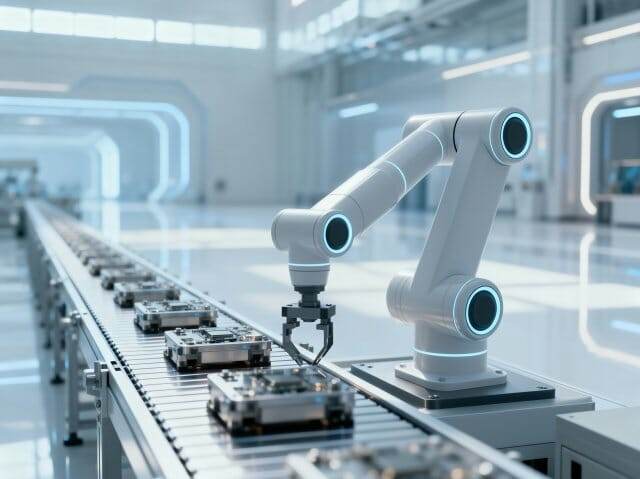
Physical AI is a technology that requires simultaneous recognition, judgment, and control in real physical environments. Developing models solely at the laboratory level makes it difficult to apply them to field and industrial settings. Manufacturing sites are representative spaces where robots, production equipment, and logistics equipment are complexly interconnected, making them the most direct area for verifying the performance and effectiveness of physical AI.
The Ministry of Science and ICT plans to support specialized R&D and field demonstrations leveraging the industrial bases of Gyeongnam and Jeonbuk, centered on two main axes: "ultra-precision control" of processes and "integrated operation" for the intelligent connection and operation of entire factories, with the goal of enhancing the competitiveness of the domestic manufacturing industry. This initiative aims to verify the feasibility of applying core domestic physical AI technologies in the field and to lay the technological foundation for future expansion into various industrial sites.
The "Global Demonstration of Human-AI Collaborative Physical Intelligent Behavior Model (LAM) Development" project, conducted in Gyeongnam, focuses on ultra-precision control technology for manufacturing process units. The R&D involves Physics-Informed Neural Network (PINN) technology, which incorporates complex physical laws such as thermodynamics and fluid dynamics generated in manufacturing processes into AI models. This reduces uncertainty in predictive control processes and improves reliability for application in manufacturing sites. Additionally, the project will integrate process, equipment, and sensor data based on actual domestic manufacturing sites, collect data usable for precision control, develop LAMs for precise prediction, and build high-reliability integrated data.
The "Building an Ecosystem for Collaborative Intelligent Physical AI-based Software Platform R&D" project, centered in Jeonbuk, aims to develop an autonomous smart factory platform for operating entire factories and logistics systems. The project will promote the standardization of AI-driven autonomous factory operating systems and software, and support the construction of testbeds and joint industry-academia-research infrastructure. This standardization effort aims to develop factory operating systems and standard software frameworks, enabling heterogeneous robots and various automated equipment to collaborate organically without conflict within the factory to complete complex tasks. Near Jeonbuk Innovation City, a testbed centered on advanced equipment for real-time future-oriented AI research and verification, as well as a large-scale joint industry-academia-research cluster, will be built to provide a foundation for the development and verification of physical AI-based autonomous factory operation technologies.
The Ministry of Science and ICT plans to interconnect these two projects, integrating ultra-precision control of manufacturing processes with integrated operation technologies for autonomous factories into a single physical AI platform, thereby localizing technologies within the domestic manufacturing ecosystem that currently rely on overseas solutions. Furthermore, the ministry intends to develop this platform into a "Smart Advanced K-AI Factory Package" integrating AI models, software, devices, and robot control technologies, cultivating it as an export-oriented model that can be disseminated to the global manufacturing market.
Park Tae-wan (박태완), Director General of Information and Communication Industry Policy at the Ministry of Science and ICT, stated that physical AI is a core technology redefining the competitiveness of South Korea's manufacturing industry, and that this project represents the first step in realizing "Physical AI," one of the three mega projects announced by the government, through concrete R&D. He added that the ministry will gather innovative capabilities from industry, academia, and research institutes to create a K-Physical AI-based manufacturing innovation model led by AI, from manufacturing processes to factory operations, and disseminate it to the global market, fostering it as a new export competitiveness driver for South Korea.
Related Products





Automatic Aiming Laser Remote Obstacle Removal Robot
Pinggao Group Weihai High-Voltage Apparatus Co., Ltd.
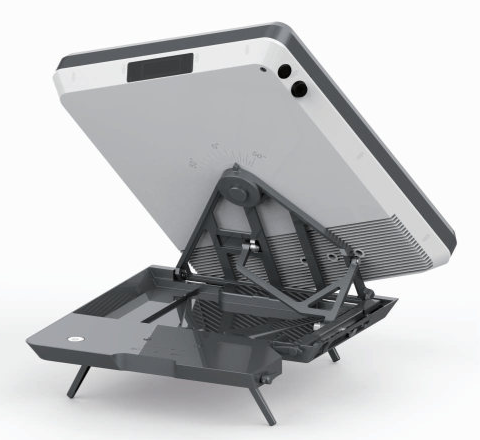
Flat Portable Satellite Terminal 0.35m Aperture Manual Portable Terminal
China Starwin Science & Technology Co., Ltd.
TWP16 P-Band Tropospheric Wind Profile Radar
China Huayun Meteorological Technology Group Co., Ltd.

Industrial and Commercial Point-Type Gas Detector
Jinan Benan Technology Development Co., Ltd.
Mine Explosion-proof and Intrinsically Safe Industrial Ethernet Ring Network (10 Gigabit/Gigabit)
Chongqing Mas Sci&Tech Co., Ltd.

MUX Series Communication Interface Device for Security and Stability Control System
Nanjing NR Electric Co., Ltd.