Korea Institute for Industrial Economics and Trade Invests 500 Million KRW to Build Regional Industry Comprehensive Information System
en.Wedoany.com Reported - The Korea Institute for Industrial Economics and Trade will promote the "Regional Industry Comprehensive Information System Construction Project," with a project scale of 500 million KRW, aimed at integrating dispersed regional industry indicators to proactively respond to signs of industrial crises.
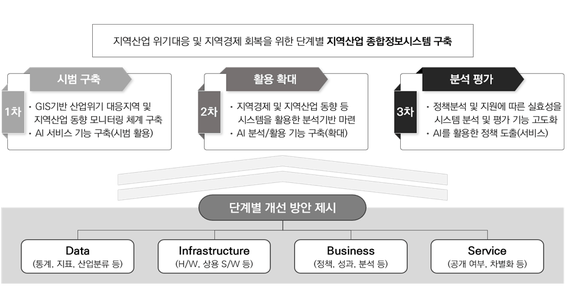
According to an announcement by the Public Procurement Service (PPS; KONEPS) on the 7th, the core of this project is to restructure collected regional industry indicators by city, county, and district units, thereby laying the foundation for real-time monitoring of industrial trends such as production, investment, and employment.
Previously, major industrial and economic indicators were managed separately by various departments, making timely access difficult due to security and other reasons. The relevant data was vast in scale, and most required manual analysis, leading to insufficient accuracy and timeliness. This made it challenging to promptly grasp the impact of internal and external shocks on regional industries, as exemplified by the shipbuilding and port industry crises that later manifested as shocks in Geoje Island and Tongyeong, South Gyeongsang Province.
To address these issues, the project focuses on building a comprehensive information system capable of monitoring regional industrial trends and responding to industrial crises. The budget allocated is 495 million KRW, with the project period running from the contract signing date to the end of November.
Specifically, the project will construct two dashboards to facilitate intuitive viewing of trends in regional industries and industrial crisis response areas. The regional industry trends dashboard, based on cities, counties, districts, and standard industrial classifications, will display productivity indicators such as production value and sales, as well as performance indicators like employment and business closures/suspensions on a Geographic Information System (GIS) map. The industrial crisis response area dashboard will visualize the overview and implementation procedures of response policies, and show economic trend data for response areas, including those already designated.
Among these, the industrial crisis response area dashboard is based on the "Special Act on Regional Industrial Crisis Response and Regional Economic Recovery" and involves policy variables used for selecting and designating crisis areas. Therefore, it is planned to be built and stabilized prior to the regional industry trends dashboard.
Regional industry analysis will apply Artificial Intelligence (AI) functions based on Large Language Models (LLM) and knowledge bases. Through natural language querying, it will display regional industry trends and the status of industrial crisis response areas on a map, aiming to provide an environment where business users can directly extract required indicators and obtain analysis results.
Through this project, the Korea Institute for Industrial Economics and Trade plans to systematically and consistently monitor regional industry trends, thereby enhancing policy effectiveness. The integrated management of dispersed regional industry statistics and support for data-based policy decision-making are also considered expected outcomes.
Related Products


G.652.D Wavelength-extended Non-dispersion Shifted Single-mode Optical Fiber
HONGAN GROUP CO., LTD.
Industrial and Commercial Point-Type Gas Detector
Jinan Benan Technology Development Co., Ltd.

TWP16 P-Band Tropospheric Wind Profile Radar
China Huayun Meteorological Technology Group Co., Ltd.