China's MoXin Tech Launches MoWorld, Inference Speed Exceeds 50 FPS
en.Wedoany.com Reported - MoXin Technology, in collaboration with Zhejiang University academician Pan Yunhe and Huawei, has launched MoWorld, a real-time interactive world model based on a domestic NPU. Its inference speed exceeds 50 FPS, and deployment costs are only 30% of those for a comparable GPU solution.
Over the past year, world models have become a hot topic in the AI industry. A true world model needs to understand space and predict the next state, making real-time performance crucial—frame rates above 30 FPS are considered smooth, but most existing models fail to meet this requirement.
Recently, MoXin Technology, which focuses on the R&D and industrialization of 4D world models, partnered with Zhejiang University and Huawei to release MoWorld. This is the first full-stack real-time interactive world model based on a domestic NPU, with inference speeds exceeding 50 FPS and deployment costs reduced to 30% of those for a comparable GPU solution. The technical report has been made public, and the project homepage is: https://moxin-tech.github.io/moworld/. Weights and code will be open-sourced soon, and services will be provided based on domestic NPU supernodes.
Compared to video generation models, the core difference of a world model lies in real-time interaction. Previously, world models mostly remained in the academic experimental stage. Key issues for transitioning from research to industry include whether real-time interaction, stable deployment, and cost control are achievable. MoWorld was launched against this backdrop. After nearly a year of technical breakthroughs by the MoXin team and its strategic shareholder Huawei, several key issues for practical application have been resolved. MoWorld takes the first frame, text, and camera trajectory as conditions to generate future world states that align with the scene state and control inputs. It supports real-time user interaction within the generated world through continuous control, achieving inference speeds of up to over 50 FPS on domestic NPUs, with system design ensuring extremely low inference costs.
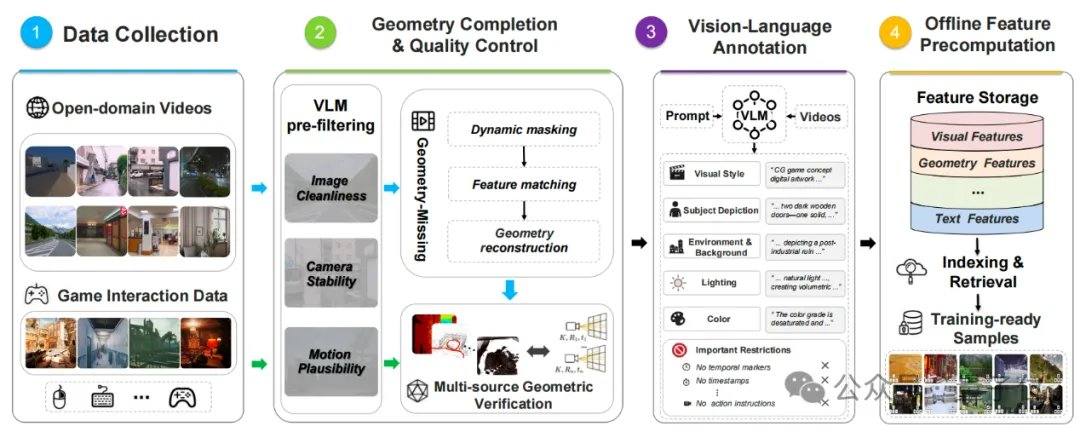
For world models, generation quality is the first step, but training costs, inference efficiency, and real-time interaction capabilities determine the feasibility of deployment. MoWorld has been optimized across the entire pipeline, from data construction and model training to system deployment. In terms of data, training a world model requires 3D information such as video, text, camera trajectories, and spatial depth, which internet videos cannot provide. To address this, MoWorld leverages years of research in 3D and 4D modeling to build a scalable data production and governance system, enhancing corpus quality through multi-dimensional quality screening.
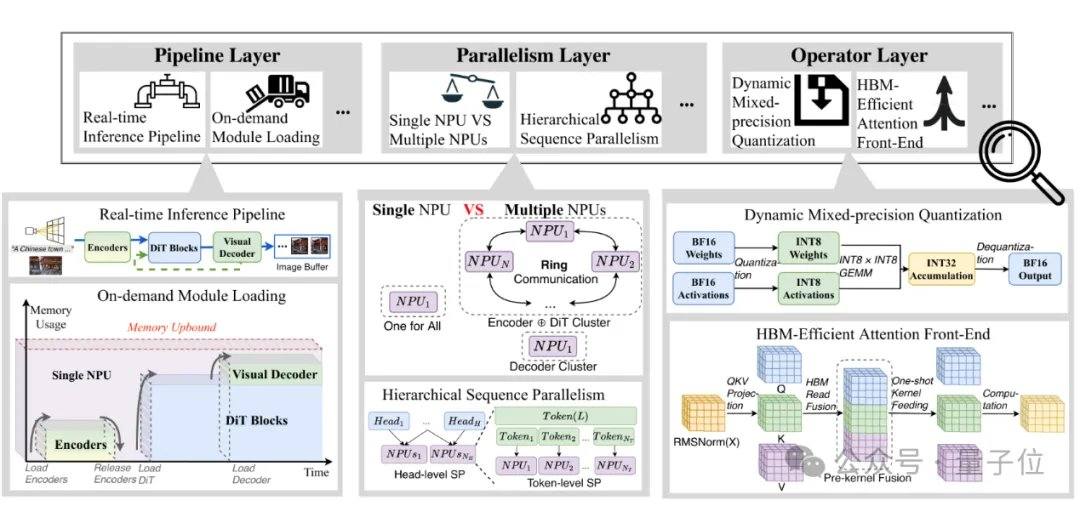
To achieve real-time deployment capability, MoWorld has undergone system-level optimization across the three stages of training, distillation, and inference. During the training stage, leveraging the characteristics of domestic NPU hardware, it introduces ultra-dense attention parallelism and long-sequence token parallelism strategies, enabling ultra-long training and inference of up to 2000 frames. During the inference stage, through pipeline execution, hierarchical sequence parallelism, and dynamic mixed-precision quantization, the 14B-parameter MoE model achieves real-time inference of up to 50 FPS on the domestic NPU platform, with inference costs only 30% of those for a comparable GPU solution.
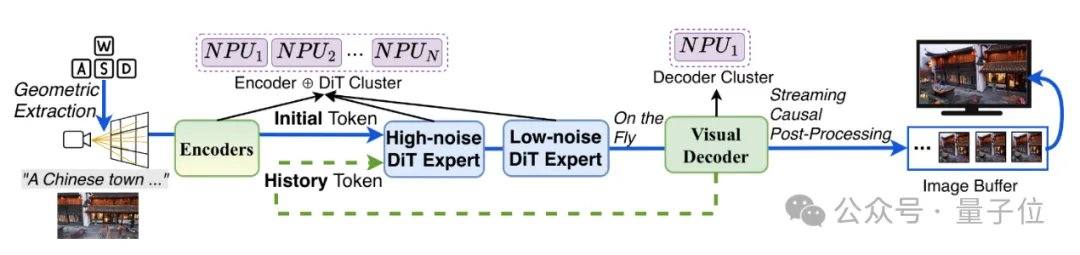
From data engine construction to long-duration training and low-cost real-time deployment, MoWorld has advanced world models from "being able to generate" to "being able to interact and deploy." Soon, MoWorld will provide services based on domestic NPU supernodes.
Leveraging its real-time interaction capabilities, MoWorld is moving from technical validation to becoming a multi-industry spatial intelligence infrastructure. As a controllable "spatial simulation engine," it provides industries with interactive, inferable, and cost-effective scene generation capabilities.
In gaming and interactive entertainment, MoWorld supports full 6-degree-of-freedom camera control. Users can achieve immersive roaming via W/A/S/D and mouse controls, with scenes supporting 1080P and higher resolutions, covering natural landscapes, anime, and game animations.
In embodied intelligence and autonomous driving, MoWorld provides a low-cost, high-fidelity digital training ground for robots and autonomous driving systems. It particularly offers intelligent driving teams a large number of high-precision environments, enabling AI to learn interaction with the physical world in a virtual setting.
In film and video creation, MoWorld allows creators to freely adjust perspectives, preview visual effects in real-time, and precisely edit shots within the generated virtual world, achieving director-level camera work.
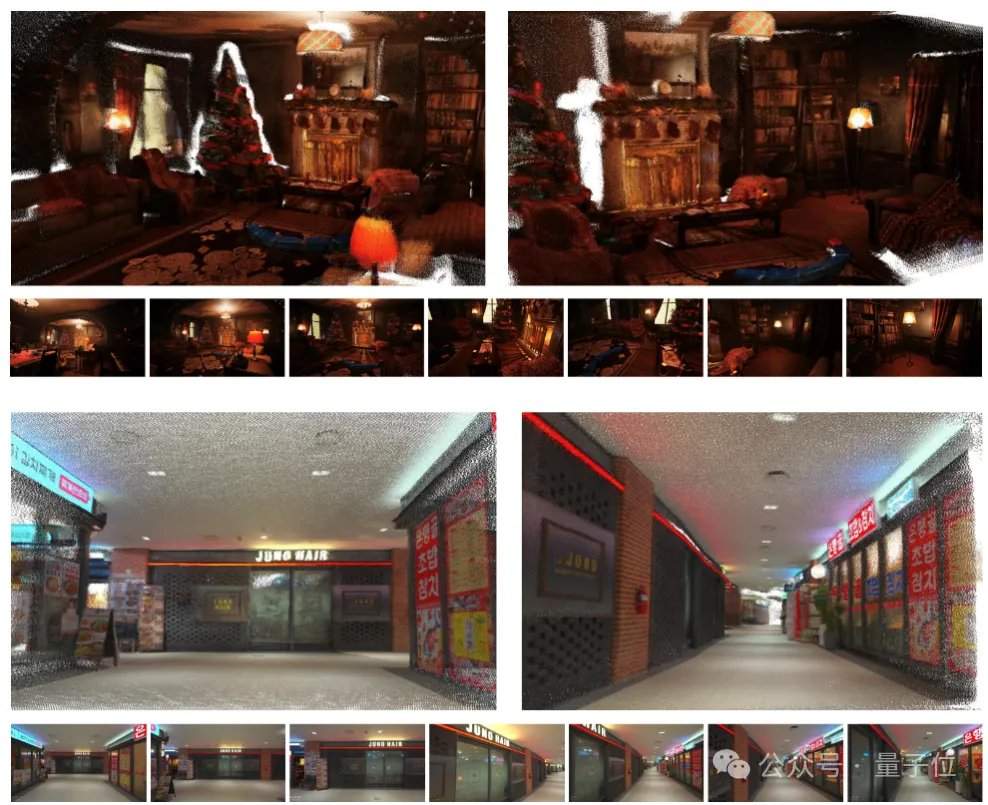
In digital twins and 3D reconstruction, videos generated by MoWorld exhibit geometric consistency exceeding industry standards. They can be directly used for 3D reconstruction of indoor scenes, offering high precision, stable structure, and excellent spatial consistency, providing high-accuracy and cost-effective solutions for digital twins, architectural visualization, virtual showrooms, and immersive games.
The competitive landscape for large language models and video generation models is already set, but the world model field currently lacks a recognized leader and industry standards. For domestic teams, this represents a critical window of opportunity. MoWorld is the first product to achieve a full-stack closed loop of training and inference using purely domestic NPUs, with real-time interactive inference exceeding 50 FPS and inference costs only 30% of those for a comparable GPU solution. Capital has responded quickly. MoXin Technology recently completed a round of financing worth hundreds of millions of dollars, with participation from top-tier dollar funds, national strategic reserve funds, and over a dozen industrial capital investors. Previously, MoXin had received investments from funds including Huawei's Hubble Investment and Lenovo's Lianrong Zhidao.
Related Products




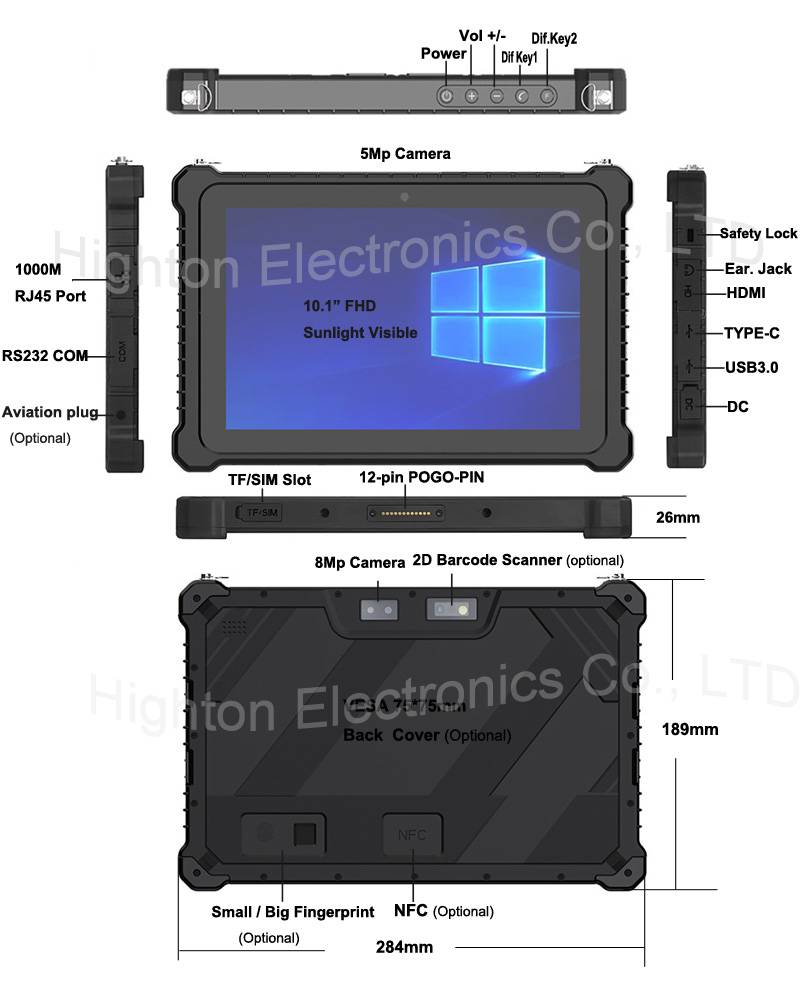
Hot Selling 10 Inch Intel N5100 I5 I7 FHD 8 +128GB 16+256GB Win10 Pro Win11 Pro 4G 5G Rugged Tablet PC Pad with NFC Barcode
Highton Electronics Co., Ltd.
Industrial and Commercial Point-Type Gas Detector
Jinan Benan Technology Development Co., Ltd.

Comprehensive Mining Automation Control System
Beijing Tianma Intelligent Control Technology Co., Ltd.