Nvidia's 88-Core Vera CPU Targets AI Inference
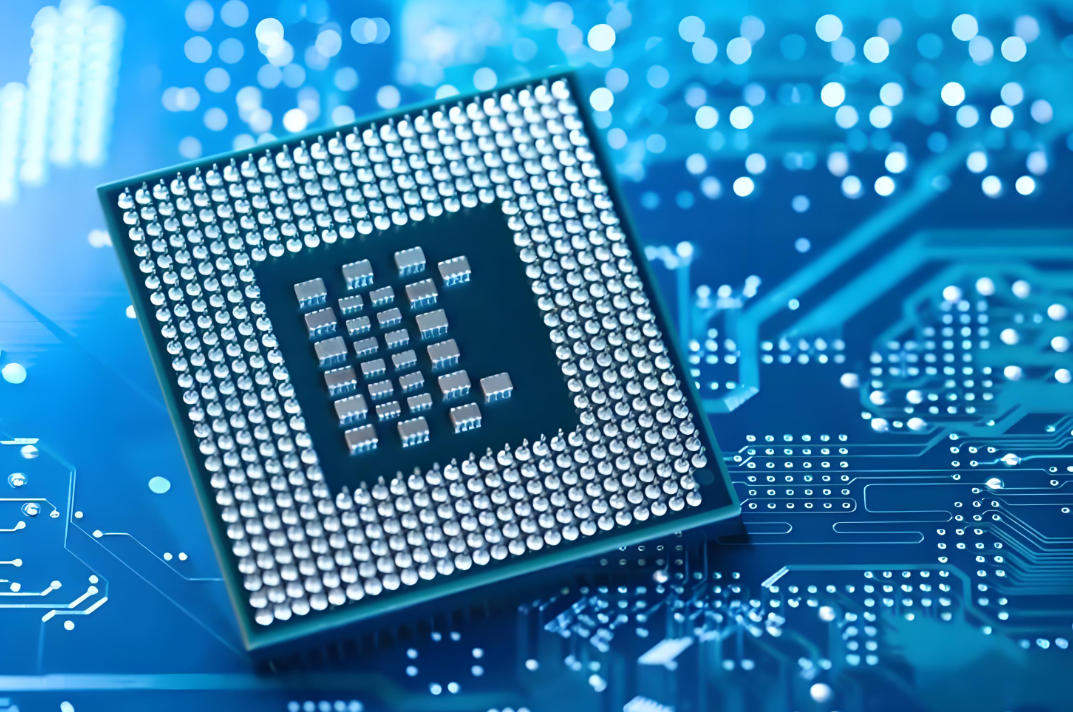
en.Wedoany.com Reported - Nvidia has launched the Vera CPU based on a new architecture, aiming to redefine the competitive landscape of the server processor market. Unlike x86 processors that pursue an extremely high number of cores, Vera is designed as the CPU with the highest single-thread performance in its class, a strategy directly targeting the computational demands of AI inference and AI agent workloads.
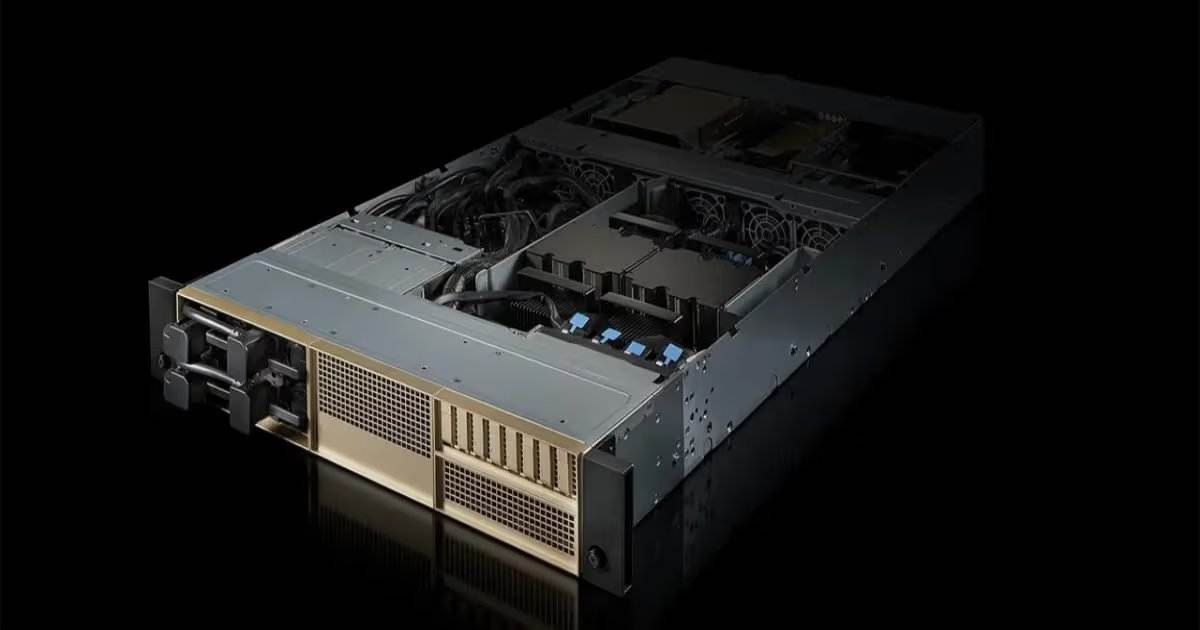
In preliminary tests by Phoronix, Vera demonstrated the ability to "completely crush competitors" in single-threaded scenarios. Although AMD subsequently responded with claims of 3.3x performance for a 100kW rack, Nvidia remains confident in its design direction. Vera is an 88-core single chip CPU supporting SMT simultaneous multithreading, providing a total of 176 threads. Its LPDDR5X memory bandwidth reaches 1.2 TB/s, with inter-core bandwidth at 3.4 TB/s, metrics Nvidia claims are three times those of other data center CPUs.
Nvidia explains that AI inference and AI agent workloads are highly dependent on single-thread speed. Inference models must wait for the result of the previous step before proceeding, making parallelization ineffective. Similarly, AI agents need to complete tasks sequentially. Therefore, Vera is described as "the largest scalable single-thread CPU," meaning a CPU that maximizes single-thread performance while remaining scalable. Its single-chip design avoids the "chiplet tax," ensuring predictable latency and consistent bandwidth for each core.
Nvidia also revealed that Vera's successor, the Rigel CPU, will feature Arm v9.2 cores and be launched as part of the Rosa CPU. Rigel will deliver higher per-core performance through "better instruction delivery," larger L2 cache, and improved memory handling.
In an official blog post, Nvidia disclosed multiple real-world performance figures. For coding agent workloads, Perplexity recorded a 1.5x performance improvement over x86, with a 1.9x speedup when running sandboxes. For database workloads, Starburst recorded a 3x performance improvement in large-scale SQL analysis, and Redpanda recorded a 6x reduction in real-time analysis latency. Nvidia claims that in "CPU workloads representative of agent execution," Vera is 1.8x faster than x86 competitors, 1.5x faster in coding workflows, and 3x faster in database analysis. It should be noted that Nvidia did not specify the exact x86 chip models used for comparison, which are presumed to be mid-to-high-end models of Intel Xeon and AMD Epyc.
Vera's design philosophy reflects a paradigm shift in the server CPU field. Traditionally, processor design focused on increasing core counts to handle numerous tasks in parallel, but for AI workloads with sequential dependencies, single-thread speed becomes the decisive factor. Nvidia positions Vera as a solution that balances single-thread performance with multi-thread scalability.
Analysts predict that this strategy could help Nvidia capture two-thirds of the x86 server CPU market currently held by Intel and AMD, with projected revenue reaching $20 billion. However, competition in the AI server CPU market is fierce, with companies like DeepSeek developing their own chips to reduce reliance on external suppliers, and French AI startup ZML releasing software targeting non-Nvidia chips, indicating a trend toward diversification in the AI ecosystem.
Related Products



Conveyor Belt Intelligent Monitoring System
LUO YANG WIRE ROPE INSPECTION TECHNOLOGY CO., LTD.





G.652.D Wavelength-extended Non-dispersion Shifted Single-mode Optical Fiber
HONGAN GROUP CO., LTD.
Flat Portable Satellite Terminal 0.35m Aperture Manual Portable Terminal
China Starwin Science & Technology Co., Ltd.


Mine Explosion-proof and Intrinsically Safe Industrial Ethernet Ring Network (10 Gigabit/Gigabit)
Chongqing Mas Sci&Tech Co., Ltd.