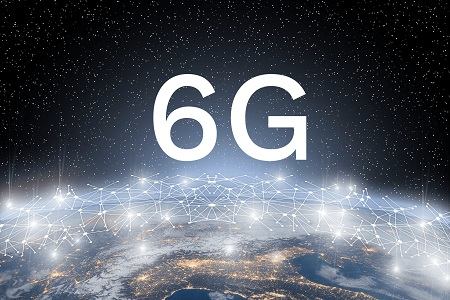
U.S. Market Focuses on 6G Integrated Sensing and Communication, T-Mobile Plans 6G Commercialization by 2029
en.Wedoany.com Reported - A recent report from market research firm Omdia indicates that while 5G SA deployment is still ongoing, the topic of 6G has already sparked strong interest in the industry. At the 6G special session of the recent Network X Americas conference, factors such as Integrated Sensing and Communication (ISAC) and Artificial Intelligence (AI) have further heightened attention.
Kristin Paulin, Principal Analyst for the North American market at Omdia, observed at the conference that the industry holds both anticipation and caution towards 6G development. Some companies hope to get a head start on related work, while others worry about repeating the mistakes of 5G, particularly regarding commercialization challenges. Operators feel they previously ceded revenue opportunities to other industry players, and the combination of 6G and AI is expected to foster a new generation of innovation, in which operators hope to capture a larger share.
U.S. operators are expected to be among the first adopters of 6G, with T-Mobile publicly planning to commercialize 6G by 2029. The timeline for standard completion has been adjusted from 2030 to 2029/30, with 3GPP confirming that the first 6G standard version, R21, will be frozen by the end of 2028. A few markets, including the United States, China, and South Korea, may see small-scale early deployments in 2029, with global large-scale deployment beginning in 2030 and beyond.
Leveraging the 2028 Summer Olympics and Paralympics in the United States, the National Telecommunications and Information Administration (NTIA) will host a 6G demonstration event called "Mission LA 2028." Currently, 28 companies have signed up to showcase their 6G vision-related content. This demonstration is expected to serve as a high-profile prelude, sparking global anticipation and enthusiasm for 6G.
Integrated Sensing and Communication was a frequently mentioned 6G feature during the conference, capable of locating unconnected vehicles, people, or objects. Although this technology is not exclusive to 6G, its concept aligns well with the new opportunities brought by 6G. The NTIA is encouraging various parties to conduct ISAC demonstrations for display during "Mission LA 2028," with application scenarios including ensuring spectator and athlete safety, drone detection, digital twins, and extended reality experiences. It is expected that more news about ISAC will emerge in the coming months and years.
The strong interest in 6G largely stems from AI. 6G will become the first AI-native generation of cellular communication technology. While the industry initially did not anticipate a major technological leap from 5G to 6G, plans to introduce an Agentic layer may bring about a significant architectural shift. It is this Agentic layer that has generated excitement in the industry, as it opens up possibilities for numerous new use cases. Industry executives predict that the combination of 6G and AI will unleash immense innovation potential in the wireless industry. Regardless of the specific driving forces behind 6G development, the Network X conference made it clear: 6G has become a focal point of discussion.
Related Products




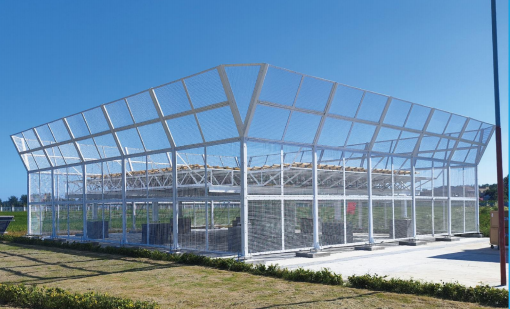
TWP16 P-Band Tropospheric Wind Profile Radar
China Huayun Meteorological Technology Group Co., Ltd.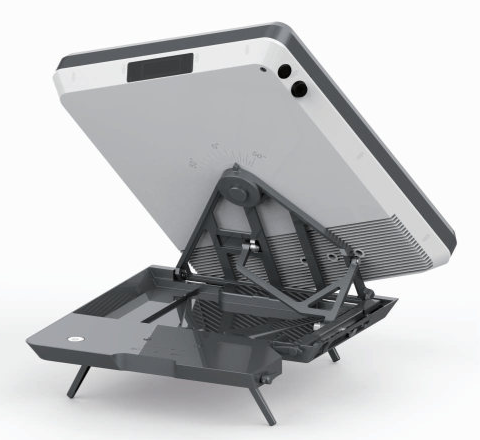
Flat Portable Satellite Terminal 0.35m Aperture Manual Portable Terminal
China Starwin Science & Technology Co., Ltd.




MUX Series Communication Interface Device for Security and Stability Control System
Nanjing NR Electric Co., Ltd.