SoftBank and Ericsson Validate AI-Native RAN on Japan's 5G Network, Boosting Spectral Efficiency by Up to 25%
en.Wedoany.com Reported - SoftBank and Ericsson Japan K.K. have completed Japan's first validation of the AI-native Scheduler for Link Adaptation on SoftBank's commercial 5G network, confirming that the feature operates effectively in a live network environment. This feature is part of Ericsson's AI in RAN software portfolio, which brings AI directly into the radio access network (RAN) and runs it in real time.

The two companies evaluated spectral efficiency, user throughput, robustness, and stability on SoftBank's commercial 5G network. The results showed that, compared with traditional technologies, spectral efficiency improved by up to approximately 25%, and downlink user throughput improved by up to approximately 50%; across all evaluation sites, both metrics improved by an average of approximately 10%.
With the proliferation of generative AI and related technologies, AI assistants, autonomous agents, and immersive applications are increasingly entering everyday life. Mobile networks must not only absorb continuously rising traffic but also cope with new traffic patterns and more complex connectivity demands. Simply expanding network capacity is no longer sufficient to address these changes. Deploying AI directly in the RAN enables operators to adapt more flexibly to radio environments and traffic fluctuations while optimizing performance and resource utilization. This validation on a commercial network demonstrates that AI-native technology can both improve existing network performance and lay the groundwork for the high-performance connectivity required to support next-generation AI-driven services. Looking ahead to collaboration on 5G Advanced and 6G, both companies confirmed that AI can support high-performance, secure, and flexible mobile networks.
Traditional approaches to link adaptation optimization rely on rule-based algorithms built on offline analysis and static parameter configuration. Ericsson's AI-native scheduler, by contrast, shifts to real-time AI decision-making on baseband equipment. After the model learns from and reasons about the complex and dynamic radio environment, it can adjust link parameters for users at cell edges or in high-interference areas, stabilize user throughput under difficult conditions such as congestion, and accommodate more traffic within existing spectrum bands through higher spectral efficiency.
This validation is part of the two companies' AI-native RAN collaboration. SoftBank defined the evaluation area requirements based on traffic characteristics, while Ericsson trained the AI-native link adaptation scheduler model using real network data and handled implementation and tuning, enabling it to predict channel capacity in real time and select appropriate downlink transmission rates. The two companies worked together end-to-end, from parameter design to evaluation. Both parties stated that they will continue to combine SoftBank's network insights with Ericsson's RAN AI expertise to further improve network performance in SoftBank's operating environment while supporting the evolution of AI-native RAN software.
Teruyuki Oya, Senior Vice President and Chief Network Officer at SoftBank, said that under its growth strategy "Activate AI for Society," SoftBank is working to extend the benefits of AI to more people and industries. As AI rapidly takes hold across society, mobile networks will need to handle larger and more volatile traffic. Validating the effectiveness of the AI-native scheduler on a commercial 5G network with Ericsson is an important step in advancing the RAN, and SoftBank will continue to drive the development of AI-native networks. Mårten Lerner, Head of Network Strategy and Product Management at Ericsson, noted that this collaboration validates Ericsson's AI-native RAN strategy and technology leadership. By bringing carrier-grade AI into the RAN and leveraging Ericsson Silicon to enable real-time optimization across the installed base, the performance and efficiency of commercial 5G networks can be improved. Combining advanced AI capabilities, operator expertise, and responsibly handled data is what turns AI innovation into measurable improvements. Jawad Manssour, President and Representative Director of Ericsson Japan, pointed out that the importance of mobile networks in unlocking the value of AI will continue to grow. This field trial proves that applying AI directly to the radio access network can deliver tangible benefits in a live network using commercial hardware and software. The two companies will continue to strengthen their collaboration to bring advanced network solutions originating from Japan to the global market.
Related Products


One-Stop Steward Service for the Entire Logistics System Integration Chain
Zhongding Intelligent (Wuxi) Technology Co., Ltd.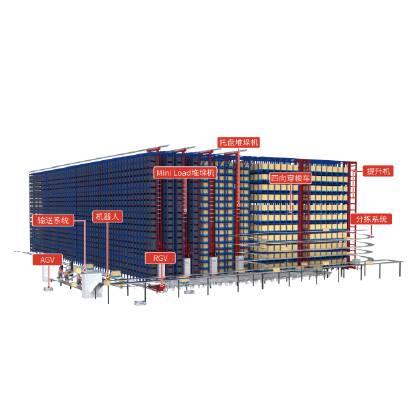


MUX Series Communication Interface Device for Security and Stability Control System
Nanjing NR Electric Co., Ltd.


Flat Portable Satellite Terminal 0.35m Aperture Manual Portable Terminal
China Starwin Science & Technology Co., Ltd.