Gulfstream and Rolls-Royce Complete High-Altitude Tests with 100% Sustainable Aviation Fuel
en.Wedoany.com Reported - Gulfstream Aerospace and Rolls-Royce have completed a series of high-altitude flight tests using 100% sustainable aviation fuel (SAF), demonstrating the fuel's potential to reduce non-CO₂ emissions associated with contrail formation.
The test campaign included the first flight of a Gulfstream G800 powered by Rolls-Royce Pearl 700 engines operating entirely on pure SAF. As part of Gulfstream's high-altitude test program, the flight evaluated emissions at altitudes up to 50,000 feet.

A modified Gulfstream G700, also equipped with Pearl 700 engines, flew alongside as a flying emissions laboratory. The two aircraft flew in close formation, enabling researchers to collect real-world data on particulate emissions and atmospheric conditions relevant to contrail formation at altitudes commonly used by business aviation.
The research program was led by Gulfstream Aerospace, with partners including the Federal Aviation Administration (FAA), the National Aeronautics and Space Administration (NASA), the German Aerospace Center (DLR), Missouri University of Science and Technology, Rolls-Royce, Aerodyne Research, Montana Renewables, and World Fuel Services.
The tests compared emissions from three fuel types: conventional Jet-A fuel, low-sulfur Jet-A, and pure hydroprocessed esters and fatty acids (HEFA) SAF, which contains no sulfur or aromatic compounds. Preliminary results showed a measurable reduction in particulate emissions associated with contrail formation when using pure SAF compared to conventional jet fuel.
Combined with compatible ultra-efficient aircraft engines, SAF will not only play a key role in aviation decarbonization but has also been proven to reduce certain non-CO₂ emissions. Findings from these high-altitude tests, along with programs such as QRITOS and ECLIF3, are advancing the understanding of aviation's non-CO₂ climate impacts and potential mitigation measures.
The latest test results will be shared with the aviation and atmospheric science communities to support emissions model development, inform future fuel standards, and help formulate operational strategies to reduce aviation's environmental impact. Rolls-Royce's current Trent series and business aviation engines can operate on 100% SAF, but existing fuel certification standards currently only allow up to a 50% blend of SAF with conventional Jet-A fuel. Compared to conventional Jet-A fuel, SAF has the potential to reduce lifecycle CO₂ emissions by approximately 80%, depending on the feedstock and production pathway.
Related Products
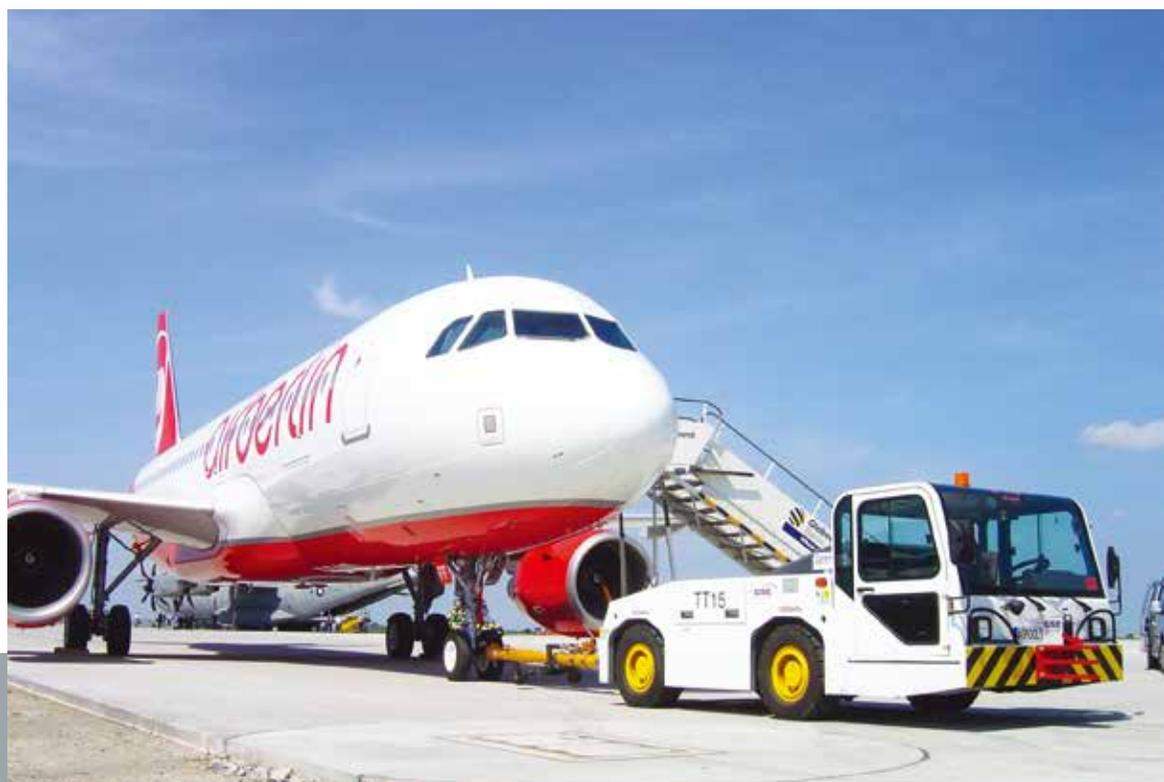

WGQY Series Aircraft Tow Tractor-WGQY15, WGQY27
Weihai Guangtai Airport Equipment Co., Ltd.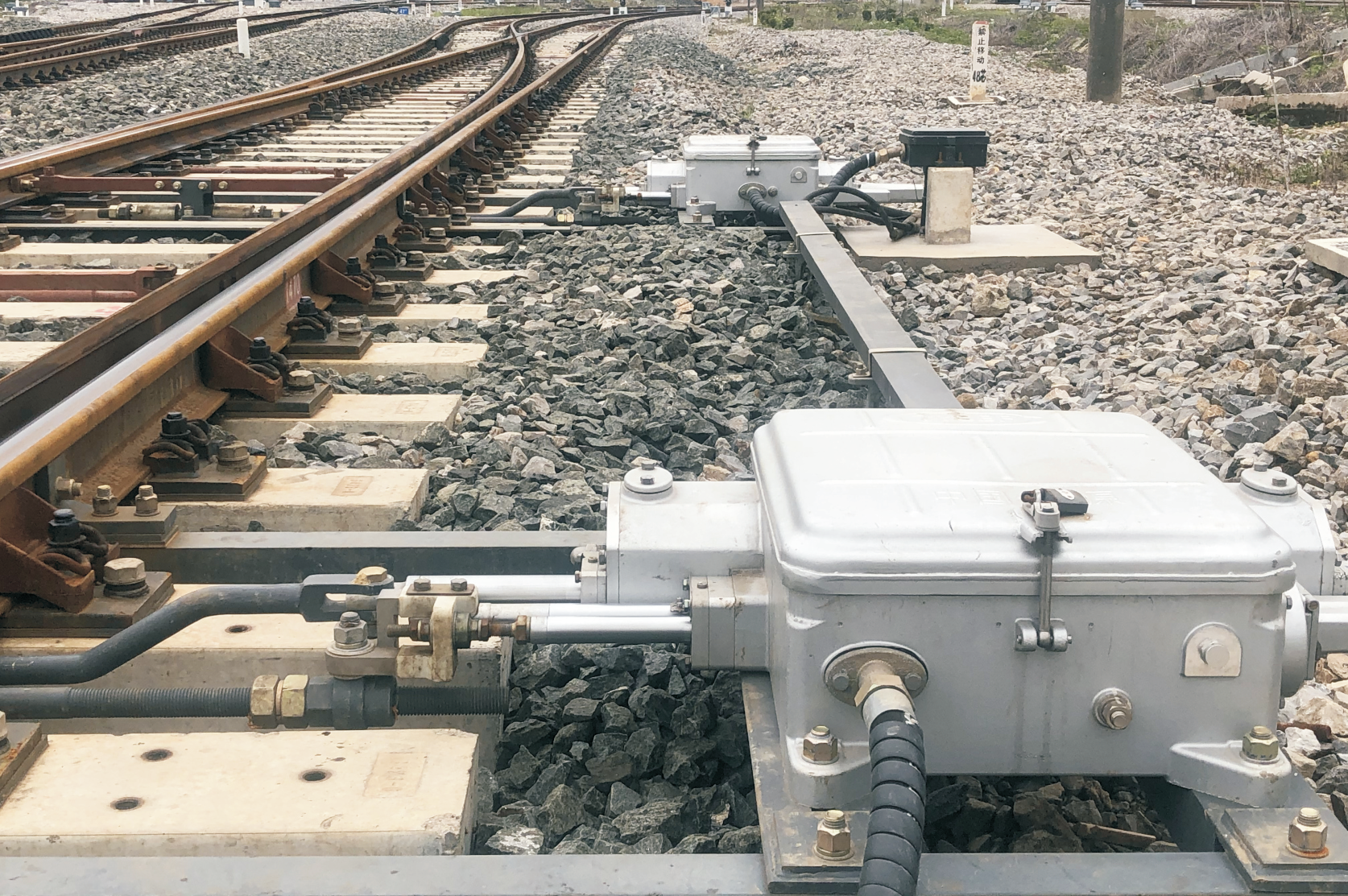
ZY(J)7(M) Sealed Type Electro-Hydraulic Turnout Machine
TAIYUAN CR JINGFENG EQUIPMENT TECHNOLOGY CO., LTD.
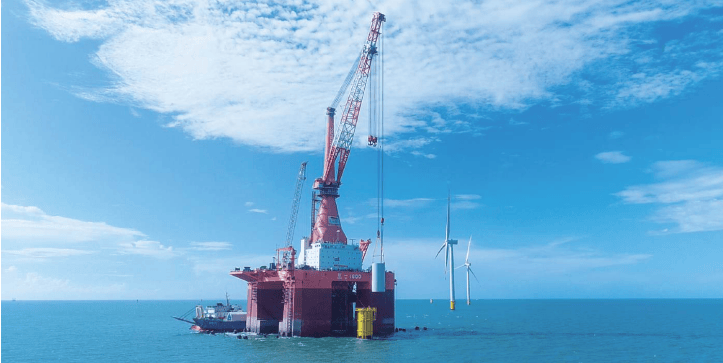
"Shunyi 1600" Deep-submerging Bottom-sitting Multi-functional Wind Power Engineering Vessel
Zhengli Offshore Engineering Co., Ltd.
China - Alashankou/Khorgos - Europe Full Range Transportation (Mala/Hamburg/Duisburg/Budapest, etc.)
Shenzhen Neptune Logistics Co., Ltd.
Explosion-proof lithium battery dispatching monorail crane locomotive (permanent magnet frequency conversion integrated machine)
Xiangtan Hengxin Industrial Co., Ltd.