India's Tejas and ITI Secure BSNL 4G Order Worth INR 30.33 Billion
en.Wedoany.com Reported - Indian telecom equipment manufacturer Tejas Networks has secured a follow-on order from state-owned operator Bharat Sanchar Nigam Limited (BSNL) to supply fourth-generation (4G) network equipment for a total of 26,238 sites, with a contract value of INR 30.33 billion.

The order includes 7,100 sites under the 4G saturation plan. State-owned enterprise ITI Limited has received a sub-order worth INR 8.55 billion to deploy radio equipment at 20% of the sites under the reservation policy, with equipment supplied by Tejas Networks. Mumbai-based diversified conglomerate Tata Sons holds a controlling stake in Bangalore-based Tejas Networks.
Last year, Tejas Networks received an Advance Purchase Order (APO) from BSNL for 26,000 sites, but its revenue declined due to a lack of work orders. Currently, Tata Consultancy Services (TCS), in partnership with Tejas Networks and the Centre for Development of Telematics (C-DoT), among others, is deploying the next-generation network for BSNL. Nearly 100,000 4G Radio Access Network (RAN) sites are already operational, and the project also includes 35 distributed core and edge data centers. TCS, as the system integrator, has integrated multidisciplinary consulting and technical teams to drive execution.
On Monday, Tejas Networks also secured an order to supply equipment for 7,100 sites under the 4G saturation project. The project is fully funded by the Universal Service Obligation Fund (now renamed Digital Bharat Nidhi), which has a corpus of INR 1.06 trillion, aiming to provide 4G mobile connectivity to 24,680 remote and unserved villages across the country at a cost of INR 263.16 billion.
Experts believe BSNL needs to double its 5G-capable sites as soon as possible to catch up with private competitors such as Reliance Jio and Bharti Airtel. BSNL aims to generate at least 15% additional revenue from 4G-dominated commercial data services. BSNL also plans to leverage 5G-ready infrastructure based on an indigenous technology stack to provide seamless connectivity to its enterprise customers once coverage reaches its peak. The telecom operator's enterprise business has achieved healthy growth, increasing by 19.2% in the first quarter of FY27 compared to the first quarter of FY26.
Related Products


TWP16 P-Band Tropospheric Wind Profile Radar
China Huayun Meteorological Technology Group Co., Ltd.
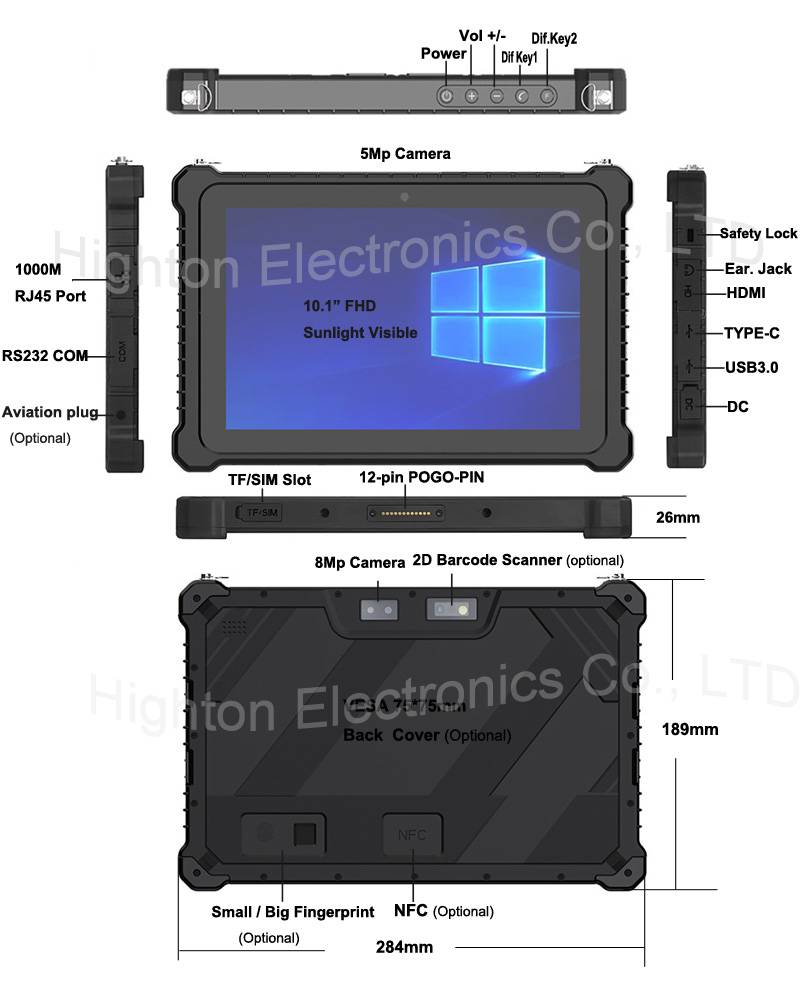
Hot Selling 10 Inch Intel N5100 I5 I7 FHD 8 +128GB 16+256GB Win10 Pro Win11 Pro 4G 5G Rugged Tablet PC Pad with NFC Barcode
Highton Electronics Co., Ltd.
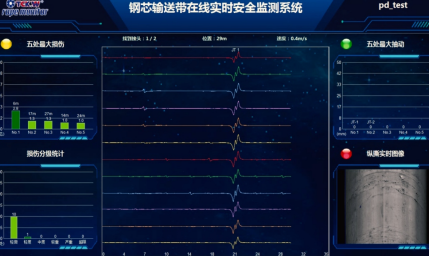
Conveyor Belt Intelligent Monitoring System
LUO YANG WIRE ROPE INSPECTION TECHNOLOGY CO., LTD.


GYTA Type Non-Self-Supporting Aerial/Duct Optical Cable
TONGDING INTERCONNECTION INFORMATION CO., LTD.

Mine Explosion-proof and Intrinsically Safe Industrial Ethernet Ring Network (10 Gigabit/Gigabit)
Chongqing Mas Sci&Tech Co., Ltd.
20 Inch 1600*900 Full HD 60Hz TFT LED Monitor with VGA and DP Interfaces for Desktop Computers-Business Use
Guangzhou Zanying Optoelectronics Technology Co., Ltd.