China Accelerates Construction of Data Security Infrastructure and High-Quality Datasets
en.Wedoany.com Reported - Recently, China's National Data Administration held a symposium with cybersecurity and data security research institutions and enterprises, clarifying the acceleration of building high-quality datasets for industries, strengthening core technology breakthroughs in the data domain, and supporting cybersecurity and data security enterprises in participating in the development and utilization of data resources and the construction of national data infrastructure. This deployment did not disclose the investment amount for individual projects or construction locations, with the focus falling on basic capabilities such as secure data circulation, trusted processing, artificial intelligence training, and the supply of industry datasets.
National data infrastructure is not simply about building data centers or communication networks; it is a comprehensive system covering data collection, aggregation, transmission, processing, circulation, utilization, operation, and security services, including hardware equipment, software platforms, model algorithms, technical standards, and operational mechanisms. The current construction goal is to open up data circulation channels across regions, industries, and entities, while simultaneously establishing security protection capabilities throughout the entire data lifecycle.
High-quality industry datasets will become the focus of the next phase of construction. China plans to complete a batch of datasets covering key areas and verified through practical application by the end of 2028, along with corresponding construction tools and technical standards. The construction scope covers fields such as industrial manufacturing, smart energy, transportation, healthcare, urban governance, public safety, embodied intelligence, and intelligent driving. Data forms include text, code, images, audio, video, point clouds, and time-series data.
To accommodate large-scale, multimodal data, related construction will further extend to data storage, cleaning, annotation, quality inspection, and secure invocation. The implementation plan proposes exploring the construction of data infrastructure storage centers for large-scale datasets, utilizing trusted data spaces and privacy-preserving computing technologies to achieve secure data storage, trusted circulation, and efficient use, promoting the transformation of data scattered within government departments, research institutions, and enterprises into standardized supply.
Data security capabilities will also shift from traditional perimeter protection to circulation process control. Existing construction tasks include secure and trusted transmission, cross-regional joint processing, data anonymization, usage permission control, circulation metering, and remote data governance. Technologies such as multi-party secure computing, federated learning, data sandboxes, trusted execution environments, and secure connectors will be used to address joint usage scenarios where data cannot be directly aggregated or raw data cannot leave its originating institution.
Artificial intelligence training will become an important application direction for data infrastructure. Relevant platforms need to simultaneously provide services such as data cleaning, feature engineering, model training, elastic computing power, trusted transmission, and security assurance to meet the data usage demands of large-scale, high-concurrency, and multimodal models. Consequently, cybersecurity and data security enterprises will increasingly participate in practical construction aspects such as data platforms, trusted connections, privacy computing, access control, operational auditing, and training data protection.
The construction direction signaled by this symposium has shifted from merely emphasizing data compliance to synchronously building security capabilities with data development. As high-quality industry datasets, trusted data spaces, and AI training platforms expand in the future, security technologies will be embedded as foundational functions throughout the entire process of data storage, transmission, processing, and invocation, rather than adding protective modules separately after the system is built.
Related Products


Industrial and Commercial Point-Type Gas Detector
Jinan Benan Technology Development Co., Ltd.
Mine Explosion-proof and Intrinsically Safe Industrial Ethernet Ring Network (10 Gigabit/Gigabit)
Chongqing Mas Sci&Tech Co., Ltd.
Automatic Aiming Laser Remote Obstacle Removal Robot
Pinggao Group Weihai High-Voltage Apparatus Co., Ltd.
Flat Portable Satellite Terminal 0.35m Aperture Manual Portable Terminal
China Starwin Science & Technology Co., Ltd.

G.652.D Wavelength-extended Non-dispersion Shifted Single-mode Optical Fiber
HONGAN GROUP CO., LTD.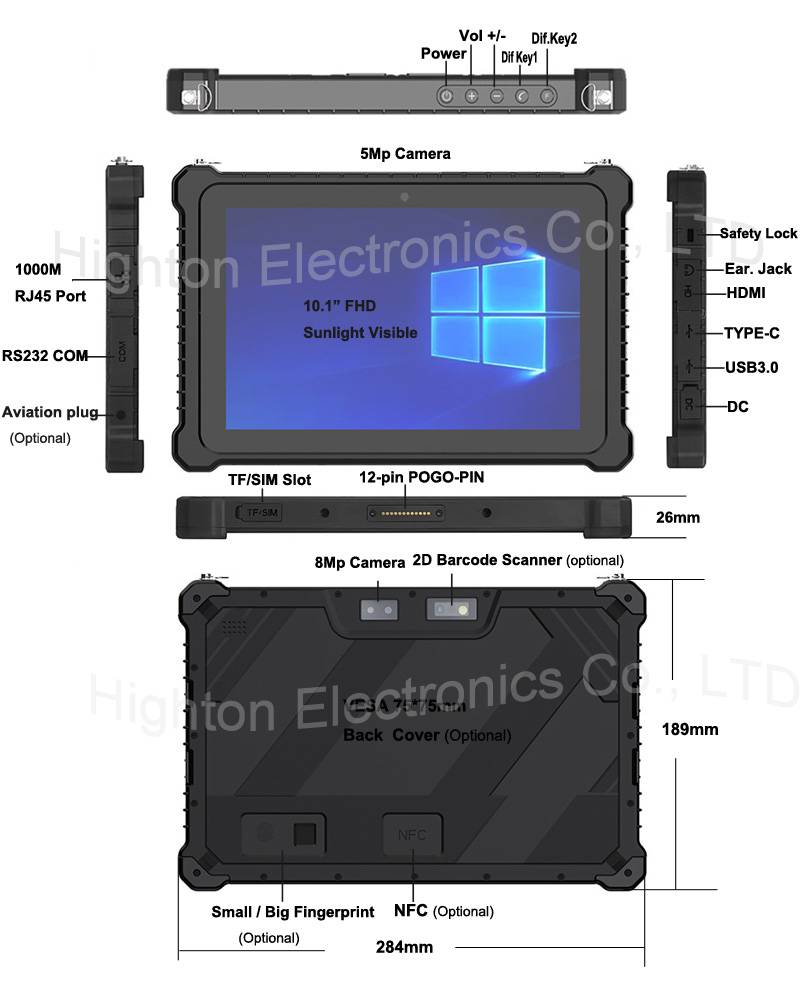
Hot Selling 10 Inch Intel N5100 I5 I7 FHD 8 +128GB 16+256GB Win10 Pro Win11 Pro 4G 5G Rugged Tablet PC Pad with NFC Barcode
Highton Electronics Co., Ltd.
Comprehensive Mining Automation Control System
Beijing Tianma Intelligent Control Technology Co., Ltd.