QTS and Lancium Plan $10 Billion Investment in Data Center Campus in Texas
en.Wedoany.com Reported - QTS and Lancium plan to invest $10 billion to build a data center campus in Hall County, Texas. The project is expected to create up to 7,000 construction jobs at its peak and approximately 350 permanent positions, covering QTS employees, maintenance, security, and tenant operations. These figures could alter local labor demand, housing pressure, contracting models, and public service needs even before the arrival of the first customer workloads.
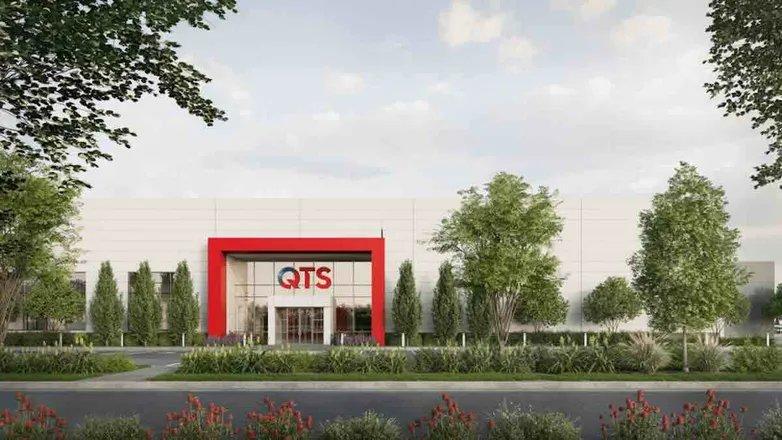
Hall County's economy relies heavily on tax revenue and secondary spending. Local officials anticipate new funding for schools, first responders, water infrastructure, and other priorities. However, the announcement did not disclose the tax structure, incentive package, development timeline, or phasing assumptions behind the $10 billion figure. These details will determine how much value remains in Hall County, when it materializes, and which public costs emerge first.
This project faces common issues in the data center industry: high capital intensity and relatively limited permanent employment. A campus of this scale can reshape the tax base but will not become a broad employer once construction slows. For a rural county, this is not necessarily a bad deal, though it complicates claims about long-term job creation.
On the power side, Lancium stated it will provide electrical and civil infrastructure and utilize battery storage and solar resources to power the site. QTS and Lancium also said they will fund all energy infrastructure improvements required for the campus. The wording leaves significant gaps: the announcement does not specify total power capacity, interconnection status, generation mix, battery duration, transmission requirements, or whether reliable capacity has been secured. For infrastructure buyers, these details are not secondary engineering issues but define delivery risk.
Texas has become a major data center market, partly due to available land, energy development, and a relatively flexible electricity market. However, it also faces risks from grid volatility, extreme weather, and interconnection complexity. Privately funded power construction may reduce reliance on municipal budgets but does not eliminate regional grid constraints or the need for regulatory approvals. Lancium believes its infrastructure can support grid stability and improve reliability for existing customers. Battery systems and controllable loads may offer flexibility, but operational outcomes depend on dispatch rules, generation availability, transmission conditions, and the campus load profile. The announcement includes no technical evidence to quantify the claimed grid benefits.
According to the two companies, the planned campus will use closed-loop cooling, consuming no water for the cooling process once operational. This is a significant claim in a region where industrial water use could become politically sensitive. However, zero water consumption for operational cooling does not mean zero water demand: the site will require water for construction, sanitation, maintenance, and other purposes. QTS and Lancium stated that water supply will come from on-site wells or approved external sources, not from the Turkey municipal system. The announcement does not specify expected water volumes, aquifer impact, transportation needs, or contingency plans during drought. For regulators and residents, the water source is nearly as important as the quantity. On-site wells avoid municipal water extraction but still affect shared groundwater; external delivery shifts rather than eliminates infrastructure and environmental costs.
QTS has over two decades of data center operations experience, while Lancium controls the campus and supporting infrastructure. The division of responsibilities is commercially reasonable but also creates interface risks across construction, power delivery, tenant readiness, and long-term operations. Large campuses are increasingly located outside mature metropolitan data center clusters, where land and power may be more accessible, but at the cost of weaker local infrastructure, smaller labor pools, and longer supply chains for specialized components and technicians. Hall County may gain investment but will also have to absorb a scale of development far beyond its existing administrative and service capacity.
The two companies stated they will work with schools and workforce programs to support community priorities and hold regular public meetings. These commitments could be significant if tied to measurable funding, timelines, and accountability. The current public record contains broad promises, projected job numbers, and investment estimates. What is missing is the campus timeline, customer commitments, power milestones, incentives, and binding community terms. The next substantive disclosure needs to go beyond intent. Hall County residents may need numbers rather than assurances, particularly regarding groundwater, tax treatment, road demands, and emergency services. QTS and Lancium said meetings will continue; the difficult questions have not yet begun.
Related Products


G.652.D Wavelength-extended Non-dispersion Shifted Single-mode Optical Fiber
HONGAN GROUP CO., LTD.
Industrial and Commercial Point-Type Gas Detector
Jinan Benan Technology Development Co., Ltd.

Flat Portable Satellite Terminal 0.35m Aperture Manual Portable Terminal
China Starwin Science & Technology Co., Ltd.

Automatic Aiming Laser Remote Obstacle Removal Robot
Pinggao Group Weihai High-Voltage Apparatus Co., Ltd.
Comprehensive Mining Automation Control System
Beijing Tianma Intelligent Control Technology Co., Ltd.