Brazil's authorized virtual mobile network operator connections reach 11.3 million in Q2 this year
en.Wedoany.com Reported - The authorized virtual mobile network operator (MVNO) market in Brazil, after years of slow expansion, has experienced significant growth since 2021, consolidating its position in machine-to-machine (M2M) and Internet of Things (IoT) communication services, while competing fiercely with traditional operators. This trend is highlighted in the latest competition monitoring report (Q2 2026) released by Brazil's National Telecommunications Agency (Anatel).

Survey data shows that between 2013 and 2020, authorized MVNOs accumulated only 620,000 connections in total. Since 2021, this sector has experienced continuous exponential growth, reaching 11.3 million connections by the end of Q2 2026. From the end of 2020 to the end of 2025, the user base grew at an average annual rate of approximately 73.5%.
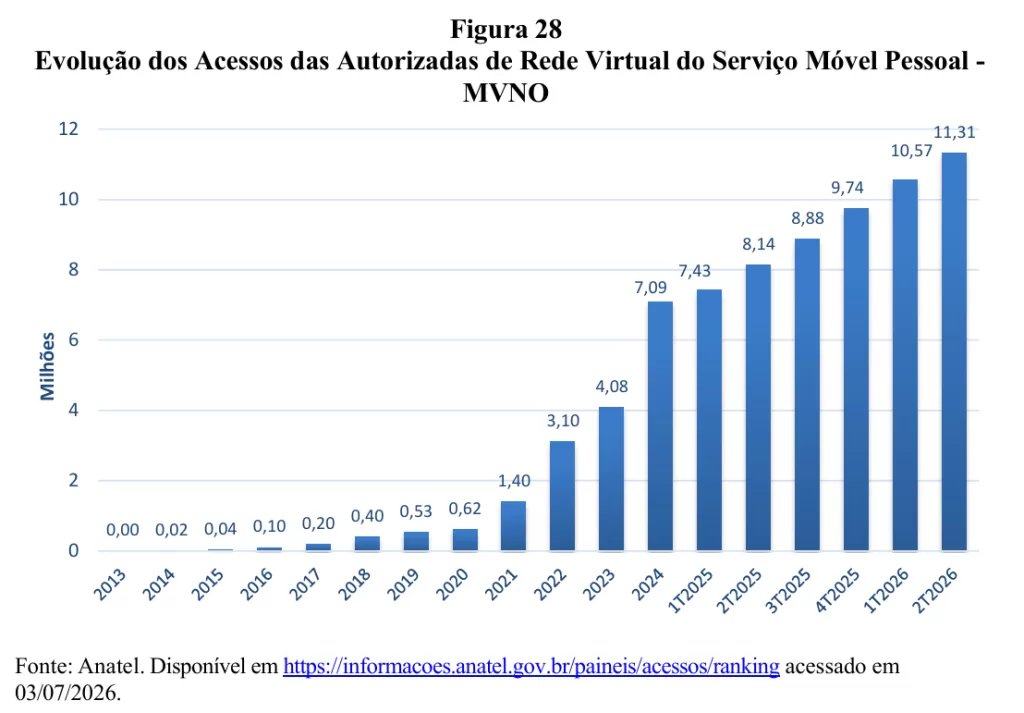
Anatel notes that this leap indicates the authorized virtual operator model has become a driving force for connectivity expansion and diversification in Brazil, particularly fueled by enterprise demand and emerging digital ecosystems. In the first half of 2026, authorized MVNOs added 1.57 million new connections.
Virtual mobile network operators provide mobile phone services without owning their own access networks, relying on the infrastructure of traditional operators to operate. In Brazil, there are two MVNO models. Under the authorized model, companies hold an operating authorization for the Personal Mobile Service (SMP) granted by Anatel, enjoying greater operational and regulatory autonomy, and can manage their own resources (such as numbers). Under the certified model, operations are conducted through registration with the source operator, which can be a national telecom company or even an authorized MVNO.
According to Anatel's study, MVNOs do not necessarily compete with each other in the same business models or service areas. The report suggests that, to date, virtual operators have not fully competed with national operators (Claro, TIM, and Vivo) and regional operators (Unifique and Brisanet) in personal mobile phone services. The regulator's assessment is that MVNOs face high competition with traditional operators in the M2M and IoT sectors, while in the mobile line market, their direct overlap with national telecom companies remains low.
The report highlights that Datora, focused on M2M, leads the authorized MVNO segment with a market share of 34.1%. It is followed by Surf (30.3%), whose operations span both traditional mobile telephony and M2M. These two companies are far ahead of Telecall (with a 13.9% share of the authorized market) and Next Level Telecom (10.6%). Other significant players include 1NCE (4.1%) and Vero (3.1%).
Related Products
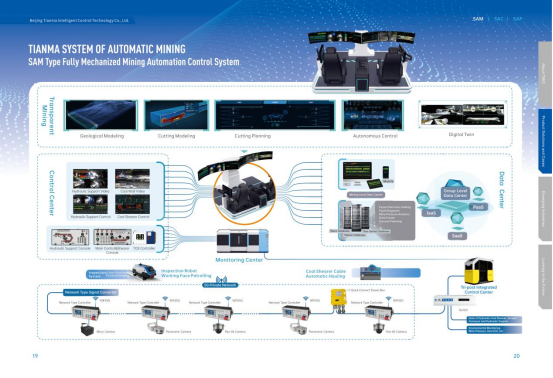

Comprehensive Mining Automation Control System
Beijing Tianma Intelligent Control Technology Co., Ltd.



TWP16 P-Band Tropospheric Wind Profile Radar
China Huayun Meteorological Technology Group Co., Ltd.
Conveyor Belt Intelligent Monitoring System
LUO YANG WIRE ROPE INSPECTION TECHNOLOGY CO., LTD.
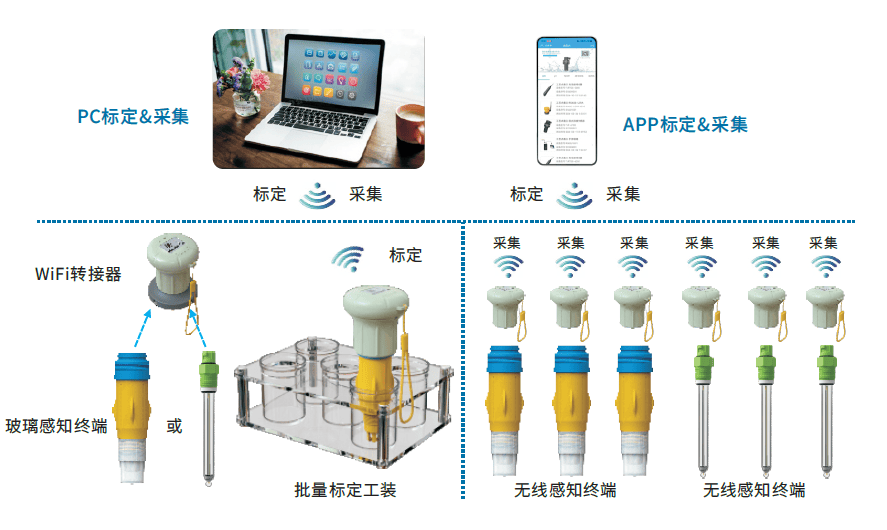



GYTA Type Non-Self-Supporting Aerial/Duct Optical Cable
TONGDING INTERCONNECTION INFORMATION CO., LTD.