Microsoft to Deploy AMD Helios AI System with 72 Integrated GPUs
en.Wedoany.com Reported - Microsoft has announced plans to deploy AMD's AI rack-scale system, Helios, at scale in its data centers to enhance the AI computing capabilities of the Azure cloud platform. This collaboration marks a significant advancement for AMD in the data center GPU market, enabling Azure customers to run cutting-edge AI model workloads—covering both training and inference tasks—using the latest generation of AMD GPUs.

The AMD Helios is a rack-scale system designed to compete with Nvidia's Vera Rubin NVL72. It integrates 72 of the latest-generation Instinct MI455X GPUs, with a total HBM4 memory capacity of 31.1 TB. Its computational performance reaches 1.4 exaFLOPS at FP8 precision and 2.9 exaFLOPS at FP4 precision, optimized for modern AI models.

Helios achieves 260 TB/s in intra-rack scaling bandwidth, comparable to Nvidia's Vera Rubin NVL72 system. For inter-rack scaling, Helios provides 43 TB/s bandwidth via UALink over Ethernet, double that of Vera Rubin. However, the actual performance of UALink over Ethernet remains to be validated in practice. Neither Microsoft nor AMD has disclosed specific deployment investment figures or power consumption metrics. Previously, AMD has established partnerships with OpenAI and Meta potentially worth hundreds of billions of dollars.
In addition to Helios, Microsoft has launched two new virtual machine series based on the sixth-generation AMD Epyc Venice processor: the HDv2 series targets AI agent workloads and data pipelines, while the HXv2 series is designed for semiconductor design workflows. Microsoft also plans to integrate AMD Pensando DPUs into the Azure Boost service to accelerate network and storage processing. This series of collaborations indicates that Azure customers now have more diverse AI computing options, no longer relying solely on Nvidia GPUs. With the emergence of open-source models like Kimi K3, AI computing demand continues to grow, allowing enterprises to choose suitable infrastructure based on performance, cost, and availability requirements.
AMD plans to launch Helios by the end of this year, coinciding with the release timeline of Nvidia's Vera Rubin NVL72. Competition between the two semiconductor giants in the data center GPU market is expected to intensify.
Related Products




Industrial and Commercial Point-Type Gas Detector
Jinan Benan Technology Development Co., Ltd.

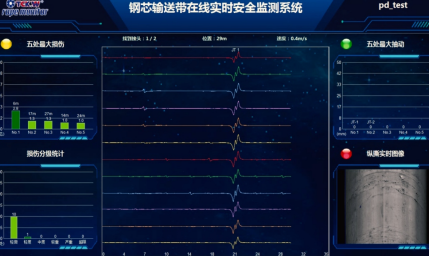
Conveyor Belt Intelligent Monitoring System
LUO YANG WIRE ROPE INSPECTION TECHNOLOGY CO., LTD.



Multi-function Marine Monitoring Low-altitude Detection Radar Sea-air Boundary Ocean Dynamic Environment Measurement
Chengdu Dixin Technology Co., Ltd.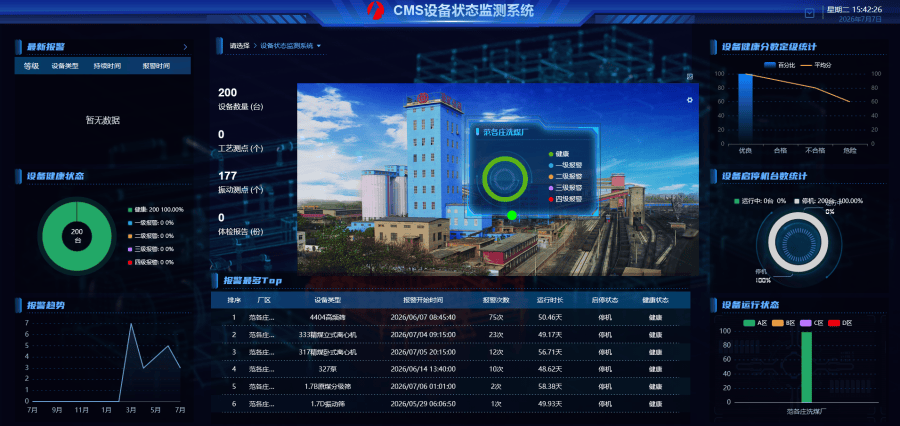
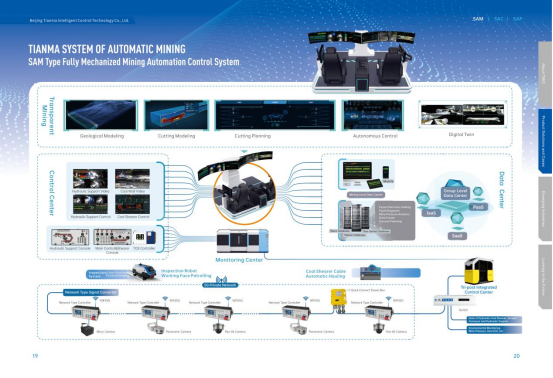
Comprehensive Mining Automation Control System
Beijing Tianma Intelligent Control Technology Co., Ltd.