China's Ministry of Industry and Information Technology to Plan Construction of Next-Generation Communication Network This Year
en.Wedoany.com Reported - China's Ministry of Industry and Information Technology (MIIT) revealed at a press conference held by the State Council Information Office on July 20 that the central government has made decisions and deployments this year regarding the planning and construction of "six networks." The MIIT is currently conducting research on the construction of a next-generation communication network. Xie Cun, Director of the MIIT's Information and Communication Administration Bureau, stated that the "newness" of the next-generation communication network is mainly reflected in four aspects.
First, the connection objects have expanded from traditional individual users to diverse entities such as people, machines, objects, and embodied intelligence. Second, the coverage scope has broken through traditional ground limitations, extending to integrated air-space-ground-sea full-area coverage. Third, connection capabilities have significantly improved in terms of certainty and stability, better meeting the differentiated needs of industry applications. Fourth, network functions have evolved from simple information transmission to the deep integration of multiple capabilities such as communication, perception, computation, intelligence, and security. Xie Cun pointed out that this is not merely a network upgrade in the traditional sense, but a key innovation in digital information infrastructure for the intelligent era.
Xie Cun stated that in the next step, the MIIT will prioritize the planning and construction of the next-generation communication network as a key driver for the development of the information and communication industry. Leveraging the implementation of the industry's "15th Five-Year Plan" as a lever, the ministry will deepen research, strengthen coordination, and improve policies, focusing on three main areas of work.
First, focus on network construction and deployment. Coordinate the construction of basic networks, space networks, international networks, and integrated networks, promote the large-scale commercial use of 5G-A and 10-gigabit optical networks, continuously increase the reach of international submarine cables, accelerate the construction of new industrial networks, and form an infrastructure system that meets the needs of the intelligent economy and intelligent society.
Second, focus on industrial support and empowerment. Strengthen core technology innovation and breakthroughs in 6G mobile communication, ultra-high-speed optical communication, submarine optical cables, and satellite communications, accelerate the development of related products, and support the high-quality construction and deployment of the next-generation communication network. Highlight the principal role of enterprises in technological innovation, leverage the role of industrial platforms, research institutes, and industry associations, and achieve efficient synergy between the innovation chain and the industrial chain.
Third, focus on application innovation and promotion. Deepen the application of 5G and gigabit optical networks in key industries, and innovate application scenarios and models. Deepen the integrated development of brain-computer interfaces, embodied intelligence, intelligent connected vehicles, and technologies such as 5G-A, 6G, and satellite internet. Leverage the digital foundation support role of the next-generation communication network to collaboratively empower innovative applications and integration across water networks, new power grids, computing networks, urban underground pipeline networks, and logistics networks.
Related Products

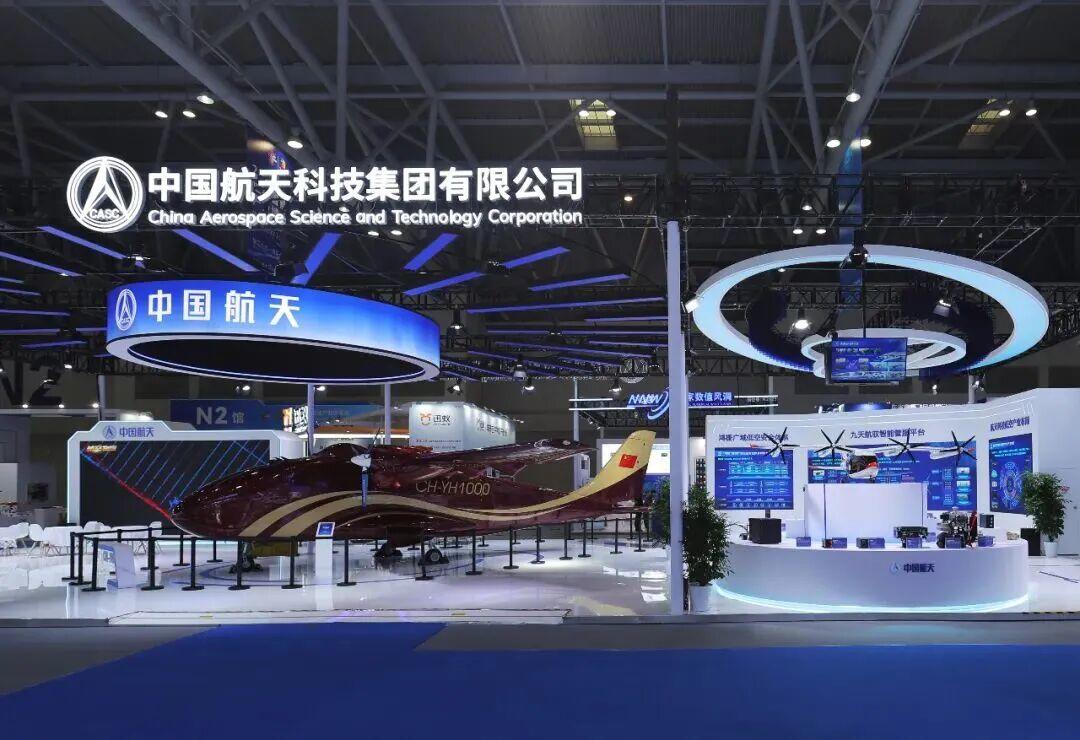
JiuTian OneSky Pilot—Intelligent Management And Service Platform
China Times Prospect Science & Technology Co., Ltd.

G.652.D Wavelength-extended Non-dispersion Shifted Single-mode Optical Fiber
HONGAN GROUP CO., LTD.

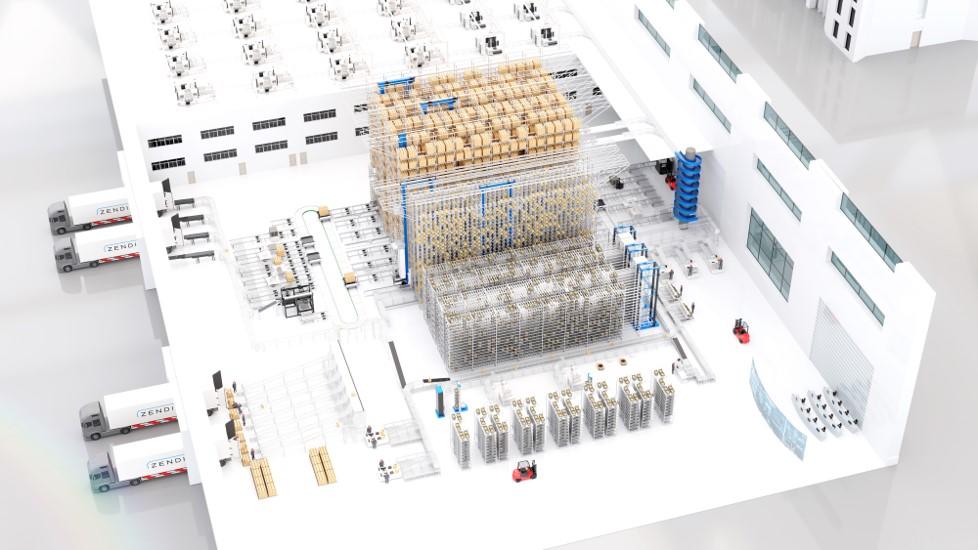
One-Stop Steward Service for the Entire Logistics System Integration Chain
Zhongding Intelligent (Wuxi) Technology Co., Ltd.

Comprehensive Mining Automation Control System
Beijing Tianma Intelligent Control Technology Co., Ltd.
GYTA Type Non-Self-Supporting Aerial/Duct Optical Cable
TONGDING INTERCONNECTION INFORMATION CO., LTD.