Fraunhofer CSP develops ultra-thin glass photovoltaic modules with coating to enhance mechanical strength
en.Wedoany.com Reported - Germany's Fraunhofer Center for Silicon Photovoltaics (Fraunhofer CSP) has developed a thin-glass solar module in collaboration with startup Exxosqel GmbH, which compensates for the mechanical strength lost due to the thinner glass cover through a special glass coating.
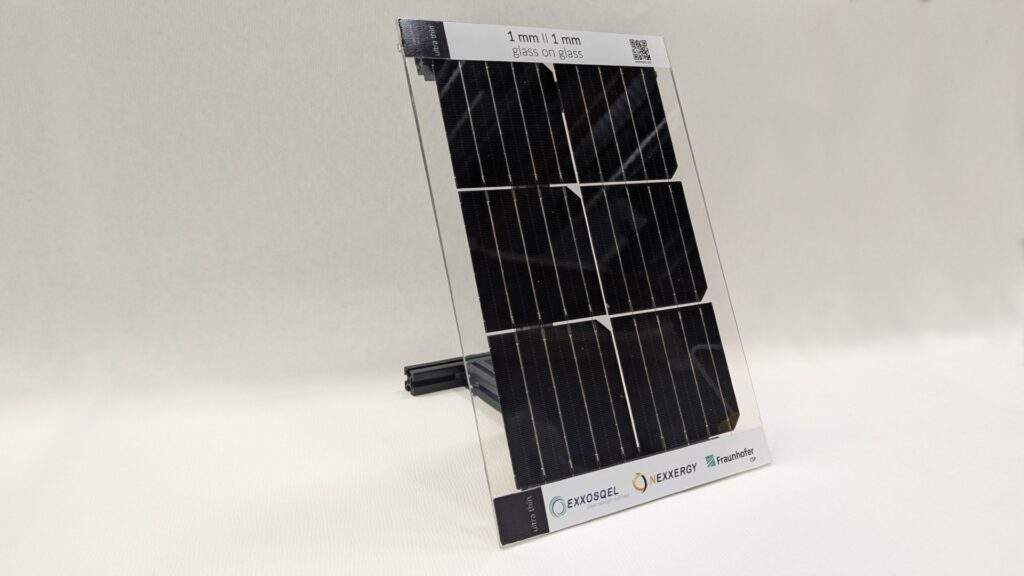
The demonstration prototype uses 1 mm thick front and rear glass panels, with a total glass area of 300 mm × 200 mm. The module employs standard solar module encapsulation materials and utilizes quarter-cut cells from bifacial M6 9-busbar PERC cells. These quarter-cut cells are connected in series, with each cell delivering an output power of approximately 1.58 watts. Fraunhofer CSP scientist Ringo Köpge stated that the module is manufactured using standard photovoltaic lamination processes, but with modifications to process parameters such as temperature, pressure, and system settings.
The coating is described as a multi-component reactive surface treatment applied directly to the glass surface. It chemically reacts with hydroxyl (Si–OH) groups associated with damaged glass surfaces and microcracks, forming covalent bonds with the glass structure. Exxosqel claims that this reaction can partially repair microcracks, reduce surface brittleness, and improve the mechanical strength of the glass. The resulting cross-linked composite layer is designed to remain transparent and chemically durable while maintaining a refractive index matching that of glass to minimize optical losses.
Exxosqel CEO Thomas C. Sauer explained that the technology is inspired by the structure of abalone shells—where a small amount of organic material significantly enhances toughness—forming a stronger composite surface while preserving transparency and durability. The technology can be integrated into existing glass production or processing workflows, potentially enabling thinner and lighter glass products without sacrificing mechanical performance. The company has not disclosed further details about the chemical composition of the coating.
According to laboratory tests conducted by Exxosqel, the strength of 2 mm glass samples increased from 79 MPa to 364 MPa, and 1 mm glass samples increased from 184 MPa to over 1300 MPa. The company estimates that thinner glass substrates can reduce weight by up to 40%, thereby decreasing material usage, energy consumption, and carbon emissions.
Ringo Köpge noted that the coating process is not limited to the demonstration module and can also be applied to standard solar modules. Fraunhofer CSP believes that ultra-thin glass coatings could provide solutions for applications such as building-integrated photovoltaics (BIPV), including modules with printed front covers and lightweight designs.
This technology is expected to reduce manufacturing costs, material consumption, module weight, and associated transportation and handling costs by using thinner glass. However, thinner glass also raises concerns about mechanical durability in the field, particularly under extreme weather conditions such as hailstorms. According to a recent study in India, solar modules with a front glass thickness of 3.2 mm may not be sufficient to withstand storms producing large hailstones, and a front glass thickness of at least 4 mm should be used to avoid severe damage.
Sauer stated that the prevailing view is that reducing glass thickness is inherently incompatible with adequate hail resistance, but their technology aims to overcome this traditional limitation by employing a fundamentally different strengthening mechanism, decoupling mechanical performance from conventional glass thickness constraints. Hail resistance testing of full-size modules is the next important development step. Based on the mechanical results obtained so far, the team is optimistic, but large-scale module testing still needs to provide the necessary evidence.
Related Products

Perfluorinated Ionic Membrane-CM-10N Series Membrane
Guizhou Juneng Century Technology Co., Ltd
Standard Nozzle Flowmeter
Jinggong Automatic Control Instrument Complete Technology Development Company

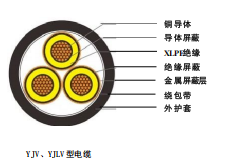
Rated Voltage 6-35kV Cross-linked Polyethylene Insulated Power Cable
TONGDING INTERCONNECTION INFORMATION CO., LTD.
Pneumatic high-pressure wear-resistant ball valve
Zhejiang Deca Control Valve Meter Co., Ltd.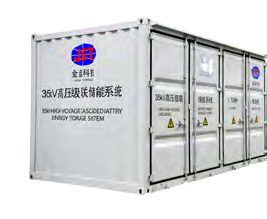
6kV-35kV Medium and High Voltage Direct-Connected Energy Storage System
Hainan Jinpan Smart Technology Co., Ltd.