China's Maritime Authorities Remind of Safety Bottom Line for Transport of Liquefiable Cargoes During Flood Season
en.Wedoany.com Reported - China's maritime authorities remind that the current flood season is characterized by widespread, intense, and sudden rainfall, with frequent occurrences of short-term gales, thunderstorms, and severe convection. Affected by rainwater infiltration and rising air humidity, the moisture content of liquefiable solid bulk cargoes is highly prone to exceeding limits, significantly increasing maritime transport safety risks. Once such cargoes undergo liquefaction, they may cause the vessel to list, lose stability, or even capsize instantly.
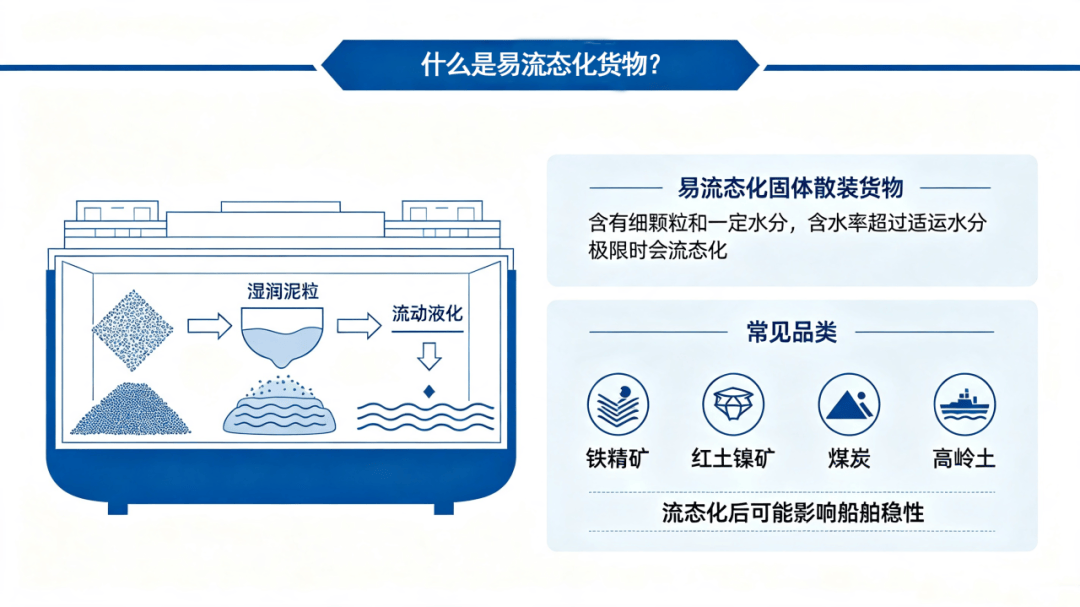
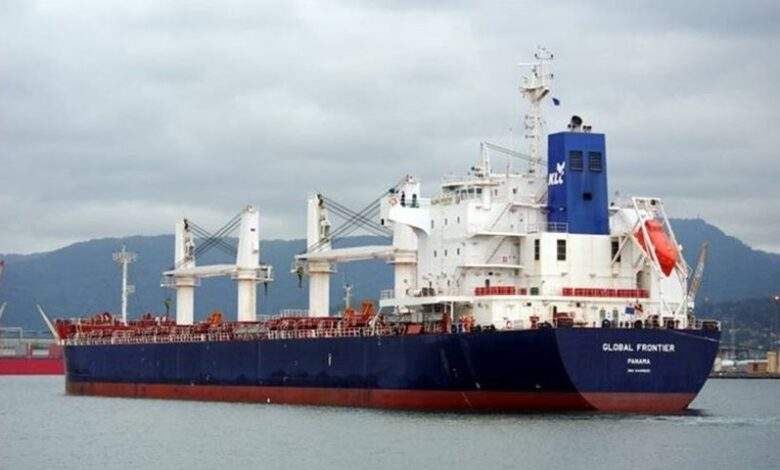
Liquefiable solid bulk cargoes refer to solid bulk cargoes containing some fine particles and a certain amount of moisture, which may liquefy when the moisture content exceeds the transportable moisture limit. Common types include iron ore concentrate, nickel laterite ore, coal, kaolin, and other cargoes with similar physical properties.
The main reasons for cargo liquefaction hazards during the flood season include several factors. Under heavy rain conditions, poorly sealed cargo holds or loading operations in the rain allow rainwater to enter the hold, rapidly increasing the cargo's moisture content. Severe convection accompanied by strong winds and heavy swells causes continuous vessel rolling, allowing liquefied cargo to slide freely with the hull, forming unstable free surfaces that significantly reduce vessel stability. During the flood season, fast currents, numerous undercurrents, and low visibility make maneuvering difficult in areas such as bridge zones, bends, and shoals, exacerbating vessel motion. Some vessels hastily load or unload before thunderstorms, resulting in uneven cargo distribution, lack of proper leveling and compaction, and inadequate waterproofing measures.
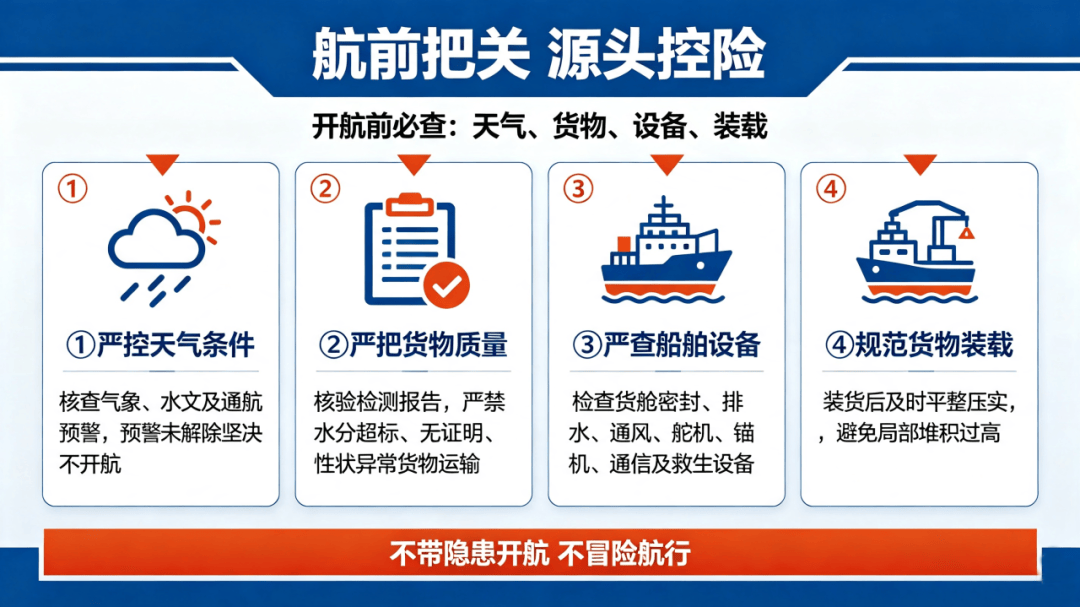
Pre-departure checks require strict control of weather conditions to avoid risky sailing. Before departure, verify weather, hydrological, and navigation warnings, and strictly comply with navigation bans. Rigorously check cargo quality, strictly verify cargo inspection reports, and prohibit the transport of cargo without valid certificates, with excessive moisture content, or with abnormal properties. Thoroughly inspect ship equipment, including cargo hold sealing, drainage, and ventilation systems, and confirm the normal working condition of steering gear, windlass, navigation and communication equipment, and emergency life-saving appliances. Standardize cargo loading, and promptly level and compact the cargo after loading.
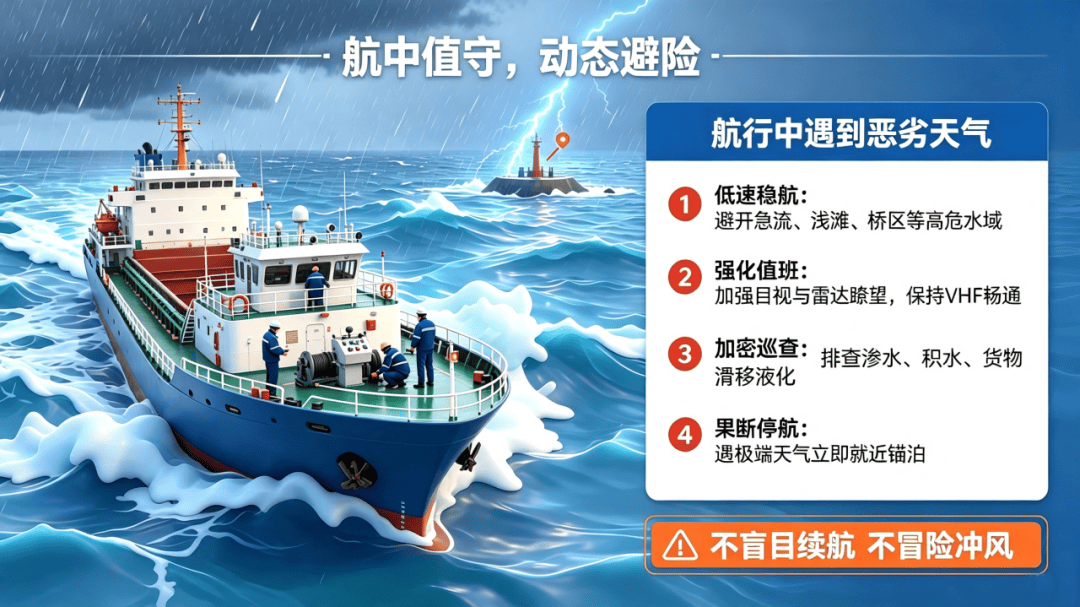
During navigation, maintain low speed and stable course. In adverse weather, immediately reduce speed and steady the helm, avoiding high-risk areas such as swift currents, shoals, and bridge zones. Strengthen watchkeeping, maintain communication, and increase cargo hold inspections. In severe weather, increase inspection frequency, and if hazards are detected, immediately reduce speed and anchor at the nearest safe location for handling.
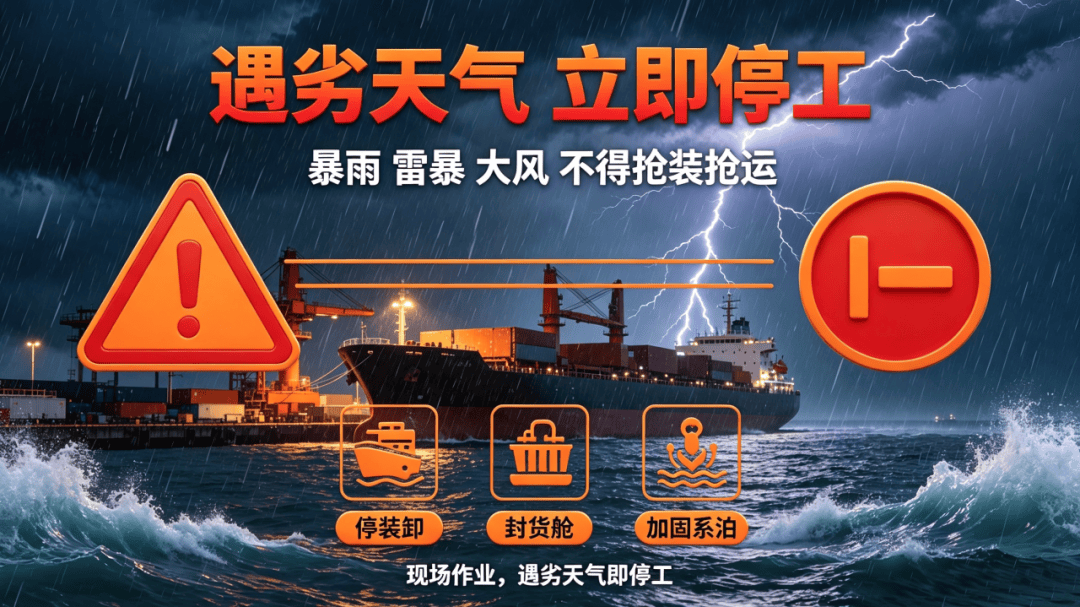
During loading and unloading operations, if heavy rain, thunderstorms, or gale-force winds occur, immediately cease all operations, quickly seal cargo holds, and reinforce mooring.
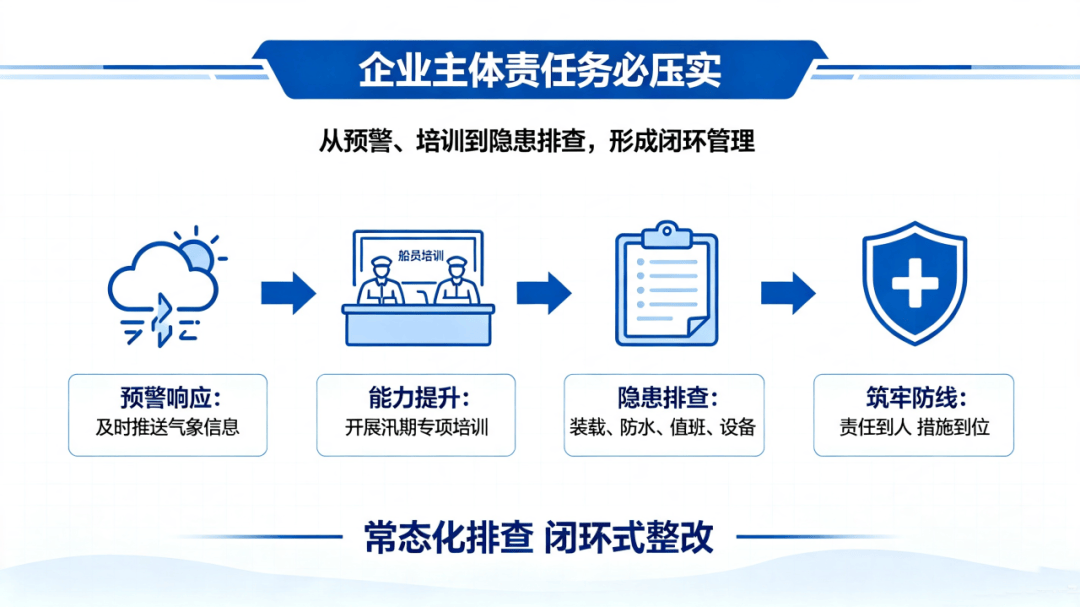
All shipping and terminal companies must establish flood season warning and response mechanisms, conduct regular specialized training for crew members, and identify and rectify various hazards related to loading, waterproofing, and watchkeeping.
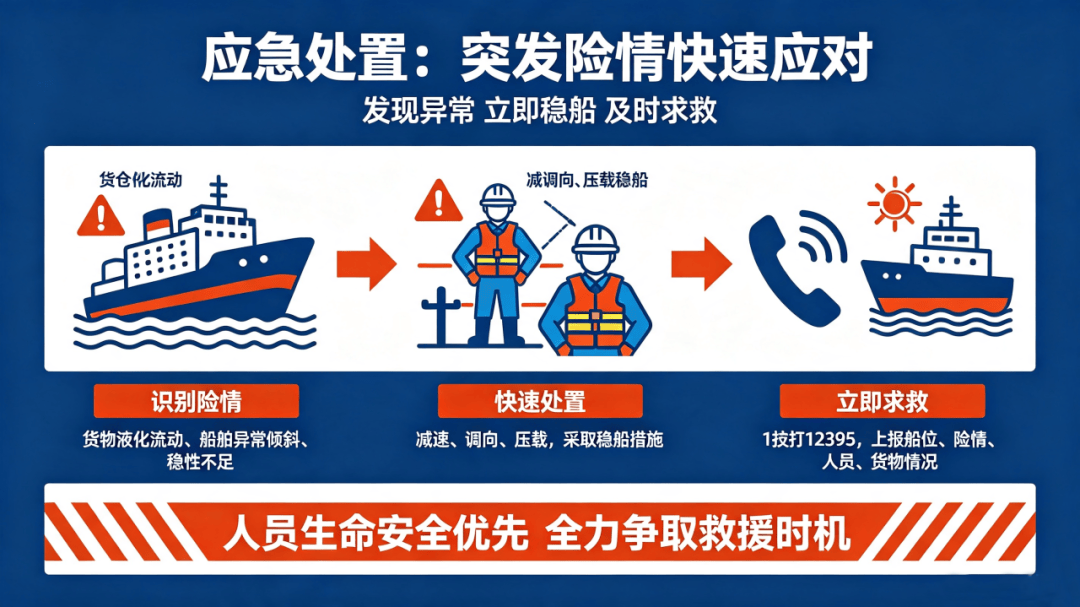
If emergency situations such as cargo liquefaction flow, abnormal vessel listing, or insufficient stability occur during navigation, crew members should immediately take measures to stabilize the vessel, such as reducing speed, adjusting course, and ballasting, while simultaneously calling the maritime distress hotline 12395 to report the vessel's position, nature of the emergency, personnel status, and cargo condition.
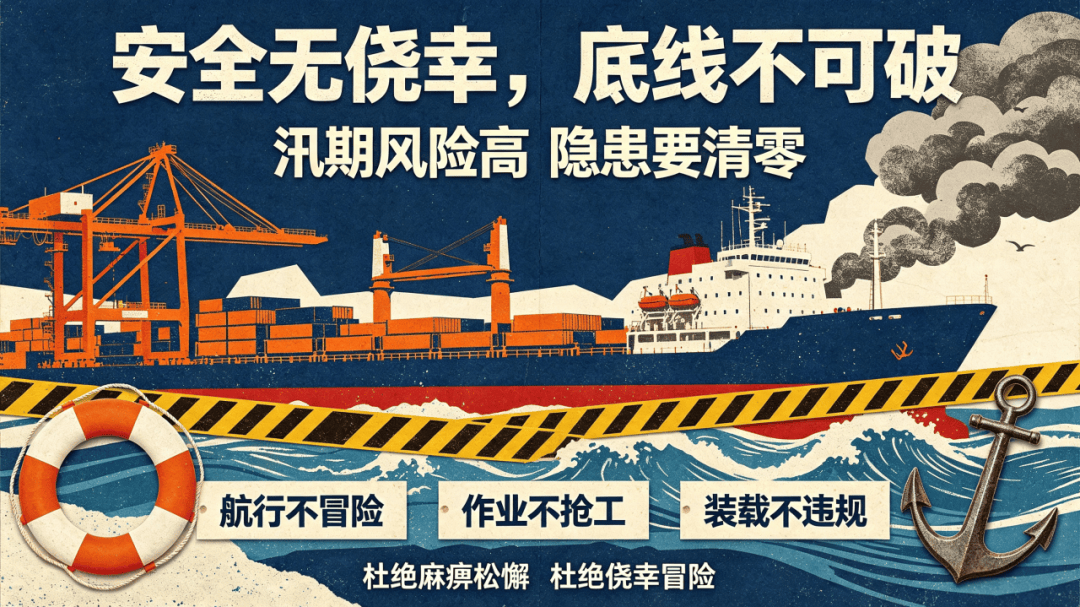
The maritime authorities remind all waterway operators to strictly adhere to safety bottom lines in navigation, operations, and loading, ensuring the continued stability of maritime traffic safety during the flood season.