NASA Considers Converting Mars Rover into Lunar Rover, Cost Could Exceed $1 Billion
en.Wedoany.com Reported - NASA is considering converting an engineering model of its Mars rover into a lunar rover called PROMISE (Polar Rover for Observation, Mapping and In-Situ Exploration). According to estimates by The Planetary Society, the project could cost more than $1 billion; NASA Administrator Jared Isaacman subsequently publicly pushed back on that figure.
NASA announced on June 30 that it is considering sending PROMISE to the Moon. PROMISE would be based on engineering models of the Curiosity and Perseverance Mars rovers—models currently used on Earth to help plan rover operations and diagnose issues. At the event where PROMISE was announced, Isaacman said the rover is part of an effort to "scour the warehouses of every one of our centers for payloads" to support its lunar base ambitions. "We are now very seriously considering sending PROMISE to the Moon."
He said: "We have this hardware, and this is exactly what we should be doing to deliver results and put capabilities like PROMISE on the lunar surface. I think we'll probably tweak some of the instruments on it. It will bring tremendous capability to the lunar south pole very soon." During the briefing, neither Isaacman nor Carlos García-Galán, NASA's lunar base program manager, provided a cost estimate for the conversion, but said the work could be done relatively quickly and cheaply due to the existing hardware.
An analysis released by The Planetary Society on July 30 offered a different assessment. Based on historical cost data, requirements, and other cost estimates, the analysis concluded that developing and launching PROMISE would cost between $723 million and $1.33 billion, including one year of operations on the Moon. PROMISE might not be ready for launch until the early 2030s. Casey Dreier, The Planetary Society's director of space policy and author of the assessment, summarized: "It's clear this mission is far from a 'free lunch'—it would consume significant resources that could otherwise be used to advance established scientific priorities in NASA's science portfolio."
The assessment examined what would be required to convert OPTIMISM, the Perseverance rover engineering model at the Jet Propulsion Laboratory, into PROMISE. Dreier noted that OPTIMISM lacks many space-grade components needed for a lunar mission, including communication systems, and has no flight-ready instruments. A major factor is power supply: Perseverance is powered by a radioisotope thermoelectric generator (RTG). NASA currently has a spare RTG available for PROMISE, but significant work would still be needed to approve its use on the rover, potentially modify the lander carrying PROMISE, and certify the launch vehicle that would carry it.
"There is no reasonable 'free' path for this mission—even the lowest cost would be equivalent to a medium-class planetary science mission." Dreier added that advancing PROMISE could have other drawbacks: it would deprive Curiosity and Perseverance of their test platform, increasing risk to those missions; and using the spare RTG for PROMISE would also rule out outer solar system planetary science missions for the foreseeable future.
On July 31, Isaacman pushed back against The Planetary Society's cost estimate in a social media post. "Launch and landing costs are a reality for any mission, so setting those aside, if PROMISE costs even 20% of your lowest estimate, we wouldn't fly it." He also defended the concept of reusing existing hardware to support lunar base construction. He wrote that it would be "crazy" not to leverage hardware in which taxpayers have already invested hundreds of millions of dollars, as well as plutonium-238 (Pu-238) fuel that is continuously decaying and losing about 2% of its potential each year. He was referring to the Pu-238 fuel in RTGs. "How much of this Pu-238 do you want to waste waiting for a mission that doesn't exist?"
The uncertainty over RTG availability is one reason there is no alternative mission. Budget pressures have forced NASA to delay the call for proposals for the next New Frontiers planetary science mission, with current plans expecting the call to be issued in fiscal year 2027. New Frontiers is a series of medium-class missions, some of which could require RTGs. At a July 21 meeting of the NASA Exploration Science Forum, Louise Prockter, director of NASA's planetary science division, said one factor in the delay of the New Frontiers call is the agency's ongoing assessment of the list of potential missions the call will consider. "We're also looking at the availability of nuclear power," she added, citing the reorganization of nuclear programs within the agency. "We're still trying to understand the implications. Several missions on the list would certainly benefit from nuclear power." Later in the meeting, she said: "We're investigating whether we can provide nuclear power for this list of candidate New Frontiers missions. That could have an impact, but we'll be releasing that information soon."
In his social media post, Isaacman defended his approach to NASA's lunar base proposal, including moving quickly and reusing existing hardware and programs. "I understand this community sometimes likes to take a long time to reach consensus, but under this administration, we can just get things done and deliver results for the lunar base and all the science and discoveries it will bring," he wrote. "In my humble opinion, fewer arguments and more wins make it easier to secure more resources to do more science."
Related Products



Pantograph-Catenary Comprehensive Detection Device (1C)
CHENGDU TANGYUAN ELECTRIC CO., LTD.
One-Stop Steward Service for the Entire Logistics System Integration Chain
Zhongding Intelligent (Wuxi) Technology Co., Ltd.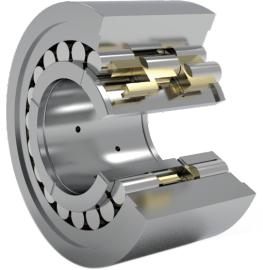

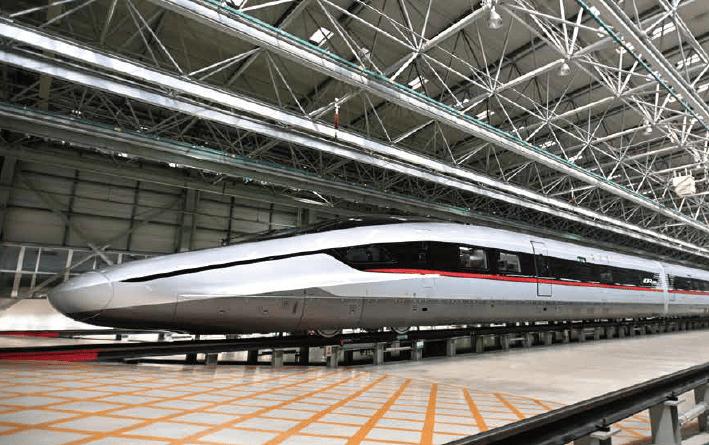
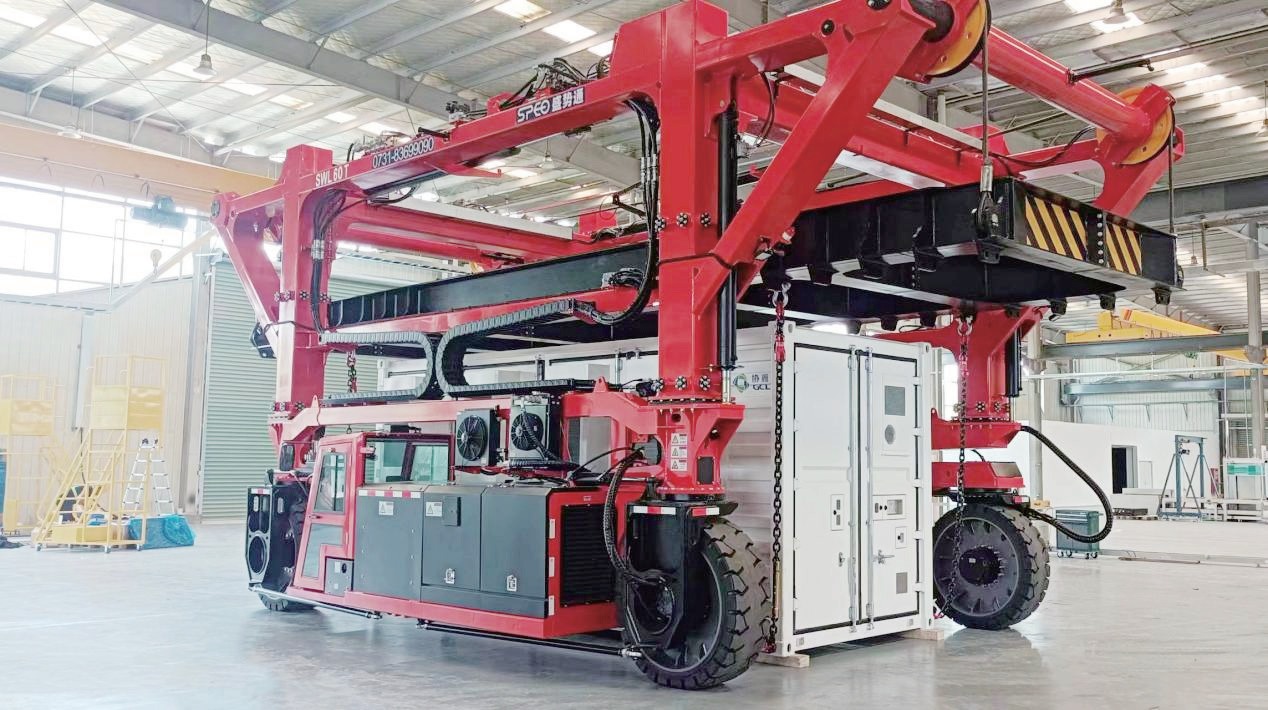

Wheel and Track Technology Business
Beijing Research & Design Institute of Rubber Industry Co., Ltd.
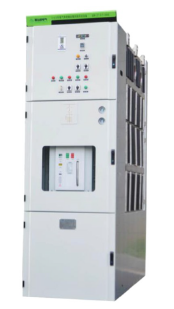
GSR6-27.5kV SF6 Free Gas-insulated Metal-enclosed Switchgear
Zhejiang Juhonkia Intelligent Electric Co., Ltd.
Explosion-proof lithium battery dispatching monorail crane locomotive (permanent magnet frequency conversion integrated machine)
Xiangtan Hengxin Industrial Co., Ltd.