Over 30 Satellites Enter Orbit in a Week: China's Aerospace Industry Is Accelerating Its Leap Forward
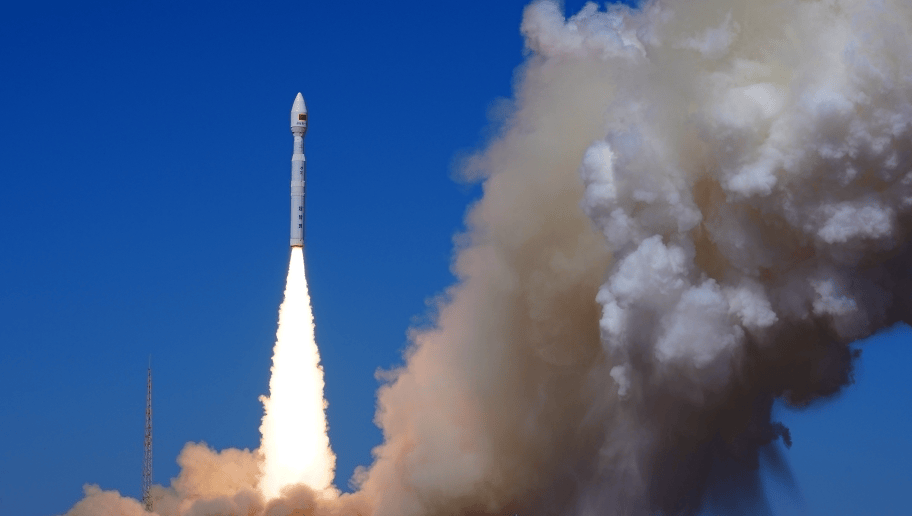
en.Wedoany.com Reported - From September 14 to 20, China completed multiple space launch missions in succession, with more than 30 satellites entering their designated orbits. Within just one week, liquid commercial rockets, solid commercial rockets, and multiple types of launch vehicles from the national space system lifted off in succession. The missions spanned low-orbit communication constellations, remote sensing, scientific experiments, and commercial satellite deployment, with launch sites extending from the inland northwest to Hainan and the eastern waters.
If this round of intensive launches is understood merely as a sudden acceleration of commercial space, it is easy to underestimate the industrial changes behind it.
Today, China's aerospace industry is entering a new stage of development. Over the past decades, China has built up capabilities in aviation manufacturing, space transportation, satellite development, navigation and communication, materials, electronics, propulsion, and large-scale complex system integration. These capabilities are now being released simultaneously across multiple industrial directions. Large aircraft have entered scaled commercial operations, low-orbit satellites have entered batch networking, reusable rockets have entered the stage of engineering verification and application, low-altitude aircraft are expanding rapidly, and satellite internet has entered a national-level infrastructure construction cycle.
For a long period in the past, China's aerospace industry mainly relied on major model programs for traction. Now, increasingly pronounced characteristics of industrialization, commercialization, and scale are emerging.
This is also why more than 30 satellites entering orbit in a week truly deserves to be observed within a larger industrial coordinate system.
From breakthroughs in major models to a complete aerospace industrial system
The development of China's aerospace industry over the past decades has roughly gone through three levels.
The earliest issue addressed was "whether it can be built."
In fields such as launch vehicles, communication satellites, remote sensing satellites, navigation satellites, and military and civil aircraft, it was necessary first to break through basic capabilities in overall design, aerodynamics, propulsion, materials, structures, control, and electronics.
What was addressed next was "whether a complete system can be formed."
The BeiDou global satellite navigation system, space station, large launch vehicles, lunar exploration program, and domestically produced large aircraft successively formed engineering capabilities. China gradually established a long industrial chain from R&D and design, testing and verification, and core component manufacturing to final assembly, launch, operation and maintenance, and application services.
The increasingly prominent question now is "whether a large-scale industry can be formed."
This change is very critical.
The national-level positioning of the aerospace industry has also changed. The 2026 Government Work Report explicitly proposed building integrated circuits, aerospace, biomedicine, and the low-altitude economy into emerging pillar industries, while separately proposing to "accelerate the development of satellite internet." Aerospace has further moved from major scientific and technological programs into the construction system of emerging pillar industries.
There is a clear difference between a "pillar industry" and the past emphasis solely on technological breakthroughs.
For an industry to become a pillar, it needs to form a sufficiently large output value scale, a sufficiently long supply chain, stable market demand, sustained capital investment, and the participation of a large number of specialized enterprises.
This is precisely the most obvious change in China's aerospace industry today.
What large aircraft truly change is the industrial foundation of China's high-end aviation manufacturing
When observing China's aerospace industry, one cannot focus only on rockets and satellites.
The aviation industry is another sector undergoing profound changes.
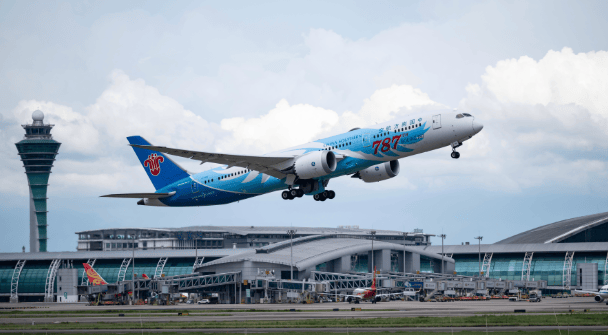
After the C919 entered commercial operation, China's civil aviation manufacturing began to enter a stage it had never experienced before: aircraft began to be delivered continuously, the fleet size expanded, the number of routes increased, and at the same time full life-cycle industrial demands emerged, including maintenance, aviation materials, training, engineering modifications, and operational support.
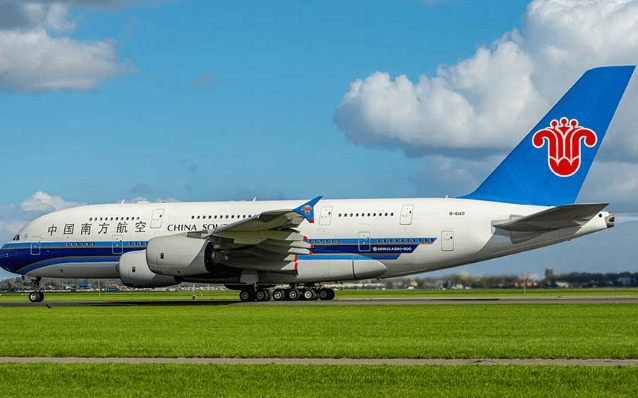
As of September 2026, Air China's C919 fleet had reached 12 aircraft, with a cumulative 13,800 safe flights, 1.83 million passengers carried, and had already operated international scheduled commercial routes. China Southern Airlines' C919 had also entered the stage of high-level heavy maintenance checks. In 2026, the first C919 C-check was completed, involving nearly 700 work cards and 28 engineering modification directives in a single C-check.
The industrial value behind these figures is far higher than the delivery of a single aircraft.
Large passenger aircraft are among the products with the most complex supply chains in the modern industrial system.
Behind a large passenger aircraft are aero engines, airborne equipment, flight control systems, avionics systems, hydraulic systems, landing gear, composite materials, aluminum-lithium alloys, titanium alloys, precision forgings, connectors, sensors, cables, seats, interiors, and a large number of software systems.
Only after the number of aircraft increases can the supply chain form true batch demand.
Only after aircraft operating hours increase can the maintenance system and aviation materials system form a market.
Only after the fleet size continues to expand can the aviation manufacturing industry truly enter a long-term industrial cycle from model development.
Therefore, the value that the C919 truly brings to China's manufacturing industry cannot be measured only by "a breakthrough in domestically produced large aircraft."
Its deeper impact is that China has begun to possess a large-scale industrial platform capable of driving the long-term upgrading of the high-end aviation industrial chain.
From manufacturing aircraft to building an aviation industry ecosystem, the difficulty is one level higher
There is a major difference between the aviation industry and ordinary manufacturing.
Product delivery is not the end point of the industrial chain.
A civil airliner may operate for twenty to thirty years, generating a maintenance, modification, aviation materials, and technical services market that lasts for decades.
As the number of C919s continues to increase, airlines need to build corresponding maintenance capabilities, engineering capabilities, and aviation materials reserves. Pilots, maintenance personnel, dispatchers, and maintenance engineers all need long-term training systems.
China Southern Airlines completed the first deep C-check of the C919 in 2026, which in fact marks an important node in the extension of China's domestically produced large aircraft industry into the aftermarket.
In the end, competition in the aircraft industry is not only about final assembly manufacturing capability.
It also includes airworthiness systems, operational reliability, aviation materials support efficiency, global maintenance networks, aircraft residual value, finance leasing, insurance, and the second-hand aircraft market.
China's aviation industry is currently gradually entering these high-value segments that it had previously been less involved in.
The C919 has already opened an international scheduled route from Beijing to Ulaanbaatar, which also shows that domestically produced large aircraft have begun to step beyond the domestic operating system and gradually accumulate data under different airports, different routes, and different operating environments.
Whether China's aviation industry can continue to move up the global industrial chain in the future depends to a large extent on whether this long-term operational capability can be established.
Changes in commercial space are even more dramatic: from scientific research manufacturing to high-frequency industrial production
If large aircraft represent China's aviation manufacturing advancing toward scaled operations, then commercial space is undergoing an even more thorough transformation in its mode of production.
Data from the China National Space Administration show that in 2025 China completed 50 commercial space launches, accounting for 54% of the year's total space launches; 311 commercial satellites entered orbit for the year, accounting for 84% of China's total satellites entering orbit that year.
This is a very important industrial signal.
In China's space activities, commercial demand has already accounted for a considerable share of mission scale.
In the past, the biggest characteristics of the space industry were small batches, high reliability, and high cost.
A large satellite might take years to develop, a rocket served one major mission, and a large number of products were produced on a project basis.
Low-orbit constellations have completely changed this mode of production.
A constellation composed of hundreds or even thousands of satellites requires satellite manufacturing to move from single-unit production to batch production; rockets need continuous delivery; engines need scaled production; assembly and testing cycles need to be compressed; launch sites need to improve turnover efficiency.
The core indicator of the traditional space industry was mission success rate.
Commercial space has added a whole new set of indicators:
How many satellites are produced per year, how many rockets are produced per year, how long the engine manufacturing cycle is, how many days launch preparation takes, how many missions one pad can complete in a year, and what the cost per kilogram to orbit is.
This is already very close to the basic logic of competition in modern manufacturing.
Low-orbit satellite constellations are becoming the largest "industrialization order" for China's space industry
This is the core reason why more than 30 satellites entering orbit in a week is important.
Constellation construction has created long-term batch orders that rarely appeared in the space industry in the past.
Traditional satellite development often revolved around a single model.
The business model of satellite internet is completely different.
The networking phase may require hundreds or even thousands of satellites, followed by continuous replenishment. Because the lifespan of low-orbit satellites is relatively limited, satellite replacement itself will also create long-term demand.
This means that once low-orbit constellations enter large-scale deployment, they may become a source of basic orders for satellite manufacturing and rocket launches for many years.
Satellite factories are also changing accordingly.
Structural components need batch production.
Solar wings need batch production.
On-board computers, attitude and orbit control equipment, propulsion systems, phased-array antennas, laser communication terminals, radio frequency devices, and power systems all need to enter a state of continuous supply.
Originally, a space model might need only dozens of sets of equipment, but in the constellation era, it may need hundreds or even thousands of sets.
Only after order scale changes will supply chain enterprises have the incentive to build automated production lines, specialized equipment, and large-scale testing capabilities.
The space industry thus begins to spread from satellite and rocket enterprises to the broader electronics, materials, machinery, and equipment manufacturing industries.
The greatest advantage of China's aerospace industry is becoming the manufacturing system itself
Aerospace is one of the few industries that requires mobilizing almost the entire industrial system.
An aircraft or a rocket is not a product completed independently by a single enterprise.
Behind it are steel, nonferrous metals, composite materials, precision machining, electronic components, chips, sensors, software, communications, energy, and equipment manufacturing.
This is precisely highly compatible with China's industrial structure.
In the past, China's manufacturing scale advantage was mainly reflected in automobiles, home appliances, machinery and equipment, electronics, and new energy.
After entering the stage of scaled development in the aerospace industry, these industrial accumulations have begun to migrate across industries.
The large-scale motor, electronic control, and battery industries formed by new energy vehicles can extend to low-altitude aircraft.
High-performance sensors, servo control, and power electronics driven by new energy vehicles and industrial robots can enter aviation equipment.
Radio frequency devices, antennas, and chip capabilities formed by the communications industry can enter satellite internet.
Power management, energy storage, and high-efficiency manufacturing capabilities accumulated by the new energy industry can enter the supply chains of satellites and aircraft.
Five-axis machining, precision casting and forging, and additive manufacturing capabilities formed by high-end equipment manufacturing can serve aero engines and rocket engines.
Increasingly strong technological intersections are beginning to form among industries.
This is also a very important structural advantage for China's aerospace industry in the future.
Reusable rockets will redefine the cost structure of China's access to space
Rockets are the transportation tools of the entire commercial space system.
After satellite internet enters the stage of large-scale networking, launch costs will directly affect the economics of the entire industry.
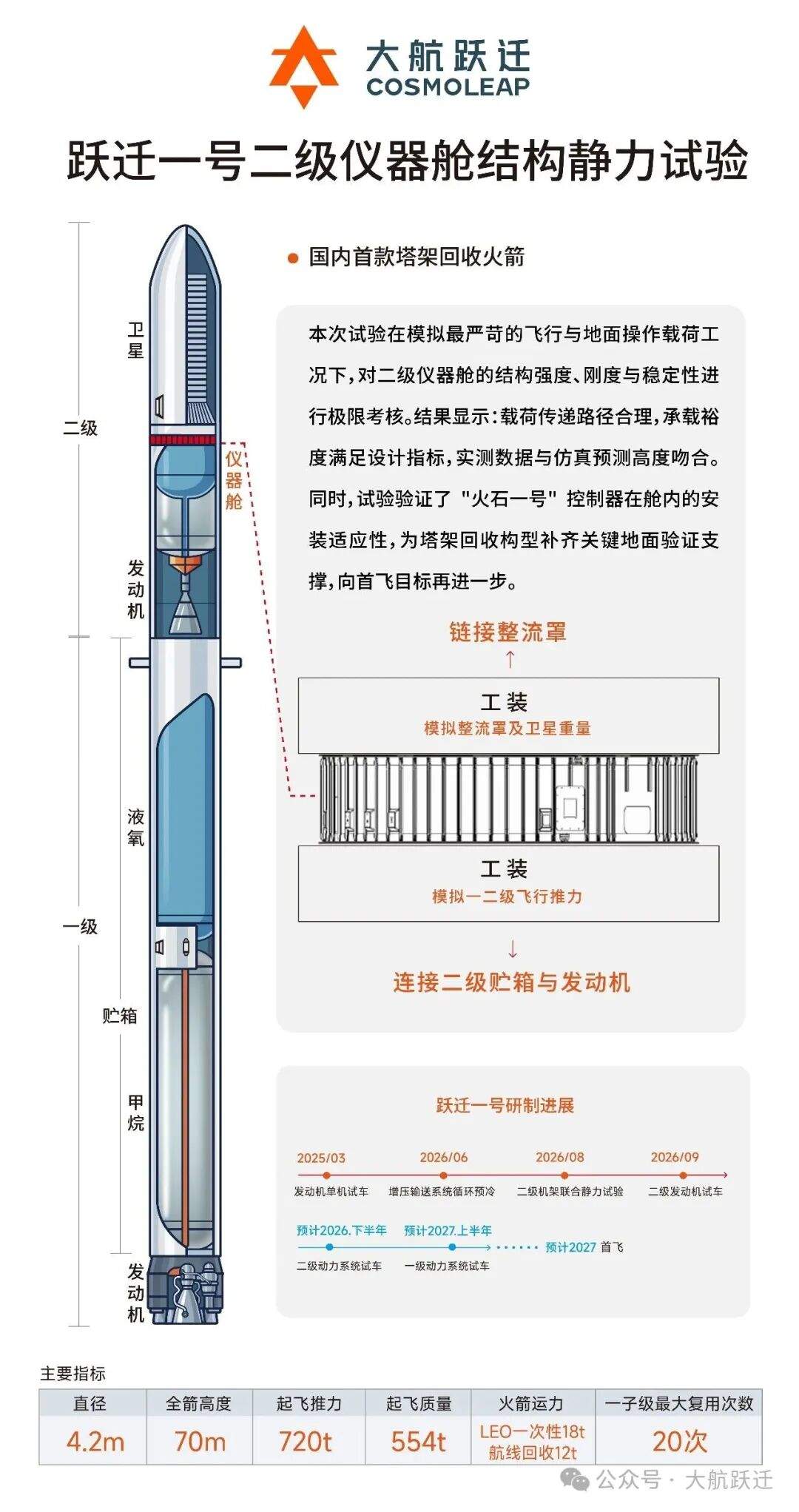
In July 2026, the Long March 10B completed its first launch and successfully implemented controlled recovery of the first stage; in August, Zhuque-3 Y2 completed vertical landing recovery of the first stage on land. The China National Space Administration subsequently explicitly proposed to continue advancing the engineering application of reusable rockets and enhance the capability for large-capacity, low-cost, high-frequency access to space.
The importance of this change to the space industry is similar in industrial significance to the aviation industry's transition from workshop-style production to modern assembly lines.
Each mission of an expendable rocket requires remanufacturing the engine, rocket body, and a large amount of equipment.
After reuse, the first stage can undertake multiple missions, and the asset utilization rate of a single rocket increases.
The business model of the rocket industry will also change.
Manufacturing a rocket to obtain one-time revenue may gradually shift in the future toward manufacturing a space transportation system that can continuously perform missions.
Engine lifespan, first-stage refurbishment cycles, number of reflights, and launch intervals will become important indicators of competition in the next stage.
Rockets may also increasingly approach the operating logic of aircraft.
A truly mature commercial space transportation system needs to form a closed loop of standardized manufacturing, ground maintenance, rapid inspection, fuel loading, and mission re-execution, just like civil aviation.
China's commercial space is advancing in this direction.
Launch sites are beginning to become industrial infrastructure similar to airports and ports
Once rockets can be manufactured in batches, launch sites will become another key production capacity.
If 100 rockets are produced a year but launch pads can only handle dozens of missions, the industry still cannot expand.
With the Hainan Commercial Spacecraft Launch Site put into operation, the Dongfeng Commercial Space Innovation Test Area continuously adding commercial launch facilities, and sea launches continuing to develop, China has begun to build a more diversified commercial launch network.
In 2025, the Hainan Commercial Spacecraft Launch Site completed 9 launches.
In the future, the indicators for measuring a space launch site will also increasingly resemble those of industrial infrastructure.
How many launches can be supported in a year;
How many days does one pad turn over on average;
Can different types of rockets share facilities;
How much time is needed from final assembly to entering the launch area;
How long after satellites arrive on site can launch be completed.
These indicators will ultimately translate into costs.
As the number of commercial space launch sites increases, China's space industry will gradually form a spatial infrastructure system similar to airport networks and port networks.
Satellite internet brings the space industry into the information industry
The 2026 Government Work Report specifically proposed to "accelerate the development of satellite internet."
This creates another new distinction between China's space industry and the past.
Rockets and satellites belong to high-end equipment manufacturing.
Satellite internet further enters communications infrastructure and the digital economy.
Satellites in space are equivalent to communication nodes, and on the ground it is still necessary to build gateway stations, tracking, telemetry and control centers, data processing centers, and user terminals.
After truly forming industrial scale, revenue sources will no longer come only from manufacturing satellites and launching rockets.
Network access, aviation communications, maritime communications, emergency communications, the Internet of Things, direct-to-cell satellite connectivity, and global data services will all form new commercial markets.
For the first time, the space industry is entering the logic of telecommunications operations on a large scale.
This is also why the importance of low-orbit satellite constellations is far higher than simply adding a few hundred satellites.
It may ultimately form a new generation of information infrastructure developing in parallel with terrestrial communication networks.
BeiDou has already proven that space infrastructure can form a huge ground industry
The development path of BeiDou provides a very important reference.
BeiDou was initially also a satellite program.
It has now formed a complete industrial chain composed of chips, modules, antennas, boards, terminals, and industry applications. Official materials show that China has achieved independent and controllable BeiDou basic products and formed a complete industrial chain; in 2026, the National Development and Reform Commission proposed to promote the BeiDou industry scale to exceed 1 trillion yuan within five years.
BeiDou's development has proven one thing:
The greatest commercial value of the space industry often does not occur in space.
Satellite system construction is only the first layer.
A larger market appears in ground applications such as transportation, agriculture, electric power, surveying and mapping, logistics, unmanned systems, and consumer electronics.
Satellite internet may also follow a similar path in the future.
Constellations are infrastructure.
The market size of user terminals, chips, antennas, communication modules, and industry applications may far exceed satellite manufacturing itself.
The low-altitude economy is pulling aviation manufacturing into a larger mass industrial market
China's aviation industry also has a new direction that has grown rapidly in the past few years—the low-altitude industry.
Traditional aviation manufacturing mainly serves large transport aircraft, helicopters, business jets, and general aviation, with a relatively limited number of products.
After the emergence of new types of aircraft such as drones and electric vertical take-off and landing aircraft, aviation equipment has for the first time had the opportunity to enter a manufacturing market of tens of thousands of units or even larger scale.
In 2026, the Ministry of Industry and Information Technology proposed that during the "15th Five-Year Plan" period it is necessary to build an intelligent, green, and integrated low-altitude industrial system and promote coordination between low-altitude equipment and industries such as new energy and the new generation of information technology.
After the low-altitude industry truly matures, aviation manufacturing may give rise to a mass industrial market that never existed before.
Logistics drones, agricultural drones, urban inspection aircraft, passenger-carrying eVTOLs, emergency rescue aircraft, and industry drones may all form scaled orders.
China's mature battery, motor, electronic control, communications, and intelligent driving industrial chains therefore also have the opportunity to enter aviation manufacturing.
From the perspective of industrial structure, the low-altitude economy is very likely to become an important industrial interface connecting China's new energy vehicles, drones, aviation manufacturing, and digital infrastructure.
Three industrial center-of-gravity shifts are emerging in China's aerospace sector
If the development of China's aerospace industry over the past decade or so is viewed as a whole, three obvious changes can be seen.
First, the industry is shifting from "model success" to "scaled delivery."
The C919 needs continuous delivery.
Satellites need batch production.
Rockets need continuous launches.
Aerospace products increasingly need to face cost, production capacity, and supply chain efficiency.
Second, the industry is shifting from "final product competition" to "ecosystem competition."
Possessing aircraft, rockets, or satellites alone is no longer enough to form an industrial advantage.
The aviation field needs supply chains, airports, maintenance, training, and airworthiness systems.
Commercial space needs satellite factories, rocket factories, launch sites, tracking, telemetry and control networks, and application platforms.
The low-altitude economy needs aircraft, communications, navigation, regulation, and take-off and landing infrastructure.
The boundaries of industrial competition are becoming larger and larger.
Third, value is extending from "equipment manufacturing" to "infrastructure operation and services."
BeiDou ultimately enters location services.
Large aircraft ultimately enter air transportation and maintenance services.
Low-orbit satellites ultimately enter communications and data services.
Low-altitude aircraft ultimately enter logistics, transportation, and public services.
Together, these three changes constitute the core industrial logic of the current upgrading of China's aerospace industry.
What truly needs to be observed is no longer just how many rockets are launched in a year
More than 30 satellites entering orbit in a week is only a very intuitive window.
Behind it corresponds to changes in the mode of production of China's aerospace industry.
To judge the development speed of this industry in the future, several groups of more important data can be watched:
The annual delivery volume and fleet size of domestic civil aircraft such as the C919;
The industrialization progress of domestic aero engines and core airborne equipment;
The annual production capacity of satellite factories;
The annual delivery volume of commercial rockets;
The number of reflights and turnaround cycles of reusable rockets;
The number of annual missions of commercial launch sites;
The number of satellites in orbit of large low-orbit constellations;
The scale of satellite internet terminals and users;
The actual number of low-altitude aircraft in operation;
The degree of localization and scale of the supply chain for core aerospace components.
These indicators together determine the industrial height that China's aerospace industry can reach in the future.
China's aerospace is becoming an important main battlefield in the next round of high-end manufacturing competition
From automobiles, shipbuilding, high-speed rail, and construction machinery to new energy, the industrial upgrading of Chinese manufacturing over the past two decades has formed a very clear path: first break through products, then build supply chains, subsequently expand production capacity, and finally form a complete industrial ecosystem and global market capability.
Aerospace is advancing along a more complex, longer-cycle, and higher-threshold path.
The C919 drives the large civil aircraft industrial chain.
Satellite internet drives batch satellite manufacturing and space communications infrastructure.
Reusable rockets restructure the cost of space transportation.
BeiDou continues to expand the spatiotemporal information industry.
The low-altitude economy connects aviation manufacturing, new energy, and artificial intelligence.
As these industries simultaneously enter an expansion cycle, the boundaries of China's aerospace industry have clearly expanded.
What it connects is no longer just a small number of space research institutes and aviation manufacturing enterprises, but also chips, materials, precision machining, communications, artificial intelligence, new energy, software, and data services.
Therefore, the industrial signal truly reflected by the intensive launches of about six times in a week is that China's aerospace is gradually acquiring the basic conditions for large-scale industrialized development.
Future competition will also increasingly come down to manufacturing efficiency, core components, operating costs, industry standards, supply chain resilience, and global service capabilities.
China has already established a relatively complete aerospace industrial foundation, and the current round of industrial expansion is further converting decades of accumulated engineering capability into manufacturing capability, infrastructure capability, and commercial capability.
When aircraft begin to form scaled fleets, rockets begin to be reused, satellites enter batch production, launch sites enter high-frequency operation, and low-orbit networks begin to provide communications and data services, China's aerospace industry will truly enter a new stage in which competitiveness is determined by scale, cost, and industrial ecosystem.
Related Products


Pantograph-Catenary Comprehensive Detection Device (1C)
CHENGDU TANGYUAN ELECTRIC CO., LTD.
ERW Welded Pipe (Black Pipe and Hot-dip Galvanized Steel Pipe)
Handan Zhengda Steel Pipe Co., Ltd.

Industrial and Commercial Point-Type Gas Detector
Jinan Benan Technology Development Co., Ltd.![IVECO Cash-in-Transit [DMT5048XYCL3-AM] - Chongqing Dima Industry Co., Ltd](https://img.wedoany.com/2026/0911/20260911030157582.png)