Wedoany.com Report-Jun 3, Solavita has introduced a new three-phase hybrid inverter series, with power ratings ranging from 29.9 kW to 50 kW, tailored to meet the increasing demand for commercial and industrial (C&I) rooftop solar systems and large-scale residential energy solutions. The inverters, each measuring 580 mm x 920 mm x 300 mm and weighing 93 kg, are designed for efficiency and versatility.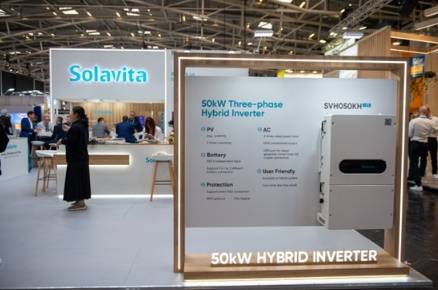
The series supports up to five maximum power point tracking (MPPT) inputs, allowing a 200% PV-to-inverter ratio. The 50 kW model can handle up to 100 kW of solar input, with an MPPT voltage range of 180 V to 850 V, a rated DC voltage of 600 V, and a peak efficiency of 97.8%. Each MPPT input supports up to 40 A, ensuring optimal performance even in partially shaded conditions.
Battery integration is a key feature, with each inverter equipped with three independent high-voltage battery ports, each rated at 55 A, totaling 165 A. The system is compatible with lithium-ion batteries using 280 Ah or 314 Ah cells and supports flexible configurations, including “3-in-1” or fully independent setups. Battery-to-AC efficiency reaches 97.5%, while PV-to-battery efficiency hits 98.5%.
The inverters can manage double their rated AC input, with the 50 kW model supporting up to 100 kW. They offer 1.5x overload capacity for 30 seconds and 1.2x for 60 seconds, alongside 100% unbalanced load support and 200 A continuous AC passthrough. A UPS switchover time of under 10 ms ensures reliability, and a GEN port allows integration with diesel generators and smart loads.
Designed for durability, the SVH series is IP66-rated for outdoor use and operates in temperatures from -30°C to 60°C. It includes built-in protections such as anti-islanding, surge protection, insulation monitoring, and optional arc-fault detection. Communication options include Wi-Fi, LAN, 4G, and Bluetooth, with mobile app monitoring. The system also supports virtual power plant and demand response integration through OpenADR.
Solavita’s SVH series offers robust technical performance and adaptable design, addressing the needs of decentralized energy systems and supporting grid stability amid increasing variability.