Cal Poly Digital Twin Predicts Infrared-Reflective Paints Can Cool by Several Degrees Celsius
en.Wedoany.com Reported - Preliminary research at California Polytechnic State University (Cal Poly) is leveraging multiphysics simulation to link paint-level optical measurements with building-system-level thermal responses. Simulation results indicate that infrared-reflective coatings typically produce lower spatially averaged indoor temperatures than conventional pigment systems under the same solar load, with differences of roughly several degrees Celsius near peak temperatures.

Infrared-reflective coatings are increasingly used to reduce solar heat gain while maintaining the dark or saturated colors required for building facades. Solar reflectance is a common metric for characterizing such coatings, but it only reflects how much sunlight the coating reflects, not how much cooler the coated wall, interior space, or entire building will be under real-world conditions. The gap between optical performance and building-level thermal response is shaped by multiple interacting factors, including solar intensity, wind, ambient temperature, wall construction, insulation, thermal mass, ventilation, and HVAC operation.
These materials preserve visible color by reflecting a greater proportion of near-infrared radiation, which is especially important for dark coatings. Earlier work at Cal Poly by Ray Fernando, Olivia Everitt, and Caleb Hall demonstrated their formulation-level potential: exterior wall coatings using infrared-reflective black pigments achieved significantly higher solar reflectance than conventional carbon black at similar visible appearance. But pigment chemistry is not the only determining factor—film thickness, substrate color, filler particle size, gloss, opacity, rheology, and application conditions also influence reflectance and the resulting thermal behavior.
To bring these variables into a unified analytical framework, student researcher Carson Dorough and Associate Professor Erik Sapper developed a coupled heat transfer and fluid flow model based on COMSOL Multiphysics. The model couples solar radiation absorbed at the coating surface, heat conduction through wall components, convection at interior and exterior boundaries, and changes in indoor thermal state, converting optical properties into temperature responses closer to real-world use. The representative wall consists of 12.7 mm gypsum board, 50.8 mm expanded polystyrene insulation, and a second layer of 12.7 mm gypsum board, with density, heat capacity, and thermal conductivity defined for each layer. Solar load is calculated using the ASTM G173 reference spectrum combined with experimentally measured reflectance, with solar input varying over a 12-hour daytime cycle; outdoor temperature and wind speed are held fixed in each case to isolate the effect of coating choice.
Preliminary simulations compared infrared-reflective coatings with conventional pigment systems across three outdoor temperatures and three fixed wind speed conditions, with both scenarios starting from the same initial internal thermal state. Under all simulated conditions, the infrared-reflective coatings produced lower spatially averaged indoor temperatures, with differences of roughly several degrees Celsius near peak temperatures in the later daytime hours.
This result translates spectral measurements into perceptible thermal performance differences: reflectance data shows how much sunlight a coating reflects, while the model estimates how that difference affects the coated wall and the adjacent indoor environment. However, the researchers caution that coating performance must be evaluated in context. In cold climates, reduced solar absorption may also reduce beneficial passive heat gain, so the optimal coating depends on climate, season, orientation, building construction, and operational strategy—not on a single reflectance value. The current model uses simplified geometry, preset external conditions, and has not been calibrated against instrumented wall or room measurements, so predicted temperature differences should not be used for product performance claims; its direct value lies in comparative screening—determining whether measured optical advantages are sufficient to justify subsequent formulation research, panel testing, and field validation.
When finite element models are linked to measured material data and continuously refined through validation, they form the foundation of a coating digital twin. The first layer can correlate spectral reflectance and thermal emissivity with the heat balance of the coated substrate; subsequent layers can incorporate local weather files, solar angles, roof or wall orientation, building geometry, ventilation, occupancy, and HVAC controls. Aging factors can also be introduced: data from laboratory and outdoor exposure—such as dirt accumulation, roughening, chalking, fading, and binder degradation—can be used to update optical properties in the digital twin and estimate how cooling benefits change with service life. Sensitivity analysis can also compare the effects of pigment systems, coating thickness, insulation levels, wall construction, geographic location, and facade orientation, and identify diminishing returns—if other heat transfer pathways such as inadequate insulation, air leakage, or internal heat generation dominate, increased reflectance does not always yield proportional reductions in indoor temperature; if predictions are highly sensitive to thermal emissivity, moisture uptake, or aged reflectance, these properties should be prioritized for measurement rather than treated as fixed assumptions.
Next-step empirical validation is critical to determining the model's value. Instrumented test walls or small enclosures can be used to compare two coating systems, recording surface temperature, heat flux, indoor air temperature, solar irradiance, ambient temperature, and wind conditions to identify model improvement directions and uncertainty bounds. The intent of this work is not to replace outdoor exposure testing, aging studies, or full building energy modeling, but to connect these elements through a validated digital twin, reducing blind experimental screening and allowing laboratories to focus resources on the most impactful variables.
Related Products

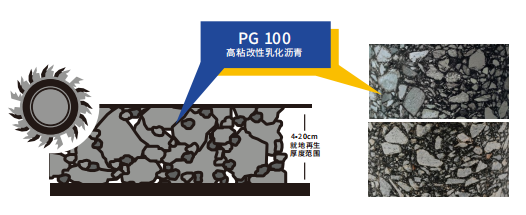
High-toughness in-Situ Cold Recycling Technology for Original Structural Layers
Central Fortune Creation Technology Group Co., Ltd.
ERW Welded Pipe (Black Pipe and Hot-dip Galvanized Steel Pipe)
Handan Zhengda Steel Pipe Co., Ltd.

Ultra-Pure Ferrite Stainless Steel Products
Gansu JISCO Group Hongxing Iron and Steel Co., Ltd.
Bidirectional Metal Hard Sealed Seawater Butterfly Valve
Henan Quanshun Flow Control Science & Technology Co., Ltd.
Pure Polyurethane Wall Panel BD-AEF-PIR-01
Baodu International Engineering Technology Co., Ltd.
West China Xiamen Hospital of Sichuan University
Wuhan Huakang Century Clean Technology Co., Ltd.