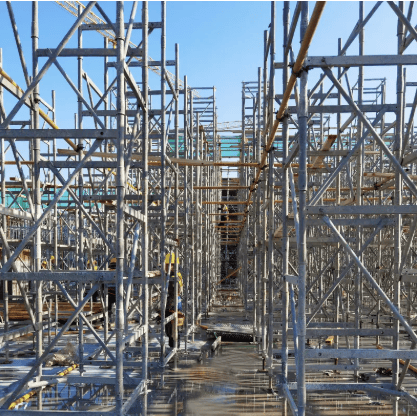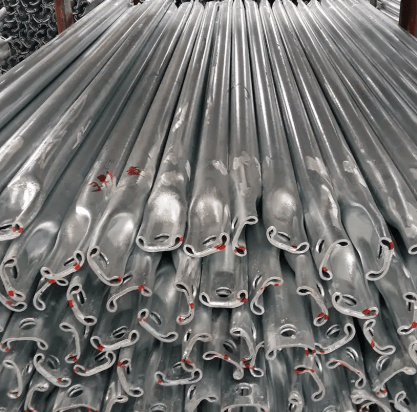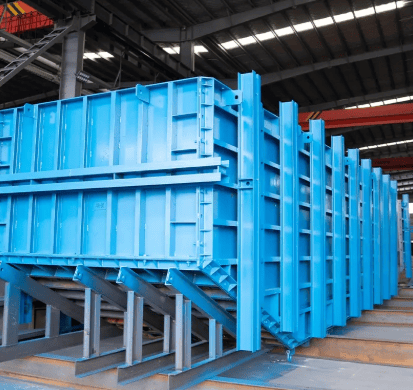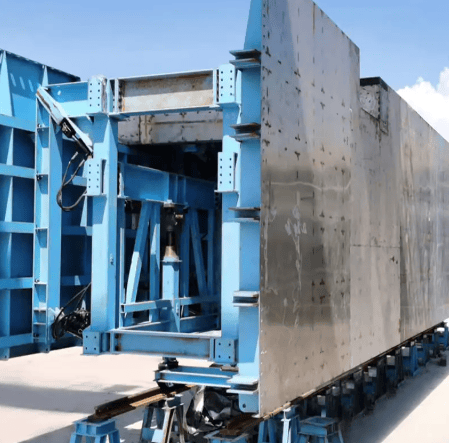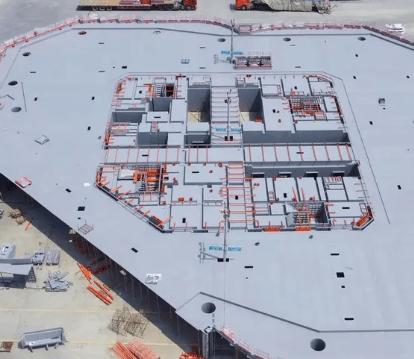


Aluminum formwork is primarily used to address formwork construction for cast-in-place concrete structures in residential buildings. It offers advantages such as shortened construction periods and the elimination of plastering. With aluminum formwork, the pouring and construction of one floor can be completed within 3 to 5 days.
Aluminum formwork is a new generation of building formwork following timber formwork and steel formwork. Made primarily from aluminum alloy profiles, it is processed through mechanical machining, welding, and other techniques to produce formwork suitable for concrete engineering. Aluminum formwork can be freely assembled according to different structures and dimensions, and its design and application represent an innovation in formwork technology.
Tie System
Formwork using the tie system requires no drilling, delivers excellent vertical pouring results, and involves fewer installation accessories, effectively reducing the workload for workers and better aligning with the usage habits of workers in different countries.
Through-Wall Tie Rod System
The through-wall tie rod system produces a smooth finished surface and is suitable for renovation projects with complex structures as well as projects where wall thickness exceeds 400 mm.
Advantages
High degree of design standardization: The formwork has a high reuse rate, up to 200–300 cycles, and is simple to install and dismantle.
Excellent finished surface quality: Verticality and flatness are controlled within 5 mm, and both interior and exterior walls can achieve a plaster-free finish.
High safety: Aluminum formwork features high material strength, strong load-bearing capacity, and excellent resistance to deformation. Once the system is assembled, it forms a highly stable frame structure.
Lower overall cost: High turnover rates reduce overall costs, rapid assembly lowers labor expenses, and costs for heavy equipment rental, plastering, and finishing are minimized, while also offering a high residual value for recycling.