ZHAW Report: Agrivoltaics Account for 0.0% of Swiss Installed PV Capacity in 2025
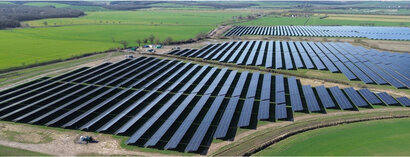
en.Wedoany.com Reported - A technical report from the Zurich University of Applied Sciences (ZHAW) shows that ground-mounted systems account for 0.1% of Switzerland's total installed photovoltaic capacity, while agrivoltaic systems account for 0.0% (rounded). The report suggests that these figures essentially summarize the overall state of ground-mounted PV—and agrivoltaics in particular—in Switzerland.
Under the Swiss Energy Act, annual electricity generation from non-hydro renewable sources must increase to 35 terawatt-hours by 2035 and 45 terawatt-hours by 2050. In 2025, Switzerland's installed PV capacity stood at 8.2 gigawatts, generating approximately 8.2 terawatt-hours per year. With solar power expected to play a key role, the country needs to add 2 to 2.5 gigawatts of new capacity annually to achieve these targets. The report notes that whether a rooftop-focused approach can deliver this scale remains an open question, partly because the potential of rooftop area has not yet been consistently and fully exploited under the current legal framework and subsidy schemes.
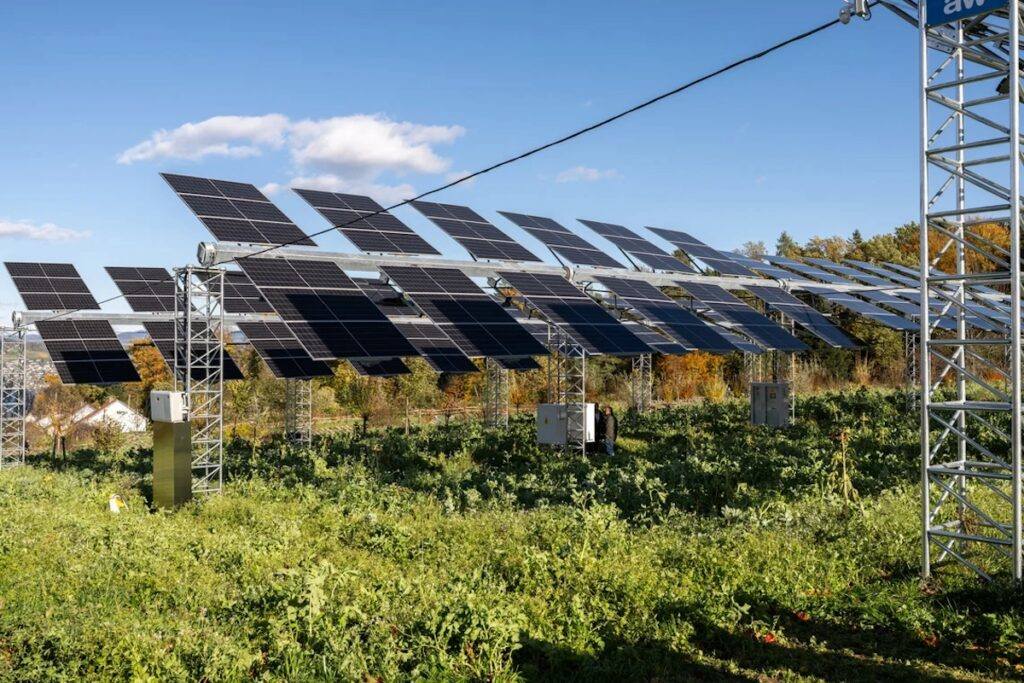
The report first outlines the technology's advantages, foremost among them its enormous potential. Theoretical annual generation potential is estimated at 323 terawatt-hours; even when installation sites are restricted to within 300 meters of the nearest grid connection point, the potential output still reaches 113 terawatt-hours. The report's authors state that this is equivalent to nearly twice Switzerland's recent electricity demand and significantly exceeds projected electricity demand under various net-zero scenarios. Other drivers include the potential for high profitability at suitable sites, the use of land with limited agricultural suitability, diversification of farm income, additional crop protection and climate adaptation benefits, as well as a positive public image and broad social acceptance.
In terms of public acceptance, agrivoltaics appears to enjoy higher acceptance than conventional ground-mounted PV, even in Switzerland, where ground-mounted systems are typically strongly opposed—at least according to studies cited in the report. At the same time, however, a lack of local acceptance is still identified as a major barrier to agrivoltaic projects; other barriers include uncertain or insufficient profitability and potential restrictions on agricultural operations, particularly where large machinery is used. Land ownership structures also play a role, as roughly half of Switzerland's agricultural land is leased. Overall, legal and administrative hurdles appear to be even more significant.
Article 24 of the Swiss Spatial Planning Act (RPG) is the core provision facing agrivoltaic projects on agricultural land. This provision requires that solar energy use must not impair agricultural production; rather, the facility must provide a benefit to agricultural production or be used for agricultural testing and research. This single requirement goes a long way toward explaining why Switzerland has so few agrivoltaic facilities. The report cites a 2024 survey that identified 22 facilities; the report estimates the current total at "fewer than 100," but considers even this estimate to be overly optimistic, assuming that these are primarily research and pilot facilities.
To change the status quo, the report puts forward a series of recommendations. On the investment side, existing support mechanisms could be adapted to the specific requirements of agrivoltaics; another option is to introduce an additional premium on top of the sliding market premium awarded through auctions. Since 2025, the sliding market premium obtained via auctions has been available but remains clearly underutilized; similar premiums already apply to PV installations on parking lots and steep-slope systems, the latter of which generate relatively high winter electricity output. On land policy, agrivoltaic land should continue to receive agricultural subsidy payments; among the measures outlined by the authors, the most prominent is amending Article 24 of the Spatial Planning Act. The report also recommends establishing and supporting citizen participation models, local participation structures such as community energy cooperatives, dedicated advisory services, and translating national renewable energy targets into local-level goals; cantons are currently responsible for much of the legislation governing agrivoltaics but are not required to meet specific capacity expansion targets.
Furthermore, the report recommends learning from neighboring countries, including the mistakes they have already made. Germany, France, Italy, and Austria are described as "clearly ahead of Switzerland in agrivoltaic development, both in terms of regulation and actual project implementation." The report concludes: "There is therefore an opportunity to bypass mistakes and focus directly on measures that have proven effective."
Related Products
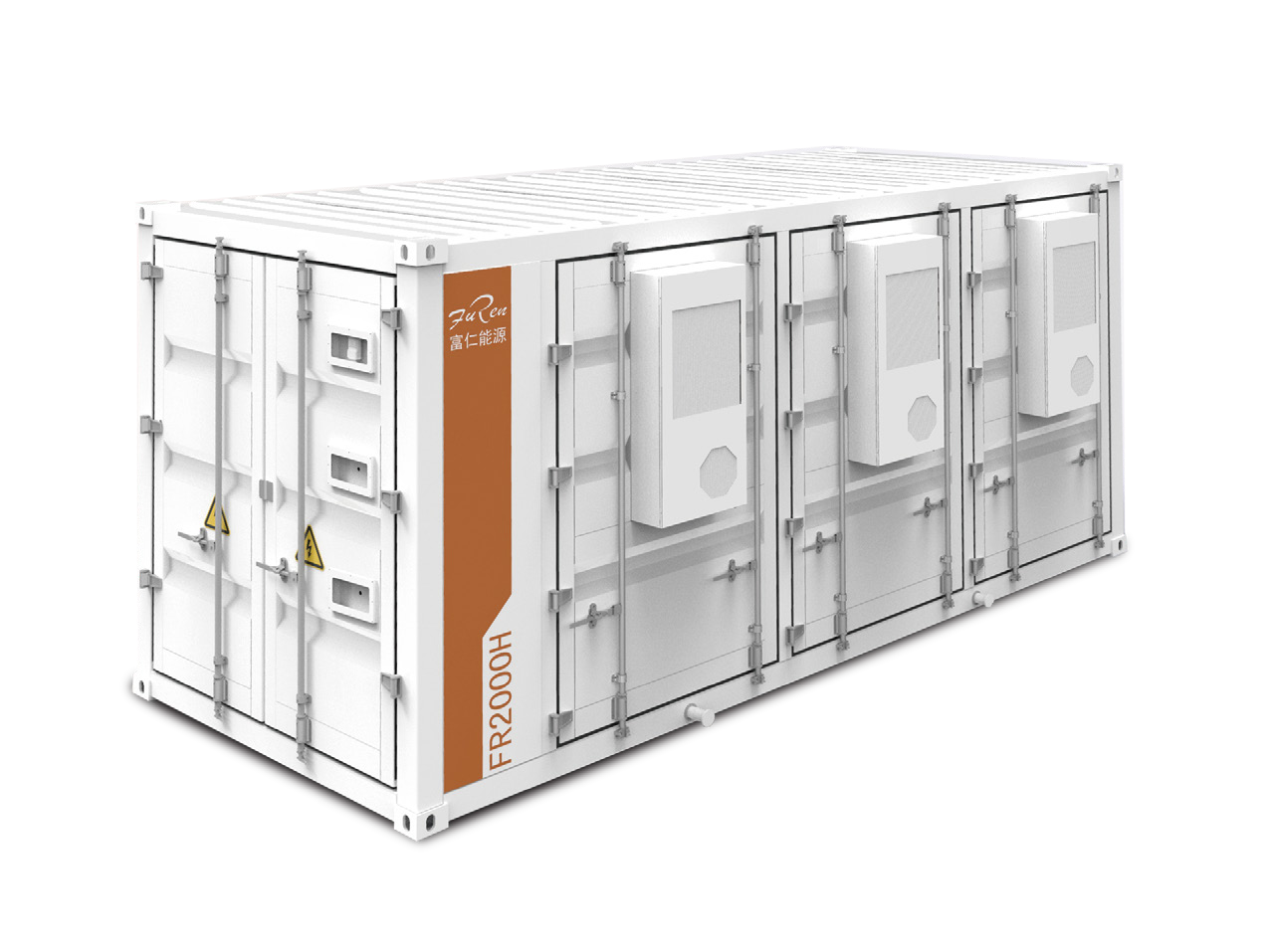

FR2000H 2.15MWh (Air-cooled) 20-foot Containerized Energy Storage System
Jiangyin Furen High-tech Co., Ltd.
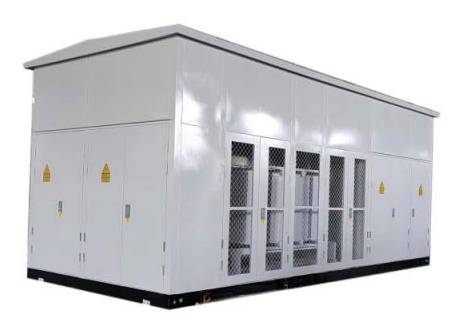
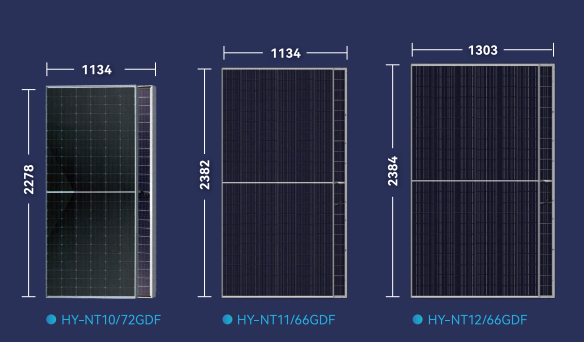
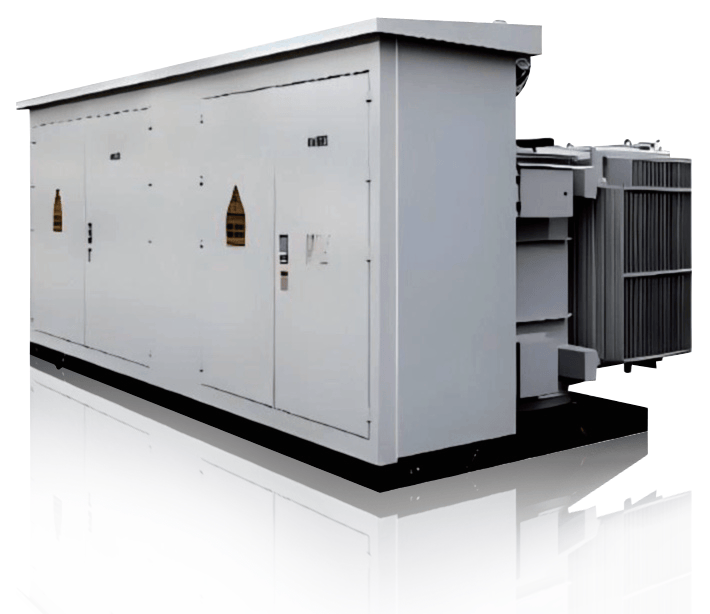
H-40.5/0.4~1.14kV New Energy Power Generation Dedicated High Voltage/Low Voltage Prefabricated Substation
XJ (Xiamen) Intelligent Power Equipment Co., Ltd.
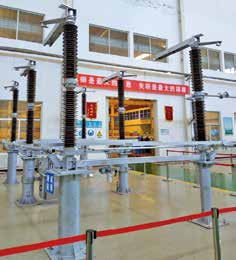
GW4-40.5/72.5/126/145/170/252/363/420 Series Double-column Horizontal Rotary High-voltage AC Disconnect Switch
SHANDONG TAIKAI DISCONNECTORS CO., LTD.