Hanbit Unit 2 in South Korea Shut Down as License Expires, Four Nuclear Units Temporarily Off Grid
en.Wedoany.com Reported - On September 11, 2026, Hanbit Nuclear Power Plant Unit 2 in Yeonggwang County, South Jeolla Province, South Korea, stopped generating electricity as its 40-year operating license expired. Korea Hydro & Nuclear Power (KHNP) said the same day that the generator of Hanbit Unit 2 was disconnected from the grid at 10 a.m., after which it entered a phase of routine inspection and planned preventive maintenance.
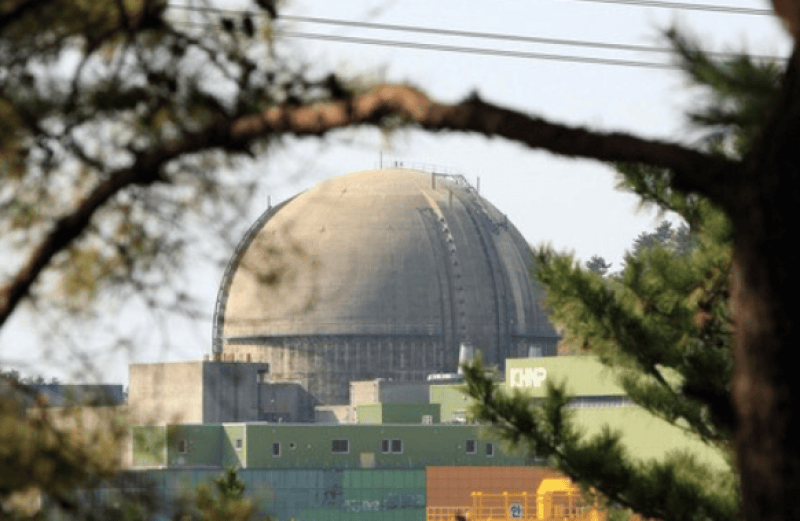
Hanbit Unit 2 entered commercial operation on September 12, 1986. Previously, Hanbit Unit 1 had been shut down in December 2025 for the same reason. As a result, about 1.9 gigawatts of installed capacity from Hanbit Units 1 and 2 has temporarily withdrawn from the grid. Together with Gori Units 3 and 4, which have already been shut down due to license expiration and are awaiting subsequent review decisions, a total of four nuclear units in South Korea are now in procedural shutdown, with total installed capacity of about 3.8 gigawatts.
This shutdown is not equivalent to permanent closure. Under South Korea's current system, if a nuclear unit is to continue operating after the end of its design life, it must go through safety reviews, operating license amendments and other procedures, and complete aging equipment assessments and replacement of necessary components. The continued operation licenses for Hanbit Units 1 and 2 are still under review. Industry sources expect that a decision on whether Hanbit Unit 2 can operate beyond its design life will not be possible until the first half of 2027 at the earliest.
South Korea's Nuclear Safety and Security Commission (NSSC) submitted approval proposals on September 11 related to accident management plans and operating license amendments for Gori Units 3 and 4 and Hanbit Units 1 and 2. However, this procedure is not the same matter as continued operation license approval. The continued operation license approval proposal for Hanbit Units 1 and 2 is expected to be submitted in the first half of 2027, and no final vote was held on the related issue that day.
South Korea's electricity demand has risen rapidly in recent years, drawing attention to the progress of life extension reviews for existing nuclear units. According to calculations for the 12th Basic Plan for Electricity Supply and Demand, South Korea's peak electricity demand in 2040 is projected to reach 158.4 gigawatts to 165.0 gigawatts, more than 50% higher than the historical peak demand of about 104 gigawatts. Affected by adjustments to large industrial projects and economic growth forecasts, this projection has increased by about 26.6 gigawatts to 26.8 gigawatts from four months earlier, equivalent to the installed capacity of about 19 large nuclear units.
Demand growth mainly comes from high-tech industries. Compared with previous forecasts, electricity demand from South Korea's high-tech industries has increased by 20.6 gigawatts, and electricity demand from data centers has increased by 7.9 gigawatts; the maximum expected electricity demand of the semiconductor industry cluster in the Honam region of southwestern South Korea is about 6.3 gigawatts. The 1.9 gigawatts of installed capacity from Hanbit Units 1 and 2 alone is equivalent to about 30% of the maximum expected electricity demand of that semiconductor industry cluster.
New nuclear power plants generally take a long time from site selection, approval and construction to power generation, and expansion of the transmission network also takes considerable time. Against the backdrop of large-scale electricity projects being implemented relatively quickly, continuing to operate existing nuclear units that have passed safety reviews is regarded as one of the important ways for South Korea to ensure stable power supply in the short and medium term.
The South Korean government's current electricity plan is also premised on the continued operation of some existing nuclear units. The 11th Basic Plan for Electricity Supply and Demand proposed that continued operation should be pursued for existing nuclear units whose operating licenses expire before 2038. The plan estimates that South Korea's nuclear power generation will increase from 180.5 terawatt-hours in 2023 to 248.3 terawatt-hours in 2038, and that nuclear power's share of total generation will rise from 30.7% to 35.2%. If continued operation reviews continue to be delayed, the related power supply arrangements will face greater uncertainty.
Several more units will successively face license expiration in the future. The operating license for Wolsong Unit 2 will expire on November 1, 2026. If the review is not completed by then, the installed capacity of nuclear units temporarily shut down in South Korea due to license expiration will increase to about 4.5 gigawatts. After that, Hanul Units 1 and 2, Wolsong Units 3 and 4 and others will also enter the relevant review stage.
South Korea's current system stipulates that the continued operation period is counted from the expiration date of the original operating license, not from the date of approval. If approval is completed three years after the license expires, the actual period of continued operation will be shortened accordingly. Regarding this institutional arrangement, relevant South Korean authorities are studying a plan to extend the continued operation period from the current 10 years to 20 years, in order to reduce the impact of review delays on the actual operating period and power supply.
Related Products

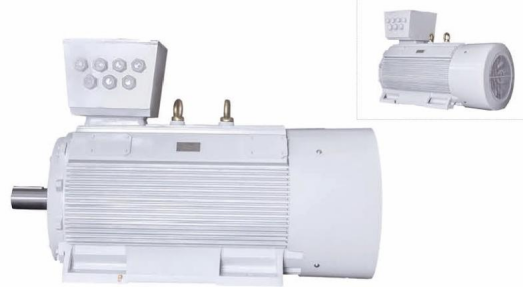
YE3 Series Low Voltage High Power Three-Phase Asynchronous Motor
Shandong Lijiu Electrical Machinery Co., Ltd.
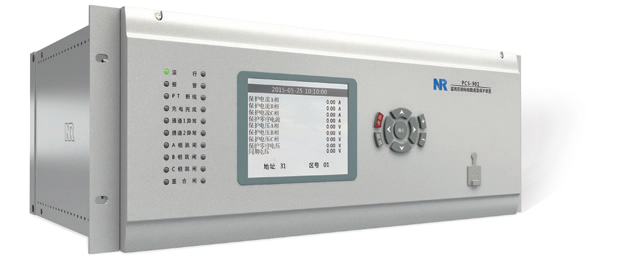
PCS-901 Series Ultra (Extra) High-voltage Transmission Line Complete Protection Device
Nanjing NR Electric Co., Ltd.
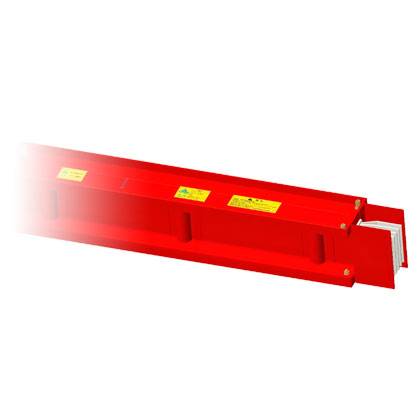
Mineral-insulated Compact Busway (Fire-resistant Busduct)
Zhuhai Guangle Electric Busway Co., Ltd.
G.652.D Wavelength-extended Non-dispersion Shifted Single-mode Optical Fiber
HONGAN GROUP CO., LTD.

CAP1400 main feedwater flow nozzle flowmeter.
Jiangsu Hongda Instrument Technology Co., LTD.