South Korea's SMR Special Act Takes Effect, Aiming to Commercialize Light Water Small Modular Reactors by 2035
en.Wedoany.com Reported - On September 11, 2026, South Korea's Ministry of Science and ICT (MSIT) announced that the Special Act on the Promotion of and Support for the Development of Small Modular Reactors and its enforcement decree, aimed at promoting the research and development, demonstration, and commercialization of small modular reactors (SMRs), took effect on that day.
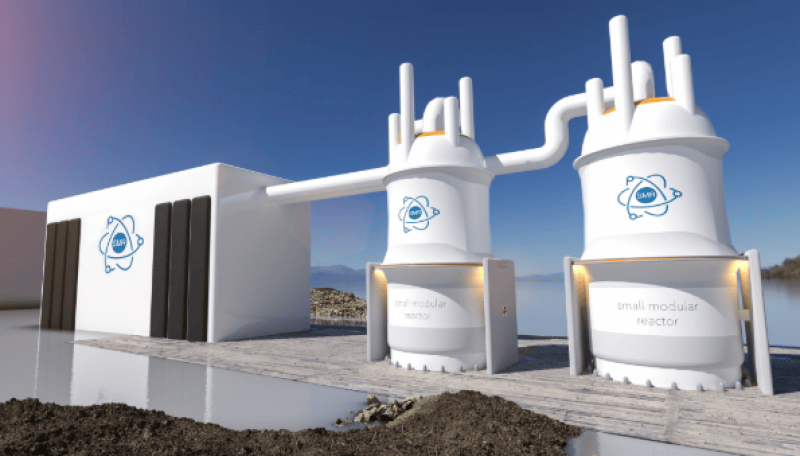
Against the backdrop of growing electricity demand driven by the rapid spread of artificial intelligence and data centers, the South Korean government plans to increase its support for the SMR sector through measures such as seven SEED projects. Under the Special Act and its enforcement decree, MSIT will formulate a "Basic Plan for Small Modular Reactor System Development" every five years and prepare annual implementation plans accordingly.
The Basic Plan covers policy objectives and implementation strategies, the nuclear fuel supply chain system, measures to enhance public acceptance, professional workforce training and education programs, institutional improvements, supply chain-related technology development, and matters concerning the designation and operation of SMR system R&D special zones. MSIT will also evaluate the implementation of the Basic Plan every five years and formulate supplementary measures.
Major matters related to SMR development will be deliberated by the "SMR System Development Promotion Committee," chaired by the Minister of Science and ICT. Committee members include vice-minister-level officials from relevant ministries such as the Ministry of Trade, Industry and Energy and the Ministry of National Defense, as well as private-sector experts. Deliberation items cover the development of various types of SMR technologies, industry-academia-research cooperation, the construction of R&D special zones, and institutional improvements.
The Special Act also provides an institutional basis for establishing companies jointly funded by private capital and public institutions. After such companies submit business plans, the South Korean government may provide financial support for project implementation costs within the budget. At the same time, the government may support the establishment and operation of SMR-related research associations to promote joint research among industry, academia, and research institutions.
Under the new regulations, South Korea may designate areas where universities, research institutions, and industrial entities are concentrated as "SMR System R&D Special Zones." The South Korean government plans to widely solicit opinions from local governments and industry to formulate plans for advancing R&D special zones and to specify concrete support measures.
In terms of talent cultivation, the Special Act and its enforcement decree set out the criteria and procedures for designating universities, research institutions, and professional organizations as talent training institutions, so as to systematically cultivate a professional workforce capable of supporting SMR R&D, demonstration, and commercialization.
MSIT plans to launch detailed public-private cooperative design for SMRs starting in 2027 under the Special Act on Small Modular Reactors, and to carry out verification and demonstration using advanced technologies such as digital twins. For non-light-water SMRs, the South Korean government plans to support the establishment of dedicated companies jointly funded by the public and private sectors from the early stages of R&D, and to accelerate consultations with relevant ministries to expand SMR applications from power generation to maritime, defense, aerospace, and other fields.
A relevant official from MSIT said that major countries around the world are simultaneously advancing SMR technology development and institutional reform to accelerate R&D, demonstration, and commercialization. South Korea will plan large-scale public-private cooperation projects and improve related systems, with the goal of achieving commercialization of light water SMRs by 2035.
South Korean Deputy Prime Minister and Minister of Science and ICT Bae Kyung-hoon said that the implementation of the Special Act on Small Modular Reactors and its enforcement decree marks an institutional starting point for South Korea to connect its existing nuclear energy R&D capabilities with demonstration and commercialization and to expand into the industrial sector.
Related Products




Standard Nozzle Flowmeter
Jinggong Automatic Control Instrument Complete Technology Development Company
1000kV Jin Southeast-Nanyang-Jingmen UHV AC Transmission and Transformation Pilot Demonstration Project
Anhui Hongyuan Steel Tower Co., Ltd.
Post-type AC Pollution-resistant Disc Suspension Porcelain Insulator (Triple Umbrella Type)
Shandong High Voltage Insulator Co., Ltd.