BRICS Plus Cooperation Deepens and Expands, Injecting New Momentum into Global South Development
en.Wedoany.com Reported - China-made pure electric buses are now traversing the streets of Addis Ababa, the capital of Ethiopia.
Ethiopia, situated on the East African Plateau, is rich in hydropower resources but highly dependent on imported oil, spending about US$6 billion in foreign exchange annually. Pure electric buses, electric heavy trucks, "oil-to-gas" conversion projects, local technical training... The cooperation brought by Chinese enterprises helps Ethiopia put its electricity to use, gradually shake off its dependence on imported oil, and inject momentum into the green upgrading of its industries.
Similar situations exist in many Global South countries. Energy, infrastructure, industrial upgrading, and digitalization are all development issues that urgently need to be addressed.
In 2024, Ethiopia became a full member of BRICS. This cooperation mechanism provides it with a platform to find development partners and expand cooperation space.
From the original "BRIC" to today's "BRICS Plus," 20 years after the establishment of the BRICS cooperation mechanism, BRICS countries have become the leading echelon of the Global South, with a population approaching half of the world's total, an economic aggregate accounting for about 30% of the global total, and an increasingly significant weight in global trade, making them an important force in the world economy and international landscape.
Why has "BRICS Plus" been able to grow ever larger?
"The coming together of BRICS countries may seem accidental, but in essence it is a historical inevitability." Wang Youming, a researcher at the China Institute of International Studies, said in an interview with Sanlihe that BRICS member countries have different national conditions, political systems, and value systems, but they share a common pursuit—building a just and reasonable international order and international system.
Xu Feibiao, a researcher at the China Institutes of Contemporary International Relations and director of the BRICS and G20 Research Center, told Sanlihe that "BRICS is not a security organization, not a political alliance, and does not target third parties. Instead, it takes economic development cooperation as its core, requires sovereign equality and friendly consultation, and enables different countries to find space for cooperation amid differences."
China's contributions within this framework are also very concrete.
It was the first to advocate the "BRICS Plus" cooperation model, proposed the four major goals of "an integrated big market, multi-level big circulation, big connectivity of land, sea and air, and big cultural exchanges," and advocated building a "Peaceful BRICS," an "Innovative BRICS," a "Green BRICS," a "Just BRICS," and a "People-to-People BRICS"... Over the past 20 years, China has continuously contributed wisdom to "BRICS Plus cooperation."
Xu Feibiao pointed out that China is the world's second-largest economy, with a huge market, resources, and strong production capacity, and maintains a high level of openness. Its extensive and in-depth cooperation with various countries provides an economic interest bond for BRICS solidarity.
As the BRICS cooperation mechanism continues to deepen and expand, with trade, investment, finance, and industrial chains, there are more and more common needs among member countries, and the boundaries of cooperation have also broadened accordingly.
These cooperations are not abstract.
In May this year, representatives from more than 20 BRICS member countries, partner countries, and other developing countries and international organizations gathered in Xiamen to exchange views on jointly building a smart manufacturing ecosystem. New industries such as artificial intelligence and digital technology are opening up new space for cooperation. At the same time, standards, certification, and other content have also entered the vision of BRICS economic and trade cooperation. For enterprises, the smoother the alignment of rules, the lower the cost of cross-border transactions.
Support in the financial sector is even more direct. By the end of 2025, the BRICS New Development Bank had approved cumulative loans exceeding US$42 billion, becoming an emerging force in the international financial system. For many emerging market countries and developing countries, this means more development projects have new sources of funding.
From industrial technology to financial support, BRICS countries are placing their respective development needs into a larger cooperation network. For the Global South, the significance of this connection is not just having a few more trading partners, but more importantly, having more space to leverage each other's strengths when facing common challenges such as industrial upgrading, digital transformation, and infrastructure construction.
In Wang Youming's view, driven by "BRICS Plus," Global South countries are moving from "supporting roles" in global governance to more important positions.
An electric bus, a project financing deal, an ongoing standards alignment—behind them are real development needs. When more needs are responded to in BRICS cooperation, South-South cooperation has a realistic foothold.
The tide rises in the South, and all things take on a new look. The story of BRICS continues.
Related Products



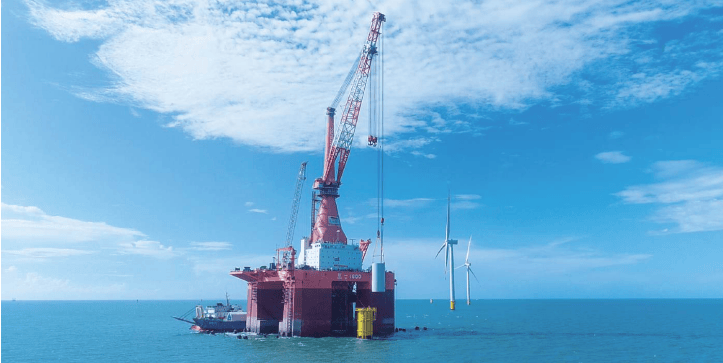
"Shunyi 1600" Deep-submerging Bottom-sitting Multi-functional Wind Power Engineering Vessel
Zhengli Offshore Engineering Co., Ltd.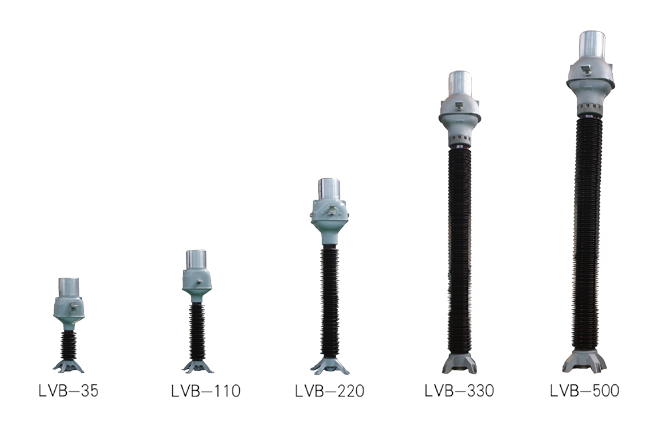
LVB Series 35-500kV Oil-immersed Inverted Current Transformer
Shandong TaiKai Instrument Transformer Co., Ltd.

Electromagnetic Fluid Seawater Floating Oil Separation and Recover Equipment
Huate Magnet Group Co., Ltd.