Circular Utilization of Agricultural Waste: From an Environmental Governance Burden to an Engine of Industrial Innovation
en.Wedoany.com Reported - For a long time, the challenge of agricultural waste disposal has plagued rural China, making it difficult to achieve environmental protection and economic development simultaneously. In recent years, with policy guidance and technological innovation, circular utilization models for agricultural waste have gradually emerged. Especially under the impetus of ecological circular agriculture, the concept of shifting from "end-of-pipe pollution interception" to "source-based circulation" is profoundly transforming the landscape of rural China. This article provides an in-depth analysis of the current status, challenges, and opportunities of agricultural waste circular utilization, and explores key pathways to promote its development.
I. The Predicament: Agricultural Non-Point Source Pollution and the "Disconnect Between Pollution Treatment and Industry"
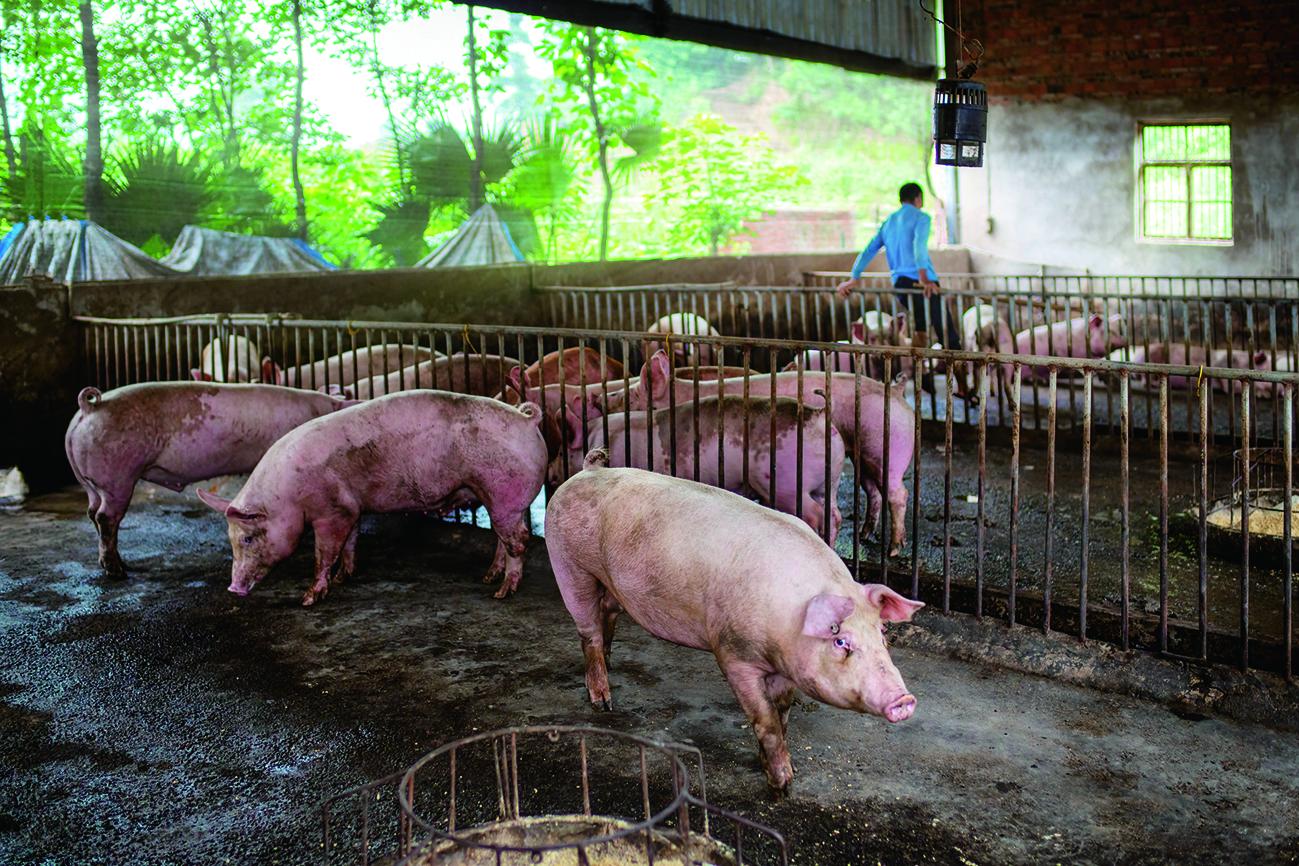
For a long time, improper disposal of agricultural waste has led to severe agricultural non-point source pollution. This is particularly evident in the increasingly prominent problem of the "disconnect between pollution treatment and industry," as pointed out by Professor Liu Guanglong of the College of Resources and Environment at Huazhong Agricultural University. Agricultural non-point source pollution is characterized by being dispersed, easily spread, and exhibiting a lag effect. Traditional "single-point treatment" and "single-chain treatment" approaches have proven ineffective. In the past, high-input pollution treatment often yielded minimal results, and the total pollutant load could not be effectively reduced. The root cause lies in the lack of effective linkage between environmental governance and industrial development, which led to governance funds being spread thinly and evenly, failing to achieve the expected results.
II. The Breakthrough: Policy Guidance and the Rise of the "Industrial Pollution Treatment" Model
The implementation of the "15th Five-Year Plan" provides a policy opportunity to resolve this predicament. The "15th Five-Year Plan for Accelerating Agricultural and Rural Modernization" emphasizes ecological circular agriculture, while the "15th Five-Year Plan for Ecological and Environmental Protection of Soil, Groundwater, and Agriculture and Rural Areas" emphasizes non-point source pollution control from the environmental governance perspective. Of particular note is the "county-wide promotion" deployment, which uses the county as a unit to coordinate pollution treatment facilities, resource circulation, and industrial layout. This breaks the previous situation of "one policy per village" and opens up space for region-wide coordination and large-scale operation.
The "industrial pollution treatment" model has emerged at the right time. Its core lies in binding governance measures with industrial development, achieving the principle of "using good steel on the blade's edge," and prioritizing limited funds to address prominent non-point source pollution problems caused by leading industries. This model not only forces industrial iterative upgrading but also changes the source of motivation for pollution treatment—shifting from external constraints to internal drivers, so that "pollution treatment and development no longer consume each other but form a virtuous cycle."
III. Ecological Circular Agriculture: Resolving Pollution Challenges from the Source
Ecological circular agriculture is an important vehicle for "industrial pollution treatment." Its deeper logic lies in resolving the challenges of agricultural pollutant treatment from the source. As Professor Liu Guanglong stated, nitrogen and phosphorus can be either nutrients or pollutants—the key lies in whether they flow out of farmland into water bodies. Ecological circular agriculture, through material circulation and utilization, locks nitrogen and phosphorus within the farmland area to build an ecological closed loop. While replacing emissions through circulation, it promotes agriculture's green transformation and upgrading.
IV. Diverse Ecological Circular Agriculture Models: Practical Case Analysis
Ecological circular agriculture models are diverse and each has its own merits, but all center on "nutrient circulation." The following are several successful cases:
**"Integrated Planting and Breeding" Model (Longquan River Small Watershed):** Biogas slurry from livestock farms is precisely returned to farmland through conveyance pipelines, realizing circular models of "pig—biogas—vegetables," "pig—biogas—tea," and "pig—biogas—fruit." Through the construction of biogas slurry storage tanks and conveyance pipelines, the threshold for farmers to participate in ecological circular agriculture has been effectively lowered.
**"Three-Dimensional Composite Planting and Breeding" Model (Xishui County):** In mountainous environments, a model of "blueberries on top + black goats below" is adopted, leveraging the high added value of blueberry cultivation and the organic fertilizer benefits of black goat manure to achieve "multi-purpose use of a single plot of land and circular repetition."
**"Regional Centralized Resource Utilization" Model (Hubei Province):** To address the inefficiency of dispersed treatment, "Watershed Agricultural Waste Resource Utilization Centers" have been established to conduct centralized coordination and systematic disposal of agricultural waste across entire watersheds. More than 20 watershed-level waste circular treatment centers have been implemented across more than 30 key non-point source pollution treatment projects in the province.
V. Challenges and Breakthroughs
The development of ecological circular agriculture has not been smooth sailing and still faces challenges:
**Mismatch of planting and breeding space:** Actual breeding scale often exceeds land carrying capacity, resulting in manure that cannot be returned to the field on-site.
**Lack of standardization for field return utilization:** There is a lack of scientific standards for biogas slurry application rates tailored to different crops.
**Incomplete socialized service system:** There is a lack of professional third-party support for agricultural waste collection, storage, and transportation.
To overcome the above challenges, the following recommendations are crucial:
**Technology empowerment:** Strengthen the application of technologies such as the Internet of Things and artificial intelligence to precisely monitor soil nutrient conditions, achieve precision fertilization, and improve nutrient use efficiency.
**Mechanism support:** Improve the monitoring and evaluation system, strengthen precision policy implementation, and deepen the policy of "promoting treatment through utilization and dual control of quantity and quality." Establish a multi-departmental coordination mechanism to achieve information sharing and overcome the challenge of fragmented advancement. Strengthen green and organic product certification and geographical indication cultivation, encourage enterprises to implement green agricultural technologies, and lower the threshold for smallholder farmers to participate through subsidies and rewards.
**Data-driven approach:** Establish a nationally unified monitoring service platform for agricultural resource circular utilization, develop functional modules such as nutrient supply-demand matching and planting-breeding carrying capacity calculation, and provide a scientific basis for regional resource allocation.
VI. Conclusion: Ecological Circular Agriculture Supports Rural Revitalization
Circular utilization of agricultural waste is an important pathway to achieving sustainable agricultural development. Through policy guidance, technological innovation, and mechanism improvement, ecological circular agriculture will transform from a burden of environmental governance into an engine of industrial innovation, injecting new vitality into rural revitalization. Looking ahead, we have reason to believe that when agricultural waste truly circulates, rural China will embrace a greener, healthier, and more prosperous future.
Related Products

4HS-8 High-efficiency Peanut Inverted-laying Harvester
Hebei Yongfa Hongtian Agricultural Machinery Manufacturing Co., Ltd.
Industrial and Commercial Point-Type Gas Detector
Jinan Benan Technology Development Co., Ltd.

714CD Series C-Band Weather Radar
Chengdu Zhongdian Jinjiang Information Industry Co., Ltd.