Australia's Hunter Offshore Wind Zone Proposes 20MW Vertical-Axis Floating Wind Turbine Demonstration Project
en.Wedoany.com Reported - Swedish vertical-axis floating wind turbine technology company SeaTwirl and Australian company Hunter Floating Offshore Wind (HFlow) have signed a five-year Memorandum of Understanding (MoU) to study the development of a demonstration project with an installed capacity of up to 20 MW in the Hunter Offshore Wind Zone off the coast of New South Wales.
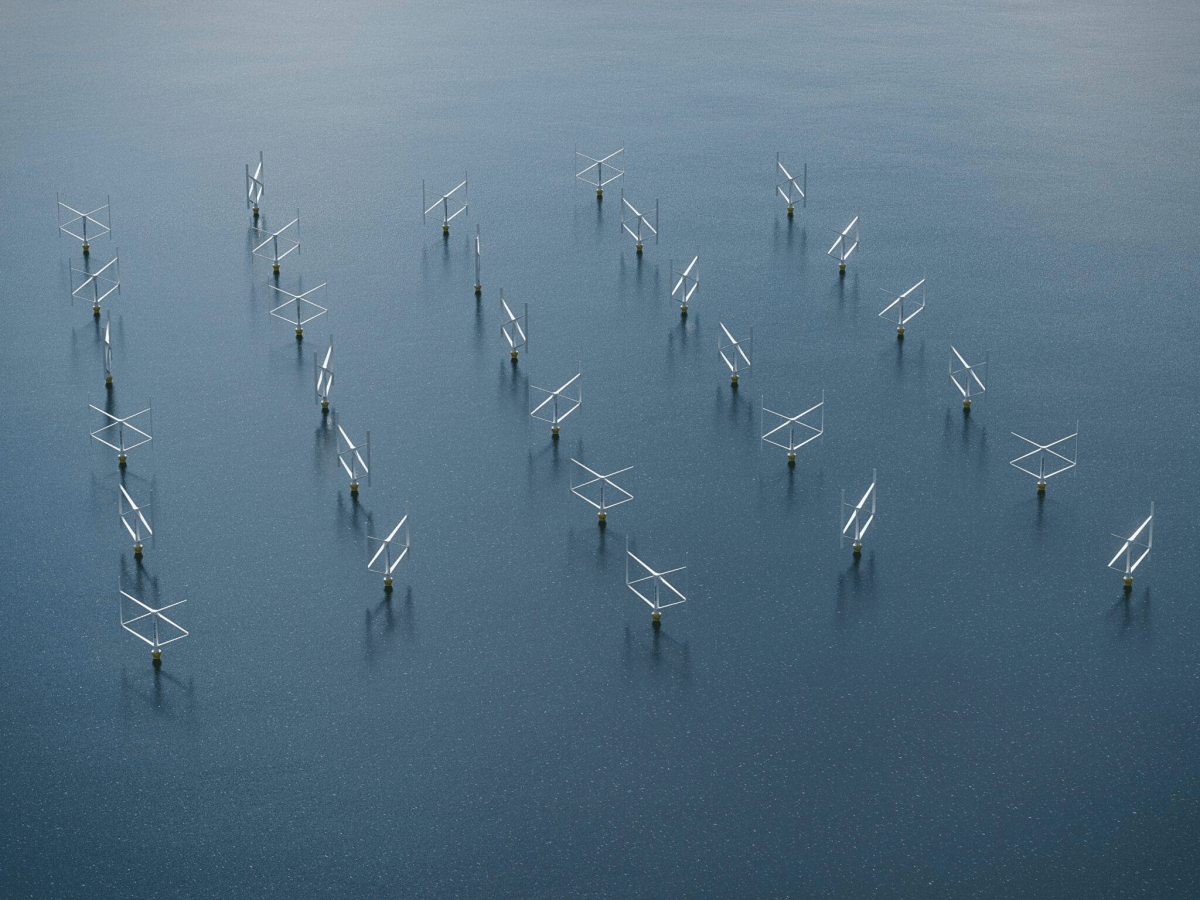
Under the plan, the demonstration project will install ten floating wind turbines, each with a capacity of 2 MW, all using SeaTwirl's technology. Conventional offshore wind turbines have blades that rotate around a horizontal axis, while this Swedish company's turbines use a vertical-axis design. SeaTwirl claims that this configuration has the potential to simplify the manufacturing, installation, and maintenance of the turbines while offering advantages in offshore environments.
SeaTwirl was founded in 2012 and has not yet built a commercial-scale wind farm, but it has accumulated demonstration project experience: since 2015, a 30 kW grid-connected prototype has been continuously operating off the coast of Sweden; the company is currently installing a new 1 MW demonstration unit in Norwegian waters.
The project's proposed site, the Hunter Offshore Wind Zone, was designated by the Australian government in July 2023, covering an area of approximately 1,854 square kilometers, extending from Norah Head in the south to Port Stephens in the north, with an estimated wind power capacity potential of up to 5 GW. The water depth conditions in the area make Hunter a particularly important site for floating technology, as it helps explore alternatives to the fixed foundations used in shallow-water areas.
The development of floating wind in the region suffered a setback last year: the only project to receive a feasibility license decided to withdraw. In response, the Australian government announced the establishment of dedicated research and demonstration licenses, aimed at making it easier for companies, researchers, and developers to test new offshore wind technologies before launching larger-scale commercial projects. Then-Federal Energy Minister Chris Bowen said these licenses could be used both for installing monitoring equipment, such as buoys for collecting site condition data, and for conducting pilot projects to evaluate new technologies before applying for commercial feasibility licenses.
In this partnership, HFlow will take on most of the development work within Australia, including approval procedures, stakeholder engagement, financing, and coordination of port and grid connection; SeaTwirl will provide technology, reference designs, and engineering support.
HFlow Development Director Richard Finlay-Jones believes that SeaTwirl's system has the potential to open up a more flexible path for offshore floating wind with fewer infrastructure requirements. The Australian company says the approach can also reduce reliance on large investments in specialized ports or large installation vessels, thereby helping to cultivate local industrial capacity. One of the project's core objectives is precisely to demonstrate that a viable path exists from experimental installations to future larger-scale commercial wind farms.
SeaTwirl CEO Johan Sandberg believes that Australia's offshore wind industry is still in its infancy and is therefore a particularly attractive market. He pointed out that port infrastructure dedicated to offshore wind has not yet been fully built, and Australia's domestic fleet currently lacks the equipment needed to install conventional offshore wind turbines. Against this backdrop, SeaTwirl believes its vertical-axis design may be better suited to Australian market conditions and hopes to demonstrate that its turbines can be manufactured without large investments in port facilities and deployed using smaller vessels. The Hunter project is thus positioned as a testing ground to examine the extent to which this concept can overcome the obstacles currently constraining the development of floating wind, particularly whether it can serve as a pathway to larger-scale commercial projects.