Chinese Huazhong University of Science and Technology Team: Best-Practice Perovskite Lead Leakage 94% Lower Than Lead-Containing Solder Crystalline Silicon
en.Wedoany.com Reported - A research team led by Huazhong University of Science and Technology modeled the lead flows of Chinese perovskite photovoltaics from 2026 to 2060, and the results show that under best-practice conditions, cumulative lead leakage for the same installed capacity can be up to 94% lower than that of crystalline silicon modules using lead-containing solder.
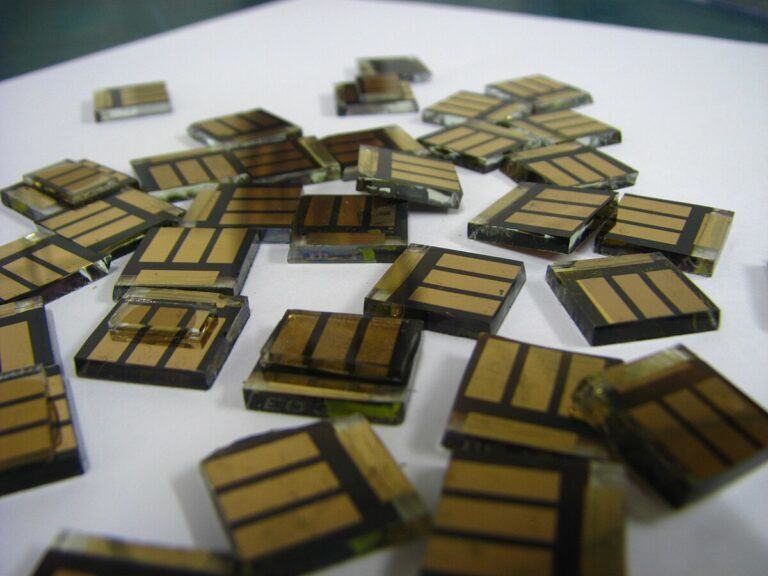
The study combined dynamic material flow analysis with freshwater ecotoxicity modeling, setting up four perovskite scenarios—business as usual, clean production, technological progress, and best practice—and comparing them with two crystalline silicon scenarios using lead-containing solder and lead-free solder, while assuming that perovskite market share reaches 20%, 40%, or 60% by 2060. The research team used an AI prediction model to project China's cumulative PV installed capacity, which will be about 6,781 GW by 2060. The results were normalized by both installed capacity and power generation, and the relative reductions obtained under the two approaches were the same.
This comparison reflects both differences in lead content and different assumptions about leakage during manufacturing, use, and end-of-life management. The aggregated data show that single-junction perovskite modules contain about 2 grams to 3.9 grams of lead per kilowatt, all-perovskite tandem modules contain about 3.6 grams to 4 grams, while crystalline silicon modules using lead-containing solder contain about 36 grams to 53 grams per kilowatt.
Under the 40% market share scenario, cumulative lead leakage from the perovskite best-practice scenario from 2026 to 2060 is about 479 metric tons, compared with about 8,554 metric tons for crystalline silicon using lead-containing solder. Under the business-as-usual scenario, perovskite leakage is about 2,406 metric tons, higher than the about 1,848 metric tons modeled for lead-free solder crystalline silicon. By 2060, leakage under the three perovskite scenarios—clean production, technological progress, and best practice—is lower than under the lead-free crystalline silicon scenario.
Under the business-as-usual scenario, the manufacturing stage is the main source of simulated lead loss. In this scenario, cumulative lead input over the perovskite life cycle is about 29,200 metric tons, of which 58.9% is lost, mainly during manufacturing. The researchers assumed an annual breakage rate of 2% for perovskite modules and 0.1% for crystalline silicon. Under the business-as-usual and clean production scenarios, perovskite module lifetime starts at about 10 years and rises to 20 years by 2060; under the technological progress and best practice scenarios, it rises to 30 years.
The study also modeled the impact on China's exports. From 2022 to 2024, 45% of China's exported PV products went to Europe. Under the simulated trade scenarios, developed economies effectively outsource manufacturing-stage leakage, while tropical developing countries face domestic leakage up to three times the upstream leakage corresponding to their imports, due to faster module degradation and limited recycling capacity. The researchers estimate that Brazil's downstream leakage is about 119 metric tons and upstream about 50 metric tons; Germany's downstream is about 17 metric tons and upstream about 67 metric tons.
The researchers argue that as long as governance thinking shifts from material restrictions to transnational extended producer responsibility, lead will not necessarily become an insurmountable obstacle to perovskite commercialization. At present, the PV industry has no such transnational mechanism.
In the EU, solar panels are not subject to the lead content limits of the Restriction of Hazardous Substances Directive (RoHS), but are governed by the Waste Electrical and Electronic Equipment Directive (WEEE). This directive requires producers to fund collection and treatment, and sets targets of an 85% collection rate and an 80% reuse and recycling rate for collected panels.
Concerns about lead have lingered since the advent of perovskites, but empirical evidence is accumulating. In another outdoor test published in the Royal Society of Chemistry journal EES Solar, glass-glass perovskite-silicon tandem devices damaged by hail released about 0.07% of their lead over nine months. Commercial deployment remains limited: Oxford PV shipped its first perovskite-silicon tandem modules in 2024, while GCL and UtmoLight have reported gigawatt-scale production lines in China.
The related results were published recently in Environmental Science & Technology under the title "Overstated Lifecycle Lead Risks of Perovskite Solar Cells and the Hidden Transboundary Displacement."
Related Products

Optional Accessory - Auxiliary Sampling Module
Beijing Soaring Electric Technology Co., Ltd.
220kV Composite Outdoor Cable Terminal
Shenyang Guolian Cable Accessories Manufacture Co., Ltd.
IGBT Hydrogen Production Power Supply - High Power Air Cooling
Beijing Zhengzhuo Engineering Technology Co., Ltd.