Nigeria Mobilises 80 Thsd Farmers to Boost Wheat Production
Wedoany.com Report-Nov. 19, Nigeria’s Federal Government has launched a significant initiative to boost domestic wheat production for the 2025/2026 dry season, aiming to strengthen food security and reduce dependence on wheat imports. The announcement was made by the Minister of Agriculture and Food Security, Abubakar Kyari, during the rollout of subsidized input distribution in Borno State on November 18, 2025.
As part of this large-scale program, the government has allocated 40,000 hectares for wheat cultivation and registered 80,000 farmers across the country. Borno State, one of the key areas for wheat farming, has been assigned 3,000 hectares, with 6,000 farmers enrolled in the initiative. This follows previous dry-season efforts that significantly increased domestic wheat production.
The focus of this year’s program is on improving productivity. Farmers will be provided with certified seeds, regulated fertilizers, and approved crop-protection products. In addition, extension agents will offer guidance on modern farming practices, and quality-control officers will ensure that all inputs meet national agricultural standards.
This wheat cultivation program, under the National Agricultural Growth Strategy and Agricultural Productivity (NAGS-AP), will cover 16 states, including key wheat-producing regions such as Adamawa, Bauchi, Kano, Kebbi, Sokoto, and Yobe. For the first time, Cross River State has also been included, marking the expansion of wheat farming to the southern part of Nigeria.
Borno State Governor Babagana Zulum expressed his support for the federal initiative, highlighting its potential to revitalize the region’s agricultural sector. Farmer representatives have also committed to increasing wheat production in line with the government's agricultural development goals.
This initiative is part of Nigeria's broader strategy to increase domestic food production and reduce its reliance on imported wheat, a critical step toward ensuring long-term food security and economic stability.
Related Products




Industrial and Commercial Point-Type Gas Detector
Jinan Benan Technology Development Co., Ltd.
714CD Series C-Band Weather Radar
Chengdu Zhongdian Jinjiang Information Industry Co., Ltd.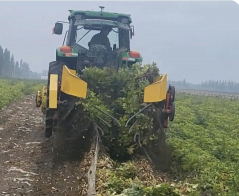
4HS-8 High-efficiency Peanut Inverted-laying Harvester
Hebei Yongfa Hongtian Agricultural Machinery Manufacturing Co., Ltd.