Transport Recovery Efforts Progress on New Zealand's North Island, Multiple Sections Reopen
Wedoany.com Report on Feb 2nd, Following severe storms and flooding, emergency transport recovery works are ongoing across New Zealand's North Island to repair damaged state highways and local roads and re-establish connections.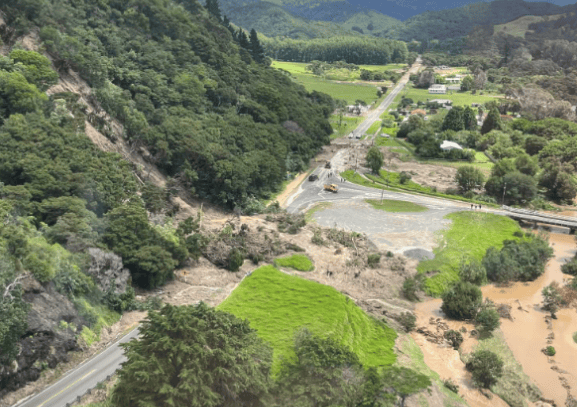
Transport Minister Chris Bishop said, "Heavy rain and flooding caused widespread damage to transport infrastructure on the North Island, triggering numerous landslides and leading to temporary closures of key state highways. Residents in affected areas are facing difficulties, especially communities cut off by road closures. The immediate priority is to restore transport links as quickly as possible, with crews working around the clock to assess damage, clear landslide debris, and repair roads."
Progress has been made across most of the network. All state highways in Northland and Waikato are now open, with some areas still undergoing cleanup and traffic management. Rail connections have also been restored. The East Coast Main Trunk line connecting Hamilton to Tauranga and the Bay of Plenty, which was closed due to landslides and washed-out track formation, was reopened by KiwiRail staff within a day to restore freight access to the Port of Tauranga. The line south of Tauranga reopened this week after rebuilding 50 meters of washed-out track, and the Main Trunk line is now fully operational.
In the Coromandel region, five state highway sections were closed at the peak of the storm; four have now reopened, including SH25 between Coromandel Town and Kuaotunu, and SH2 through the Karangahake Gorge. SH25 between Whangamatā and Whiritoa is not expected to reopen until February due to the scale and complexity of the landslide.
Transport in the Bay of Plenty remains significantly impacted. Approximately 40 landslides occurred along the section of SH2 through the Waioeka Gorge, and repair work continues. Bishop stated, "This is one of the most significant closures we've seen. Crews are dealing with large landslides, with an estimated thousand truckloads of material still to be removed. Teams are working from both ends of the gorge, seven days a week, with the goal of reopening at least one lane as soon as it is safe to do so."
SH35 on the East Coast was severely damaged, with an estimated 500,000 cubic meters of material displaced in landslides. Convoys are being organized at set times between Tolaga Bay Bridge and Te Araroa to provide limited access. However, the section between Te Araroa and Potaka remains closed due to a major landslide involving nearly 250,000 cubic meters of material. Bishop noted, "Some of this material has only come down in recent days, and conditions are dangerous. This is the worst-affected section of SH35 and is expected to take the longest to reopen." He urged the public to avoid non-essential travel and to drive with extra care.
Recovery work will continue over the coming weeks, including clearing landslides, repairing road surfaces, stabilizing hillsides, and monitoring at-risk areas. Even reopened sections may have single-lane stretches, lower speed limits, and traffic management measures in place. Waka Kotahi NZ Transport Agency continues to monitor the network and respond quickly to new damage.
Bishop emphasized that the response highlights the importance of investing in transport resilience. He pointed out that transport recovery projects in the Mangamuka Gorge in Northland and on the Brynderwyn Hills performed well during the recent weather events, and resilience projects implemented after Cyclone Gabrielle have also held up. He said, "These projects show that while we can't stop storms, we can build a transport system that recovers more quickly. We will continue to support affected communities and invest in making our transport network more resilient."
Related Products



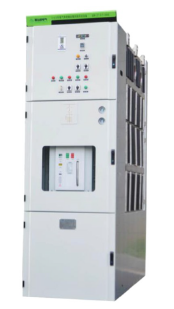
GSR6-27.5kV SF6 Free Gas-insulated Metal-enclosed Switchgear
Zhejiang Juhonkia Intelligent Electric Co., Ltd.
Industrial and Commercial Point-Type Gas Detector
Jinan Benan Technology Development Co., Ltd.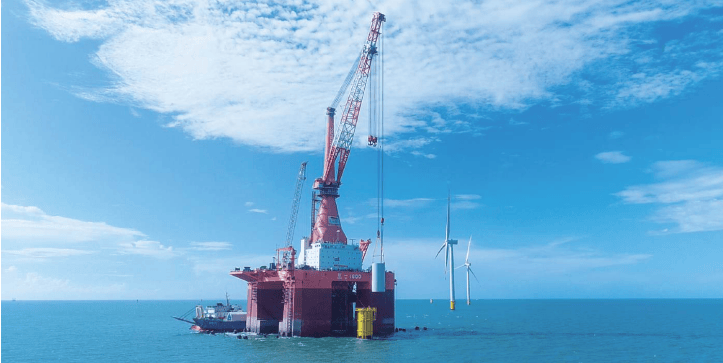
"Shunyi 1600" Deep-submerging Bottom-sitting Multi-functional Wind Power Engineering Vessel
Zhengli Offshore Engineering Co., Ltd.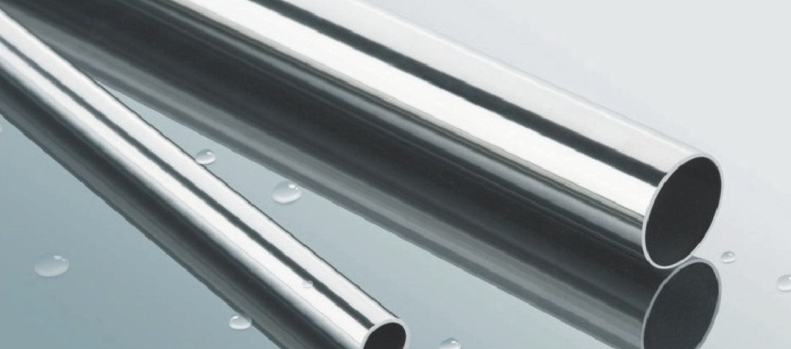
ERW Welded Pipe (Black Pipe and Hot-dip Galvanized Steel Pipe)
Handan Zhengda Steel Pipe Co., Ltd.