Wedoany.com Report-Nov 25, Lower electricity prices from renewables will be the key to reducing the levelised cost of hydrogen (LCOH), W.L. Gore & Associates’ Oliver Teller told a H2 View webinar today.
The UK-based firm specialises in advanced membrane technologies for proton exchange membrane (PEM) and alkaline electrolysers, with the aim of enhancing efficiency, durability and cost-effectiveness.
Teller, the company’s Product Manager in the Clean Business Group, explained that a membrane represents just 1% of the total cost of a PEM electrolyser, and therefore electricity costs need to come down to reduce the LCOH.
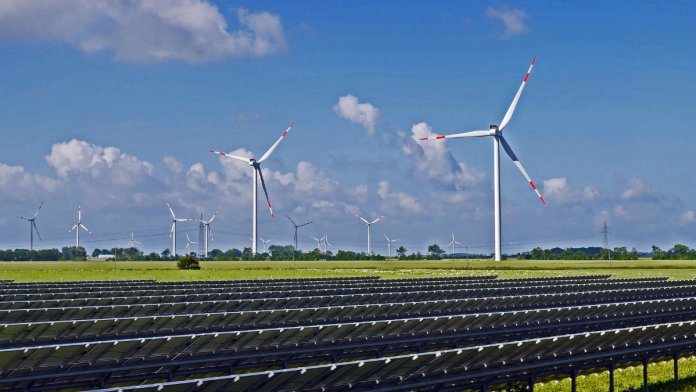
“Electricity expenses are the primary driver for high LCOH,” he said. “This implies that lower electricity prices from renewables are really key to lowering the LCOH.
“Maximising the system efficiency will also be key to low LCOH. Membranes with enhanced proton resistance and hydrogen permeation boost system efficiency – in our use case by approximately 3%, leading to LCOH reductions of 22-24 cents.
“Our goal is to offer a membrane that lowers the LCOH while meeting market durability and safety requirements,” he continued.
“We have three tools to construct the membrane and balance properties: the ionomer, the additives and the reinforcement layer.”
Amr Kobaisy, New Product Development Manager for Clean Energy Business Group at W.L. Gore, added, “Here, we consider the design robustness and this is where we apply our ionomer technologies to continue to develop and increase confidence in the technology.”
With alkaline being a more mature technology, Kobaisy explained that it currently has a cost advantage over PEM in terms of LCOH. However, he did add, “[PEM has] higher current density and compression, which are its key advantages.
“Further efficiencies in PEM are achievable, which can be done in time and result in further cost reductions.”
Regarding the challenges W.L. Gore faces, Kobaisy said the company’s membrane products must demonstrate high and consistent efficiencies.
“It needs to remain at a certain percentage with minimal losses over the course of electrolyser operation, around 20 years.
“This is one of the key challenges – to anticipate and predict these new, larger-scale systems what the guaranteed per cent degradation in the field will be.
“Key inputs are the value of power supply and water quality. These two inputs can damage the system if not controlled. Instead of 20 years, the electrolyser will begin to degrade much sooner.”