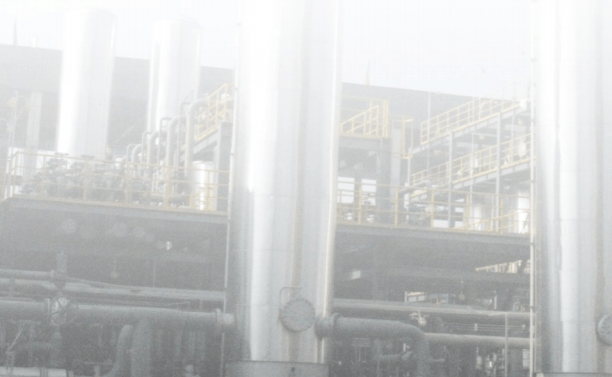


The main applications of carbon dioxide in food include: carbonated beverages, tobacco shred expansion, food preservation, and other fields. Carbon dioxide has a wide range of sources. As an industrial product for direct consumption, the quality of carbon dioxide used as a food additive is closely related to human health. To ensure product quality and application effectiveness, the requirements for CO₂ gas are becoming increasingly stringent. The new standard currently implemented in China for the inspection and quality control of food additive carbon dioxide product quality stipulates that sulfur content ≤0.1×10⁻⁶V/V and sulfur dioxide content ≤1.0×10⁻⁶V/V.
Food-grade liquid CO<p>Technical Introduction</p> <p>The main applications of carbon dioxide in food include: carbonated beverages, tobacco shred expansion, food preservation, and other fields. Carbon dioxide has a wide range of sources. As an industrial product for direct consumption, the quality of carbon dioxide used as a food additive is closely related to human health. To ensure product quality and application effectiveness, the requirements for CO₂ gas are becoming increasingly stringent. The new standard currently implemented in China for the inspection and quality control of food additive carbon dioxide product quality stipulates that sulfur content ≤0.1×10⁻⁶V/V and sulfur dioxide content ≤1.0×10⁻⁶V/V.</p> <p>The commonly used production methods for food-grade liquid CO₂ are generally divided into the high-pressure method (8.0MPa), medium-pressure method (4.0MPa), and low-pressure method (1.6MPa-2.5MPa).</p> <p>Technical Features</p> <p>• High product quality standards;</p> <p>• Fully domestically produced equipment with a high degree of intensification;</p> <p>• Advanced and reliable process;</p> <p>• Low equipment investment;</p> <p>• Complete testing equipment.</p> <p>Applicable Fields</p> <p>Fermentation tail gas, decarbonized gas from synthetic ammonia processes, lime kiln gas, underground coal mine gas, and hydrocarbon decarbonization gas.</p>The commonly used production methods are generally divided into the high-pressure method (8.0MPa), medium-pressure method (4.0MPa), and low-pressure method (1.6MPa-2.5MPa).
Technical Features
• High product quality standards;
• Fully domestically produced equipment with a high degree of intensification;
• Advanced and reliable process;
• Low equipment investment;
• Complete testing equipment.
Applicable Fields
Fermentation tail gas, decarbonized gas from synthetic ammonia processes, lime kiln gas, underground coal mine gas, and hydrocarbon decarbonization gas.