Wedoany.com Report on Feb 28th, Recently, a piece of news about Panasonic's plan to dissolve its home appliance company has sparked heated discussions on the Chinese internet, with some media even interpreting it as "Panasonic Electric will bid farewell to the market." This misunderstanding originated from a management reform briefing held by Panasonic Holdings on February 4th. Due to translation and contextual differences, its business restructuring was misinterpreted as a complete withdrawal from the home appliance business, forcing Panasonic China to issue two statements urgently clarifying the situation.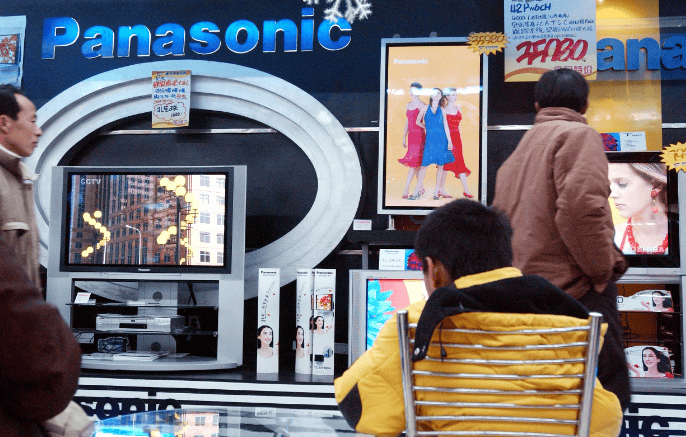
The Whole Story of the Misinterpretation: Restructuring, Not Dissolution, the Panasonic Brand Will Continue
On February 4th, Panasonic Holdings announced plans to dissolve the current home appliance business company "Panasonic Electric Works Co., Ltd." responsible for home appliances, air conditioning, lighting, and other businesses within the 2025 fiscal year, and split it into three independent subsidiaries: Smart Life, New Air Conditioning Food Distribution, and Electrical Engineering. For businesses with poor profitability, such as televisions, Panasonic is considering possibilities for sale or downsizing.
However, this adjustment was misinterpreted on the Chinese internet as "Panasonic Electric is dissolving" and "Panasonic TVs will exit the historical stage." Panasonic China immediately clarified: only a single legal entity is being dissolved, not the Panasonic Group; the Panasonic brand will continue to exist and play an important role in the new business structure. Regarding the TV business, Panasonic Holdings President Yuki Kusumi admitted that "selling is a difficult decision," but emphasized that no final decision has been made yet, "there may be other options besides selling." Panasonic China told Jiemian News that discussions regarding the TV business are still in the research stage, with all possibilities being considered.
Despite timely clarification, consumer concerns continue to spread. Several Panasonic dealers told Jiemian News that the number of times customers have recently inquired "whether Panasonic is exiting China" has significantly increased, requiring extra effort to explain. Panasonic China's after-sales customer service clearly responded: Panasonic Electric is absolutely not dissolving and will continue to serve the Chinese market, and products purchased through official channels can enjoy the stipulated after-sales service.
Former Cash Cow: TV Business from Peak to Margins
Panasonic's TV business was once the most dazzling calling card of this century-old company. In 2003, Panasonic launched the plasma flat-screen TV "VIERA," which became popular worldwide, with a global market share exceeding 50% at its peak. A 42-inch plasma TV sold for as high as 18,000 yuan. However, Panasonic's plasma camp refused to open its technology, leading partners to turn to the LCD route. After the 2008 financial crisis, plasma TV sales were severely hit. Panasonic still invested 600 billion yen to acquire Hitachi's and Pioneer's plasma businesses, ultimately completely ceasing plasma production in 2012 after recording its largest-ever loss.
In the following decade or so, Panasonic repeatedly scaled back its TV business: in 2019, it outsourced mid-to-low-end TV production to TCL; in 2021, it closed its last TV factory in Malaysia, completely exiting TV manufacturing and shifting to brand licensing. By around 2025, Panasonic's global TV market share had fallen to less than 1%, with a profit margin below 5%, classified as a "non-core asset." Analyst Liu Hao from Display Consulting pointed out that factors such as the impact of domestic brands going global, the increased influence of mainland panel manufacturers, and global consumption downgrading have put pressure on Japanese brands on both production and sales ends, making accelerated withdrawal inevitable.
No Break, No Establishment: Three Decades of "Zero Growth" Force Transformation
For Panasonic, divesting the TV business is just one part of its long-term transformation. Since the burst of Japan's bubble economy in the 1990s, Panasonic has consistently faced sluggish growth. In the 1991 fiscal year, its revenue had already reached 7.45 trillion yen, yet thirty years later, it still hovers around a similar level, referred to by Japanese media as thirty years of "zero growth."
In 2012, when former President Kazuhiro Tsuga took office facing two consecutive years of losses exceeding 700 billion yen, he decisively divested loss-making businesses like plasma and semiconductors, vigorously promoting a shift from B2C to B2B, focusing on high-growth areas such as automotive electronics, housing, and components. This strategy continues to this day: Panasonic became a battery supplier for Tesla, and its energy business has become one of the most profitable segments; the latest financial report shows that in the first nine months of the 2025 fiscal year, energy business sales accounted for 10% of the company's total.
Current President Yuki Kusumi further clarified that Panasonic's future lies in the B2B field. Amid the AI boom, Panasonic is collaborating with Oracle to increase AI-related revenue and meet data center demand for efficient components. The purpose of this business restructuring is precisely to streamline the management structure, compressing the three-tier structure into two tiers to respond faster to B2B market demands.
Between Choices: Home Appliance Business Becomes the "Image Window" for B2B Transformation
Industry insiders told Jiemian News that the bottleneck in Panasonic's development of B2B business lies in over-reliance on a few large partners, such as Tesla, whose shipment fluctuations can directly impact its battery business. Meanwhile, although the home appliance business is no longer core, it undertakes the function of brand image output—just as companies like Midea and Gree use B2C business to promote their B2B low-carbon and smart image. However, the insider believes that Panasonic's investment and innovation efforts in the home appliance business have been relatively conservative in recent years. If product competitiveness further declines, it may indirectly affect brand recognition in the B2B business.
Yuki Kusumi responded to this by stating that the core of Panasonic's internal decentralization reform is "selection and concentration." Only by making each business division responsible for its own profits and losses can resources be ensured to flow to the most competitive areas. The traditional home appliance market is bound to shrink, and decentralization will stimulate innovation, focusing on high-growth tracks like new energy and digitalization. He clearly stated: "Reform will not stop." The next step will involve promoting more business units to become subsidiaries, even independent listings.
Capital Market Optimism: Stock Price Soars After Reform Plan Announcement
Despite misinterpretation on the consumer side, the capital market gave a positive response to Panasonic's management reform plan. On February 5th, the day after the reform plan was announced, Panasonic Holdings' stock price surged after opening, rising over 13%, marking its largest intraday gain since 2014. Wind data shows that the average ROE in the home appliance industry over the past five fiscal years was 8%-11%, while Panasonic Holdings' target is to achieve over 10% ROE by the 2028 fiscal year and accumulate more than 300 billion yen in additional profit.
From a small factory producing light bulb sockets in 1918 to a global home appliance giant, and now firmly turning towards B2B, Panasonic is undergoing the most profound self-reinvention in its century-long history. Divesting TVs, restructuring home appliances, betting on new energy and AI—these choices of what to keep and what to discard, what to break and what to establish, will ultimately test whether this company can navigate through cycles and emerge from the mire of "zero growth."