Australia's 2025-26 Winter Crop Production Forecast Raised to 68.4 Million Tonnes
The Australian Bureau of Agricultural and Resource Economics and Sciences (ABARES) released a report, raising the total winter crop production forecast for the 2025-26 marketing year to 68.4 million tonnes. This is 2.1 million tonnes higher than the forecast made in December last year, representing a 13% year-on-year increase.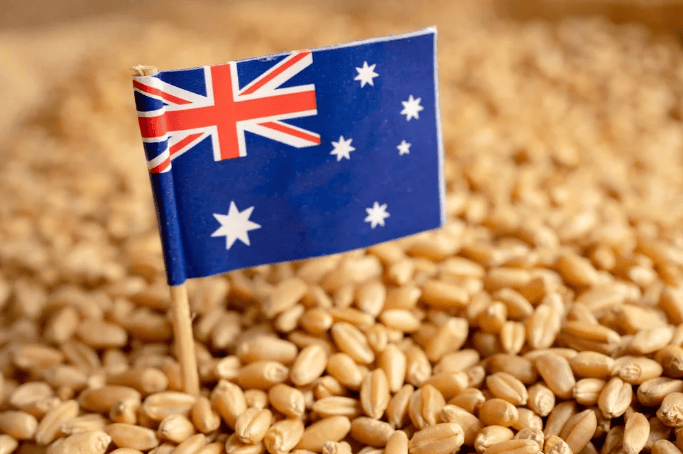
According to the March Australian Crop Report, Australia's winter crop production will be 15% above the average of the past five years, making it the second largest production on record. Australia is a major global supplier of wheat, barley, and canola.
The winter crop harvest shows yields exceeding expectations, particularly in Western Australia and Victoria, where total production has been revised upwards by 2% and 11% respectively compared to the December forecast.
ABARES stated: "Despite challenging conditions in many key growing regions, the strong results reflect improved farming practices that help retain soil moisture and improve water-use efficiency, alongside advancements in seed varieties."
Wheat production for 2025-26 is projected to increase by 5% to just under 36 million tonnes, which is 7% above the five-year average. A 5% reduction in planted area to 12.4 million hectares is expected to be offset by above-average yields.
Barley production is forecast to reach a record 16.3 million tonnes, a 23% increase from the previous year and 21% above the five-year average. Planted area increased by 3% to 4.7 million hectares, with yields significantly above the national average.
Canola production is projected to grow by 20% to 7.7 million tonnes, making it the second largest on record. This is attributed to an 8% increase in total planted area to 3.7 million hectares and above-average yields.
The winter crop planted area for 2025-26 is estimated to have increased slightly, reaching a new national record of 25.2 million hectares. This is primarily due to increased plantings in Queensland, South Australia, and Western Australia, partially offset by declines in New South Wales and Victoria.
For summer crops, sorghum production for 2025-26 is expected to fall by 6% to 2.5 million tonnes, though it remains 7% above the average of the past five years. Despite an 11% increase in planted area, below-average summer rainfall and significantly above-average temperatures have limited yields.
The Australian Crop Report contains ABARES' forecasts for the area, yield, and production of Australia's major winter and summer field crops. It is released quarterly in March, June, September, and December each year.
Related Products



MH220E Two-Row Hybrid Packaged Cotton Picker
CHINA RAILWAY CONSTRUCTION HEAVY NDUSTRY XINJIANG CO., LTD.
4HS-8 High-efficiency Peanut Inverted-laying Harvester
Hebei Yongfa Hongtian Agricultural Machinery Manufacturing Co., Ltd.
714CD Series C-Band Weather Radar
Chengdu Zhongdian Jinjiang Information Industry Co., Ltd.
Industrial and Commercial Point-Type Gas Detector
Jinan Benan Technology Development Co., Ltd.