Reza Nekouie Esfahani, a technical expert at the UK's Manufacturing Technology Centre (MTC), recently discussed the cutting-edge applications of laser processing technology in industrial manufacturing, covering precision cutting, welding, and sustainable material development. He emphasized that laser processing is advancing towards digitalization, precision, and environmental friendliness, bringing innovation to the manufacturing sector.
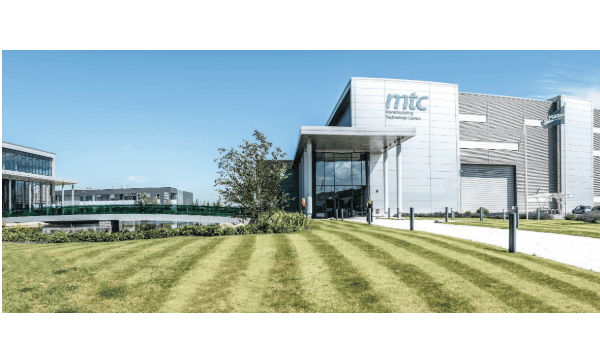
Established in 2010, the MTC is dedicated to bridging the gap between academic research and industrial application. By providing state-of-the-art facilities and expertise, it accelerates the adoption of advanced manufacturing technologies. Today, the centre serves as a strategic partner for industries such as aerospace, automotive, energy, and healthcare, driving sustainability, digitalization, and workforce skills development.
In terms of laser processing capabilities, the MTC possesses leading European facilities, including a 50kW high-power laser, a water-jet guided laser cutting system, and ultrafast femtosecond/picosecond systems. These technologies are applied to the cutting and drilling of metals, ceramics, and composites, as well as to dissimilar material welding for battery and hydrogen energy technologies. Laser surface engineering enhances coating adhesion and corrosion resistance by creating microstructural patterns, providing reliable solutions for batteries, fuel cells, and aerospace components.
Reza Nekouie Esfahani noted, "Laser processing is digital, maskless, and environmentally friendly. It eliminates hazardous waste and enables selective processing of complex geometries." When addressing industrial challenges, the MTC deploys multi-beam laser systems and adaptive optics to ensure process stability. For instance, in a laser cleaning project for lithium-ion battery substrates, real-time feedback control improved weld strength and reduced quality variations.
As part of the Horizon Europe program, the MTC collaborated with 13 organizations on the SYNTECS laser texturing project. Despite difficulties in coordinating cross-industry objectives, the collaboration facilitated technology validation and cross-sector innovation. Additionally, the EU-funded BUTTERFLIES project, launched in 2025, aims to utilize chitin and chitosan biopolymers to develop biodegradable materials through binder jetting and two-photon polymerization technologies, reducing dependence on petroleum-based plastics.
To support technology dissemination, the MTC Training Centre offers specialized courses in laser safety, process fundamentals, and advanced applications, including hands-on operations and digital learning modules. The centre also partners with universities to provide apprenticeship and continuous professional development programs. It plans to host an online laser surface engineering workshop in 2026 to enhance knowledge sharing and support the UK's transition to high-value manufacturing.