Wedoany.com Report on Mar 13th, At the 2026 Two Sessions in China, energy structure transformation once again became a top-tier topic. As the draft outline of the 15th Five-Year Plan charts the core roadmap for green and low-carbon energy development, the chronic issues plaguing the industry for years are finally seeing a key solution on the horizon.
On March 10th, Li Mao, an NPC Deputy and Secretary of the Party Committee and Chairman of China Pingmei Shenma Group, clearly stated in an interview: In the western regions, the coordinated development of integrated solar thermal power and energy storage will help enhance the stability of power sources and improve the integration capacity for new energy.
This statement directly pinpointed the core breakthrough point for the long-standing challenges in the new energy industry. Concentrated Solar Power (CSP), once overshadowed by the spotlight on photovoltaics, is now fundamentally rewriting the underlying development logic of China's new energy sector through its synergistic effects with energy storage.
01
A Decade of Rapid Growth: Why Has New Energy Consistently Faced the Life-or-Death Challenge of "Stability"?
Since the implementation of the dual-carbon strategy, China's new energy industry has delivered a miraculous report card.
By the end of 2025, China's cumulative installed capacity of wind and solar power exceeded 1.5 billion kilowatts, accounting for over 45% of the nation's total installed capacity, officially making it the largest power source in China. The annual electricity generation from new energy surpassed 2.8 trillion kilowatt-hours, nearing 30% of the total electricity consumption, evolving from a "supplement" to an absolute "main force" in the energy system.
However, behind the soaring installed capacity of wind and solar, the industry has never been able to shake off the "Sword of Damocles" hanging over its head—the lack of power source stability due to intermittency and volatility, and the resulting persistent issues of grid connection difficulties and integration challenges.
The data doesn't lie: In 2025, the national curtailment rate for wind power was about 3.2%, and for solar PV about 2.8%. In some northwestern provinces rich in wind and solar resources, local curtailment rates for solar PV still exceeded 5% during certain periods, resulting in over ten billion kilowatt-hours of clean electricity being wasted annually. Meanwhile, the electricity load centers in central and eastern China frequently face power shortages during peak hours. The ultra-high voltage transmission corridors for "West-to-East Power Transmission" also cannot achieve stable, full-capacity power transfer due to the severe fluctuations of wind and solar power.
The core contradiction is very clear: Wind and solar power generation is typical "weather-dependent" — operating at full capacity during the day and stopping at night, generating excess during strong winds and zero output during calm. This severely mismatches the power grid's "morning and evening peak" load curve. In contrast, the core lifeline of a power system is real-time balance, stability, controllability, and dispatchability.
For years, the industry has been searching for solutions but has yet to find the optimal one:
Thermal Power for Peak Shaving: As the traditional "ballast," the share of thermal power installed capacity continues to decline, and its peak-shaving capability is nearing its physical limit, unable to match the explosive growth of new energy.
Pumped Hydro Storage: Currently the most mature long-duration energy storage solution, but its construction cycle lasts 5-8 years, and site selection is strictly limited by geographical conditions, making it unable to keep pace with the expansion speed of wind and solar installations.
Lithium Battery Chemical Energy Storage: The fastest-growing energy storage route in recent years. However, it suffers from short cycle life, high safety risks at high temperatures, an incomplete recycling system, and is only suitable for short-term frequency regulation and peak shaving. The cost for cross-day and cross-seasonal long-duration energy storage remains prohibitively high.
What the industry truly needs is a solution that can achieve zero-carbon power generation, inherently possesses energy storage attributes, can deeply synergize with diverse energy storage technologies, and truly realizes the integration of "source, grid, load, and storage." This is precisely the irreplaceable core value of Concentrated Solar Power (CSP).
02
What Core Pain Points of New Energy Does CSP + Energy Storage Actually Solve?
Many people confuse CSP with photovoltaic (PV) power generation, but they are fundamentally different technological pathways, which determines their distinct industry values.
PV is a direct "light-to-electricity" conversion—it generates power when there's sunlight and stops when there isn't; electricity cannot be stored on a large scale at low cost, inherently carrying the "volatility" gene. CSP, however, follows a "light-to-heat-to-electricity" conversion path: It concentrates solar energy through a concentrating solar collector system, first heating a heat transfer medium, and stores the thermal energy in high-temperature molten salt tanks. When power generation is needed, the high-temperature molten salt is used to heat water to produce steam, which drives a steam turbine for stable power generation.
Key point: CSP inherently possesses long-duration energy storage attributes. It can store daytime solar energy as thermal energy at low cost and achieve continuous, stable power generation for 24 hours on demand. It can flexibly adjust its output according to the grid's load curve, equivalent to a "zero-carbon solar thermal power plant"—combining the low-carbon attributes of clean energy with the peak-shaving capability of thermal power and the stability of a baseload power source.
The "coordinated development of integrated solar thermal power and energy storage" emphasized by Deputy Li Mao is by no means a simple technological addition but an industrial reconstruction where 1+1>2, fundamentally solving the core pain points of new energy development from four dimensions.
1. Power Source End: From "Weather-Dependent" to "Controllable and Dispatchable," Reconstructing New Energy Power Source Stability
This is the most core value of CSP + storage and the most fundamental need of the new power system.
The molten salt long-duration storage inherent to CSP has a cycle life exceeding 30 years with almost no capacity degradation. Its levelized cost of electricity over the full lifecycle is far lower than that of chemical storage, perfectly solving the problem of long-cycle energy shifting across days and weeks. Chemical storage like lithium batteries and vanadium redox flow batteries can respond in milliseconds, meeting the grid's needs for short-term frequency regulation and peak shaving.
The deep synergy between the two builds a full-scenario power source system with "long-duration storage as the foundation + short-duration storage for frequency regulation," transforming new energy power plants from "uncontrollable fluctuating sources" into "dispatchable, adjustable baseload sources." Data from China's first batch of CSP demonstration projects show that CSP plants equipped with molten salt storage can achieve annual equivalent full-load hours exceeding 7,000 hours, far surpassing the 1,200-1,800 utilization hours of PV and even exceeding the annual utilization hours of many thermal power plants, truly realizing stable power supply from clean energy.
2. Integration End: Solving the "Trapped Power" Dilemma in the Northwest, Unblocking Core Channels for New Energy Transmission
Deputy Li Mao specifically focused on the western regions, accurately pinpointing the core contradiction in China's energy layout.
Over 80% of China's wind and solar resources are concentrated in the Northwest and Northern North China, while over 70% of the electricity load is in the central and eastern regions. The installed capacity of large-scale wind and solar bases in the Northwest continues to expand, but local integration capacity is limited. Ultra-high voltage transmission corridors have extremely high requirements for power stability and continuity. The highly volatile wind and solar power simply cannot achieve safe, full-capacity transmission, which is the core reason for the long-standing wind and solar curtailment issues in the Northwest.
The combination of integrated CSP + storage is precisely the optimal solution to this problem. Equipping large-scale wind and solar bases with CSP plants and diverse energy storage systems can directly smooth the output fluctuations of wind and solar power, transforming intermittent, random green electricity into a continuous, stable power flow. This not only significantly improves the utilization efficiency of ultra-high voltage transmission corridors but also enables local storage and consumption of surplus electricity. Industry estimates show that equipping Northwest large-scale wind and solar bases with about 15% CSP and storage systems can reduce regional solar curtailment rates from over 5% to below 1%, completely solving the industry anomaly of "power shortage on one side and power waste on the other."
3. Full Chain: Connecting All Links of "Production - Transmission & Distribution - Consumption," Achieving Systemic Low-Carbon Transition
Deputy Li Mao clearly stated that building a green energy system involves not only optimization in the power generation segment but also links such as power transmission, the grid, and zero-carbon factories, requiring emission reduction and efficiency improvement across the entire chain.
The advantages of CSP extend far beyond the power generation segment. The high-temperature thermal energy it produces can not only drive steam turbines for power generation but also be directly supplied for industrial production, replacing coal-fired boilers in high-energy-consuming industries like coal chemicals, steel, and petrochemicals, achieving deep decarbonization in the industrial sector. It can also achieve combined heat and power (CHP), providing urban heating and steam for industrial parks, truly realizing "combined electricity and heat supply, and integration of source, grid, load, and storage."
This full-scenario application capability elevates CSP from a single power generation technology to a low-carbon solution spanning the entire chain of energy production, transmission/distribution, and consumption, perfectly aligning with the core requirement of green transition: "energy conservation and efficiency improvement."
4. Industry End: Empowering the Integration of Diverse Energy Storage, Unlocking Explosive Growth Space for the Energy Storage Industry
Deputy Li Mao predicts that the next step will see explosive growth in energy storage, and the technological pathways will not be limited to a single mode. Integrated CSP is precisely the core carrier for the coordinated development of diverse energy storage technologies.
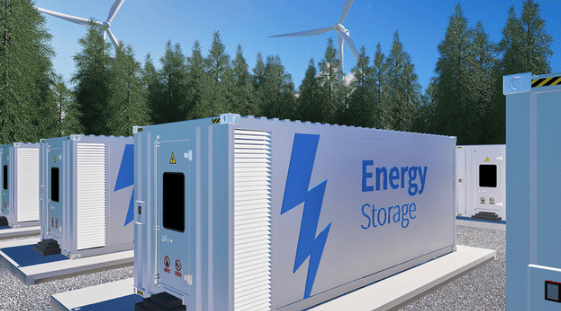
Beyond synergizing with chemical storage, CSP storage can also deeply integrate with compressed air energy storage, mechanical storage, and hydrogen pathways: using surplus electricity from CSP for water electrolysis to produce green hydrogen, achieving long-term, cross-seasonal energy storage and transport; combining with compressed air energy storage to improve the overall efficiency of the storage system; coupling with hydrogen energy to realize an integrated "solar-thermal-electricity-hydrogen" zero-carbon energy system.
This diversified integration development model can not only promote the complementary improvement of various energy storage technologies but also drive cost reduction and efficiency improvement across the entire industry chain through large-scale application, opening up new growth space for the healthy development of the entire energy storage industry, ultimately providing stable, efficient, and low-cost energy support for an intelligent society.
03
On the Eve of the CSP Breakout: Opportunities and Challenges Coexist, Marketization is the Core Solution
Currently, CSP stands at a critical juncture for industrial breakout.
During the 14th Five-Year Plan period, China's CSP installed capacity grew from less than 500 MW to over 3,000 MW by the end of 2025, with a compound annual growth rate exceeding 50%. The core deployment for energy structure optimization in the draft outline of the 15th Five-Year Plan has brought unprecedented policy dividends to the CSP industry. According to industry forecasts, by 2030, the national cumulative installed capacity of CSP will exceed 20,000 MW, becoming the next growth pole in the new energy track.
Especially in western provinces like Gansu, Qinghai, Xinjiang, and Inner Mongolia, which possess over 90% of the nation's high-quality CSP resources, have issued special plans requiring new large-scale wind and solar bases to be equipped with a certain proportion of CSP plants, positioning CSP storage as the core supporting facility for stable power transmission from these large bases, directly injecting certainty into industrial development.
However, facing these opportunities, the CSP industry still encounters non-negligible challenges to achieve truly large-scale and efficient development. Deputy Li Mao's proposal also points out a clear path for the industry to break through.
First, policy support and planning guidance are the foundational prerequisites for industrial development. Currently, the unit initial investment for CSP plants is about 12-15 CNY per watt, still higher than mature new energy technologies like PV and wind power. Policy-level support such as guaranteed grid connection, priority dispatch, and ancillary service compensation is needed to create a stable policy environment for large-scale industrial development. Simultaneously, CSP development must rely on the national grid backbone and a stable, reliable power system. National-level coordinated planning is required to promote the synergistic layout of CSP projects and grid construction, allowing the peak-shaving value of CSP to be fully realized.
More crucially, market mechanisms are the core driving force for the long-term healthy development of the industry. Deputy Li Mao clearly stated that only by promoting competition through market-oriented methods can costs be better reduced and efficiency improved, thereby driving the healthy development of the entire industry.
The development journey of PV and wind power over the past decade has fully proven that large-scale application + market competition is the core formula for cost reduction in new energy technologies. The CSP industry similarly needs to promote technological innovation, industrial chain improvement, and domestic substitution through market-oriented bidding and fair competition, gradually lowering initial investment costs, ultimately achieving grid parity, and completely opening up the nationwide application market.
04
A Transformation Model for Traditional Energy Enterprises: Pingmei Shenma's Green Turnaround — What Insights Does It Offer the Industry?
Deputy Li Mao's significant proposal is by no means merely an industry observation; it is a profound summary drawn from the hands-on practice of a traditional energy enterprise.
As a traditional energy giant primarily engaged in coal and petrochemicals, the transformation path of China Pingmei Shenma Group is a benchmark model for the green development of traditional energy enterprises under the dual-carbon background.
Deputy Li Mao clearly judges that the major direction for future energy development is greening, but traditional energies like coal and petrochemicals will still play the role of "ballast" and provide regulation support. The incremental share of energy should be increasingly borne by green energies like wind and solar. This judgment is precisely the core logic behind China Pingmei Shenma Group's transformation.
On one hand, the enterprise continues to consolidate its advantages in traditional energy, solidifying the "ballast" for national energy security. On the other hand, it continuously increases investment in the development and utilization of green energy, actively deploying in new energy tracks such as CSP, energy storage, and hydrogen, promoting the synergistic integration of traditional and new energy, and proactively playing a demonstrative and leading role in the energy transition.
This offers extremely important insights for the entire industry: Energy transition is never a "one-size-fits-all" replacement of the old with the new but a systemic transformation that "coordinates energy production, energy use, and energy norms." Traditional energy enterprises possess strong financial resources, well-established energy infrastructure, and rich experience in power system operation, making them precisely the core force for deploying in new energy tracks like CSP and storage. The new pathway of integrated CSP and coordinated energy storage development also provides a clear, feasible, and sustainable development path for the green, low-carbon transformation of traditional energy enterprises.
The 2026 Two Sessions have drawn a clear roadmap for China's energy transition during the 15th Five-Year Plan period.
As new energy has become China's largest power source and the dual-carbon goals enter a phase of deep攻坚, the industry's core contradiction has shifted from "rapid expansion of installed capacity" to "the stability and security of the new power system."
Deputy Li Mao's proposal accurately hits the core crux of the industry's transformation: The coordinated development of integrated CSP and energy storage is not only the key to solving new energy integration and enhancing power source stability but also a crucial strategic support for building a new power system, ensuring national energy security, and achieving the dual-carbon goals.
The golden age of CSP is arriving.
As technology continues to break through, policies continue to exert force, and market mechanisms gradually improve, the combination of CSP + storage will undoubtedly, during the 15th Five-Year Plan period, fundamentally reconstruct the underlying logic of China's new energy sector, injecting continuous,澎湃 momentum into China's green and low-carbon energy transition.