en.Wedoany.com Report on Mar 25th, In the field of mechanical engineering, the performance variation of plain bearings often stems from assembly details rather than the bearings themselves. Although small, the three parameters of clearance, alignment, and fit directly affect the smooth operation and lifespan of equipment. Precise control of these elements can avoid issues such as overheating and seizing, thereby enhancing overall reliability.
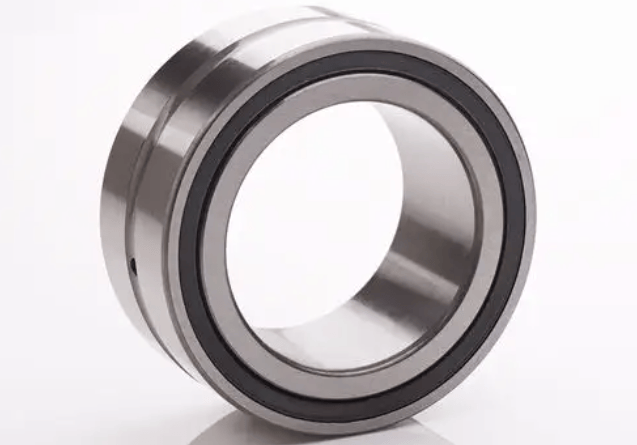
Clearance is crucial for oil film formation. In engineering, diametral clearance is commonly used, with design based on the relative clearance ψ. High-speed conditions require a smaller ψ value to maintain oil film stiffness, while low-speed, heavy-load conditions can use a larger ψ to facilitate lubrication. Improper clearance can easily lead to excessively thin oil film or leakage, causing wear and vibration, which affects the stable operation of plain bearings.
Alignment and geometric accuracy demand extremely high geometric matching. For instance, crush height and free spread must be reasonably controlled to ensure tight contact between the bearing shell and the housing bore. Deviations in the cylindricity of the bearing housing bore and the parallelism of the bearing shell can cause uneven oil film distribution, accelerating failure. Although these details are subtle, they form the foundation for the long-term reliability of plain bearings.
Fit involves tolerance selection. For the shaft and bearing shell, the hole-basis system such as H8/d8 is commonly used, while an interference fit such as m6 is employed for the bearing shell and housing bore. A proper fit can optimize lubrication conditions, prevent shell rotation, and ensure heat conduction and positioning. Neglecting fit details may compromise equipment performance, whereas precise assembly can significantly extend the service life of plain bearings.