Nearly 40% of US Farmers Consider Reducing Fertilizer Application Before 2026 Planting Season to Address Cost Pressures
en.Wedoany.com Report on Mar 26th, A survey by the American Corn Growers Association reveals that nearly 40% of US farmers are considering reducing fertilizer application before the 2026 planting season. Against a backdrop of persistently rising operational costs, producers are seeking more precise input management methods to cope with a tighter economic environment.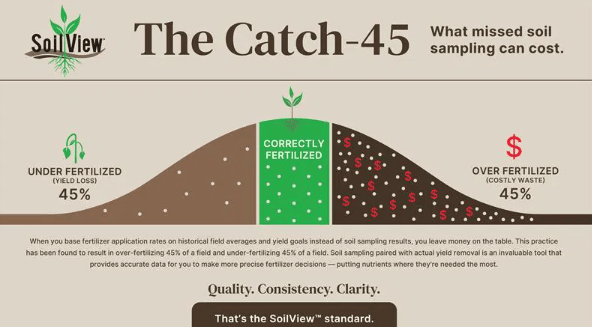
As fertilizer use strategies face closer scrutiny, soil sampling tools that guide precise nutrient management are gaining increased attention. Agronomy experts point out that effective fertility planning should begin with accurate field data, not directly selecting specific products. Data from SoilView indicates that without soil testing, only about 10% of fields achieve appropriate nutrient input, with the remaining area distributed between over-application and under-application.
Industry experts state that consistent and systematic soil sampling helps growers identify nutrient variability within fields, optimize fertilization timing, and reduce unnecessary input waste. As the 2026 planting season approaches, a growing number of agricultural technology service companies are positioning soil testing as a foundational step to help growers improve operational efficiency, enhance profitability, and maintain long-term soil health.
Through more precise nutrient management, farmers can control input costs while safeguarding yields and reducing potential environmental impacts. Industry observers believe this data-driven, precision management model is gradually becoming a crucial path for agricultural producers to achieve stable operations in an uncertain market environment.
Related Products

4HS-8 High-efficiency Peanut Inverted-laying Harvester
Hebei Yongfa Hongtian Agricultural Machinery Manufacturing Co., Ltd.

714CD Series C-Band Weather Radar
Chengdu Zhongdian Jinjiang Information Industry Co., Ltd.




Industrial and Commercial Point-Type Gas Detector
Jinan Benan Technology Development Co., Ltd.